
















 EPISODE · 36 MIN
Reposition before rebrand: a Brussels hotel asset case
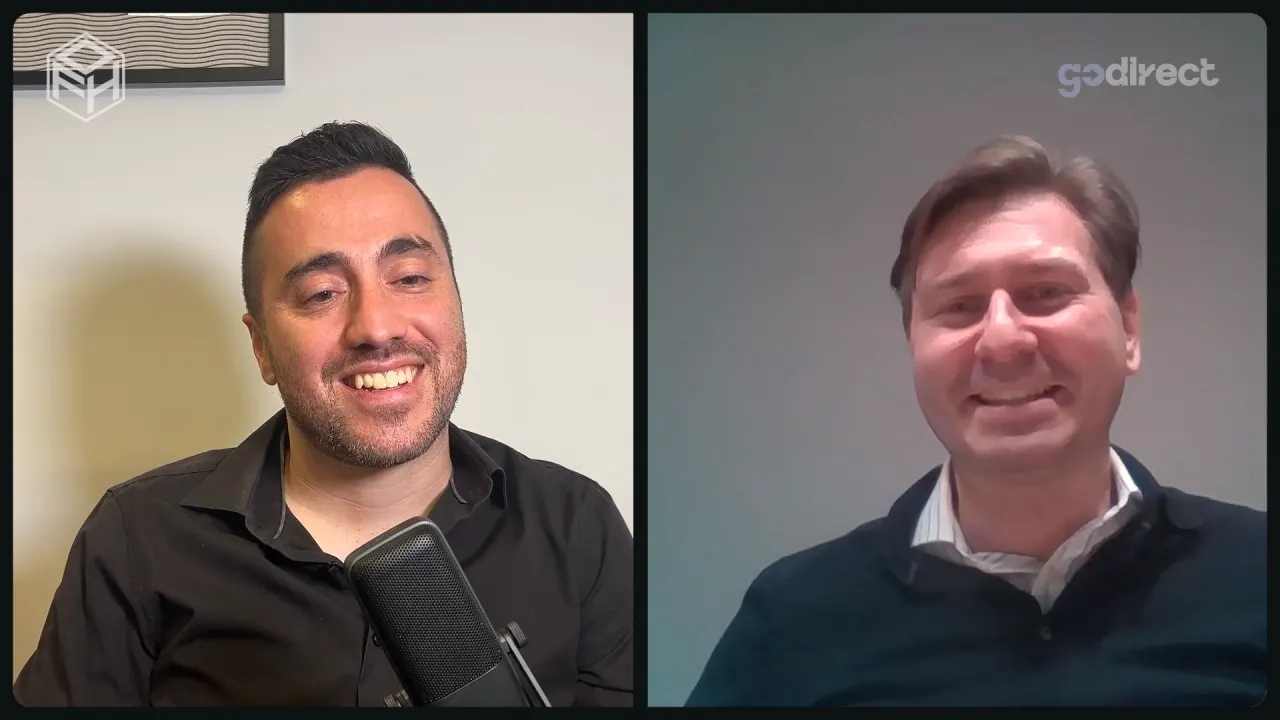
Sophie Richard joins Inside Hotel Asset Management to break down the repositioning of a 142-room hotel at Brussels Midi. From a bold segmentation cut to a full rebrand, this episode explores how to rebuild rate quality and move RGI from 81 to 110.
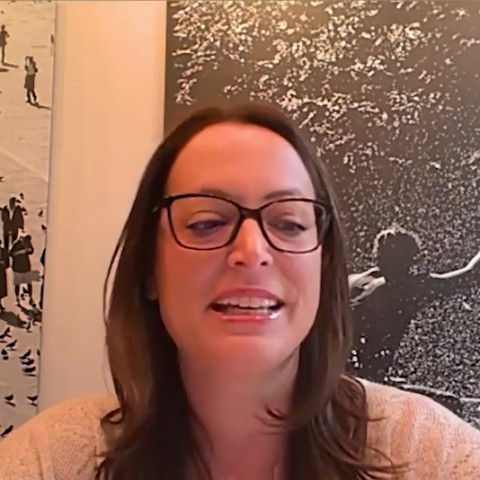 Sophie Richard
KEY TAKEAWAYS
Cut the safe segment
A high-volume wholesaler base feels safe, but it quietly caps your rate. Cancelling those contracts cost 13 percent occupancy overnight, and the rate that came back was higher quality than the revenue that left.
Reposition before you rebrand
Fix the segmentation and the product first, then add the brand. Done in that order, the move from Park Inn to Radisson added value instead of having to carry the turnaround on its own.
Aging reads as dirty
When a hotel ages, guests stop calling it old and start calling it unclean, even when it is spotless. A renovation lifts cleanliness scores and the rate guests accept, and it earned a four-star classification that opened new contracts.
The market shifts faster than ever. Look at your asset with fresh eyes.
Transcript
Click a timecode to watch from that moment.
00:04Welcome and the case study
7
How do I get there? Based on who's coming in my in my city, the type of business they bring, and rethink very quickly. Welcome to Inside Hotel Asset Management, the Future of Hospitality podcast. In this series, we are exploring hotel asset management case studies. And we we are having conversations with industry leaders, from inside the investment and asset management hospitality, world. Today, we are talking with Sophie Richard.
We will be focusing on a case study in Brussels, And we'll be talking about the strategic repositioning, about segmentation shifts, and about a renovation strategy and a rebrand.
00:52Sophie Richard and M&L Hospitality
22
So a lot of things to cover here. So so let's start straight away. So maybe, Sophie, introduce yourself, please. And, tell me tell me a little bit about yourself and about M and L Group. Of course. Yes.
Thank you for having me. It's a pleasure. So I've been in the hospitality industry since as far as I can remember. I started with my first internship when I was 14, and I loved it ever since. Worked in operation, and then I decided I wanted to do something more. I was lucky enough to be able to do master degree at a sec with Cornell University at the time.
And then I've done eleven years of evaluation. So that was a great they call it a stepping stone, but I think it was just fantastic exposure to many players in the market, many brands. You know, I'm lucky enough to then know most of the people in industry in Europe, and I think that's a great it's a great tool. I decided after a while that the only thing that was missing for me is I was a little bit too far away from the actual operation of the hotel. And this is when the the ID and asset management was emerging at the time very much in Europe, to go back into closer to the operation, and that was just a natural move. And I've been with M and L Group for ten years in about a couple of weeks, so very exciting.
The M and L Group is a family office. They're based in Singapore. They started in shipping, and they've been very successful ever since then. They moved into the hospitality real estate with one hotel in Australia, and it grew to now a very large portfolio.
02:42The asset management cycle
15
And we have 12 hotels in Europe at the moment. So very exciting. When I joined, we've grown the portfolio, already by more than half in Europe over the last ten years and, yeah, looking to a bright future. Great. Okay. Fantastic.
Thank you, Sophie. So, let's talk a little bit about the case study, that we will we will discuss today. So, you know, I usually show us the cycle of, asset management where we go through acquisition. And then, after acquisition, usually, you would go through a phase where you have renovation going on or you question about the branding and then you will monitor your performance. And then often you will try to think about other initiatives, value creating initiatives, everything you can do in order to increase the value of the hotel because in the end, that's what asset management is all about. And I think this particular case study is a really good example of that because, you know, we will be talking about the renovation.
We will be talking about, you know, that you were monitoring the performance. And, you know, from what I understood, you know, there were a few things where you thought the hotel could do better looking at segmentation. And then, in the end, you even went through a whole rebranding process, which I think is, you know, fascinating as well.
04:10The hotel at Brussels Midi
9
So, please Sophie, introduce the hotel and let us know, you know, what you have done and how did you get to that conclusion. Yes. Thank you. I think it was a very interesting case study to present. This is our smallest asset in Europe at the moment, but it's always been performing well. And what I like about that case study, it's a very typical textbook value of how to look at active asset management in operation.
So it's, it's actually very interesting because the result also can be shown very quickly. It's a very quick turnaround. So we we've actually had the asset since 2015, but it opened in 2010.
05:00Finding the low-quality segment
23
It's, at the time was the parking by Radisson at the Midi Station in Brussels. So it's a quite competitive area. It's also not an area or location that has great reputation within the city because around train station, usually, there's always a little bit of insecurity. But we've always managed to position Yotel quite well. We have an inner garden, and, you know, we've played on those kind of safe and secure words that usually tend to appreciate by all travelers that are international. And then, you know, in '20 around 2017, we started to look at the at the hotel a little bit more.
And in 2018, I sat down with the team, and I said, listen. It seems that we have a trend over the last six months that going down in term of RGI, and I've asked them to deep dive a little bit into the data. And we've been lucky enough to have enough data tool, and this is very important. You know, whatever you use for benchmark, you know, whether it's hot stat or STR or k MKG at the time was also available, you really deep dive. And even with Demand three sixty, you have a look at where the concept does better. You know, you have your team on-site.
They actively talk to people. And then we realize that there's a particular segment that tends to be very heavy with us and very low rated, and I was very much driven by all sellers. So I don't know if everybody's familiar with all sellers, but they tend to buy, you know, your inventory in bulk at a very high discount price. And they don't sell it directly to guests. They send it to another party. So it could be OTA, travel agency, travel operator.
Call them however you want. But then you completely lose control over your inventory, and that's not a that's not a great segment, but sometime it's needed. That's why it exists in some moments. But I think it was the right time to look at it and say, okay. If in the past, they used it as base and to create that revenue stabilization and that level of business on the book they felt comfortable with, we have to look elsewhere and make a strong decision.
06:58The decision to cut the wholesalers
17
So with the team, we've done the analysis. What if we cancel completely our contract and we remove them? So we decided to remove them. And in 2019 Sounds like a pretty bold move. Right? Because Well as both contract, you know, gives you, you know, quite a lot of security and and That's that's the base business, right, that people love because your revenue management system typically yields on top of base.
Right? If you have that strong base, then the pricing yield. But, you know, you have to and, you know, operators are usually very good at it. You do a displacement analysis. You really have a look at what it displays as a segment. You know, your corporate, your more wanted segment.
Even some of your other discounted segments, you know, add better value. And that's come to the quality of the revenue at the end of the day that comes into your book. Because we had a strong occupancy. We're in the high eighties at the time, so it was actually pretty strong. And, you know, from the high level look, it's not bad.
08:07Holding nerve through the occupancy drop
23
And we had a good GOP margin as well. But, you know, you can always do better, and then we deep dive, and then we make a bold move. And that's when you lose 13% of your occupancy overnight. Mhmm. And that's that is a bit I have to say, that was the first time I I did this completely. It's it's something I was confident would resolve, but you still go a bit nervous into the into the story.
I think it's, yeah, it it was a bit unsettling. The first month, the second month, nothing moves. Right? Except that you lose that occupancy, and when you look at the future business on the book, it's not there. So you're losing towards the competition. And that was, a little scary.
This is where you find a little bit of resistance as well. You have to explain that very clearly to the owners why you're doing it. Resistance, you know, with the operator and with your owners as well or, you know, so both? Or I I think it's a bit of both. But, you know, the the job of asset management, at least how I see it and and how I think a lot of, asset manager would see it is to look at the medium to long term value here. Yeah.
Now we have to understand that our teller is incentivized differently, that our sales team are incentivized differently, the revenue team is incentivized differently. They only look at certain part of revenue. So, you know, the RGI needs to look good. Whether it comes from occupancy or it comes from rates, makes no difference to them if the RGI is good. It makes a huge difference to me, though Mhmm.
09:38Owner, operator, and brand structure
38
As the asset manager. So it it the resistance was really to explain to people you have to give it a little bit of time. Change doesn't happen overnight, but that's something we felt confident. I was very lucky. I had a very strong relationship with the general manager at the time. Okay.
Just just to be clear. So the so M and L Group owns a hotel. The hotel Mhmm. Is branded under Park Inn, which is the brand of Radisson, and Radisson was also managing the offer. Correct? Correct.
Yes. So, you know, we can't manage the hotel on their behalf. That's something, you know, we can only sit down and discuss strategy. It was an absolutely must for me to have the local team, agreeing with the strategy overall. And was that difficult? Was it difficult to get the, you know, the local team, the the management team of hotel to to agree with that strategy change?
I think if you look at the bigger picture, the general manager could see the future. And, I was lucky he had a financial background. He he was very an efficient person. He was looking at efficiencies, and he he didn't look for a quick, turnaround within a month. So it was not difficult, and I really worked hand in hand with him through the process to look at it because there are certain, in that overall segment, there are certain small pieces of leisure group that we've decided to keep as well, because they were coming at the right time. They had the right pattern, the right spending outside of the bedroom.
So it was an entire process that we dissected, and it's all about the data. The data is all there. It's how you, you know, interpret the data, how you look at your concept, and how do you say, okay. I need to just simply take a bold move and try to reposition myself. You always have the option, although I hate to say it, to say, well, you know, if not in 2019, we are losing some room nights if we can't replace it all without the segment. Nothing stops you from restarting the year later, those contracts should your, should your move has not come to fruition.
But we were lucky. It didn't last a year to do that. From q two, we already started to see some numbers change. My business on the book looks a lot brighter for the next, q three, q four. But what was very interesting is toward the end of the year, we boomed. Wow.
And all of that segmentation that was, taken us from July to December was really taking the hotel down, and the result were incredible. You know, I can't say I'm not pleased with it.
12:28The results: rate and RGI up
12
It was I didn't think it was gonna be that that, that strong right away. I thought I could show a good trend on q three, q four that would be the business case to not renew those contract going forward. I didn't even need to build a business case. I mean, nobody wanted to renew those contract going forward. And and right away, we saw we've got an RGI in the market that moved up. We've got an ADR that moved up.
So it was a very successful, first step. Great. And, you know, I love the fact that you talk about the quality of the revenue. Because and, and, you know, by achieving a better quality of the revenue. By quality, I suppose you mean, you know, maybe a little bit less occupancy or at least in the beginning in order to, you know, start building a higher rated space. And then, of course, the in trying to match that, you know, getting close to the previous occupancy levels but with a higher rate, which would obviously mean, you know, a better bottom line because higher rate means better flow through.
13:26From segmentation to renovation
29
Great. That's that's a fantastic, fantastic example. Tell us a little bit about your, you know, the next phase of the of the whole repositioning, exercise with this hotel. So Yes. So I I think that the natural transition at the end of the year because, you know, we've we've managed to increase, our rate by 8%. Right?
It was unexpected. And that entire segment by 43%, increase in rate. The next phase was to really holistically look at the hotel and say, great. We've managed to reposition our segmentation. Does our current segmentation reflects well with the physical assets? Right?
The hotel opened in 10/2010. We were already nine years in its life cycle. And we know that one of our main competitor within the station was doing renovation Mhmm. Of their bedroom stock. So, naturally, you come to the point where you say, okay. Is it the right time, to look at ourself?
And then as everybody knows, COVID hit. Right? So between that first phase of looking at where we are with our segmentation and where we are with the renovation of the product, it took quite a long time, I have to say. But it was a right moment for us to put it on hold. I think a lot of the competitors have decided to renovate the building right away or during low time. It gave us a little bit of insight as well on which way to go.
You know, once everybody's done their work apart from one hotel in our concept, You can look at their product. You can look at the positioning they are trying to give their guests and how they want to position themselves in the market. And then it was really time for us to plan. So we did, of course, do a mock up room. We've done all of the process of diligencies, presented it to the operator.
15:33Renovating the rooms
10
And at the time, there was in the back of my mind, what do we do with the brands? But we were not quite certain yet, that it was necessary to change the brand because the market has a natural rate ceiling, that is difficult to break in that location. So we started the renovation of the room going for a park in by Radisson. Right? So we started the room process in September 2024. But very quickly, I've asked the hotel to split the room, the room configuration in the system to renovated versus non renovated room to see how the new product would trade versus the old product.
And we saw directly again an uplifting ADR that was quite significant overall. So I was really happy with that. And this is when right before we started to plan for the public areas, which was the last, we started by the rules, and then we wanted to finish with the public areas. This is where we sat down with Radisson.
16:36Rebranding to Radisson
32
We've also seen a trend, and I don't know if that's anywhere else in the world, but at least in our region, there was a strong, trend in France, in The UK, and Benelux where the parking brand by Radisson was fading. A lot of the hotels were doing renovation and rebranding towards Radisson. Which is in which is, you know, as cap three above? Correct. It's it's a bit above, but it's below their, Radisson Blu, which is their main brand. Got it.
It's a it's it's a light it's a soft brand. It's got very beautiful finishes. I'm not saying Nordic like this, but, you know, it's very it's very light colored versus parking. That was a bit bright colored scheme. As I think it's also felt a little bit more in tune with what the market demanded. COVID really brought a paradigm shift towards a lot of things.
And rebranding, renovating, how you approach rooms, you know, was no different. That's also why I was kind of pleased we started the process later. We might have done something differently doing it during COVID without fully understanding what the guests wanted, that kind of greenery, safer, you know, environment that people are now kind of requesting and depend it doesn't matter. You can be in the upper upscale or upscale segment or midscale and still request the same level of experience. So we sat down with Radisson, and we've asked them to come to the table with us and discuss the possibility to rebrand. And were they on board from the beginning?
I think, the first time we've discussed it, and that's always, you know, that moment between the operator and the owner, we looked at the basic guideline of of the brands and forget about just the design of it. It was more about the manning that was a bit difficult to achieve, the elevated cost in certain area. And then when we really deep dive into the need of this property, Radisson was very, very open about it. They said, listen. You're at the media station. The way your cost is structured right now, we don't see your need to change completely your money.
We have very little and many space, in that area. It's very efficient building. So we've kind of agreed to say, listen. We don't need any other changes except for signage change and making sure that our public area colors scheme was changing slightly versus what we had. Funny enough, it's very close what they requested to what we had originally designed. But, you know, the blue is slightly different and, you know, the walls are this.
We had it a bit more greenery, but, it's overall very aligned with what we wanted. So did you have the rebranding in mind already when you started the renovation?
19:30Why reposition before rebrand
32
Or is it No. We didn't. It it's it's something we explored years before at the time, but parking brand was still very vibrant. It was extremely profitable, for us, and we didn't really see the need of spending that extra money Got it. That. The positioning of the parking brand also fit really well with the area.
Everything is midscale or upper midscale. Yeah. Because the sequence the sequence of your your your It's unusual. It's unusual. It's interesting. Right?
Because you usually, you would say, okay. Let's rebrand. And by doing the rebranding and going trying to, you know, rebrand to a to a high category, you would then change the segmentation and try to upgrade or, you know, uplift the ADR or anything. But you did it a little bit the other way around. We we did it we did it the other way around because we realized we're not so far away from the brand standard of Radisson. And Radisson was carrying a lot of the of the things we wanted to carry, a bit that sustainability element, the environment.
So it it kind of felt like a good fit right away. We're already within a hotel management agreement with Radisson. It's just a matter of agreeing to do the brand change. Yeah. It was really just down to that. From the perspective of of the owners, the only extra cost that needed to be negotiated was the signage at the end of the day and the wayfinding around the building, which is slightly more clean as a Radisson than it used to be with Sparkin brands.
But in in all honesty, it was very it was not a very difficult process. I think we also value in trying to push the Radisson brand forward. They've give us a very strong business case that they felt that they could achieve Mhmm. Top line, with the brand than they would with the Parkin brand, with limited increase of costs. So, you know, what's not to like about this when you're the owners. I think also with the brand new the hotel being brand new and fresh because we've really done a renovation over the period of nine months when you think of it.
Because the first room went back in December 24, and we rebranded on the September 1 even though some of our room are out from September 24. So over the course of nine months, guests have seen the transformation, and I think it has that kind of violent impact, positive impact by rebranding on September 1 to say, look.
22:06Guest satisfaction and value for money
17
It's not just brand new rule. We're also a brand new brand, got a brand new website, We've got a brand new product to offer, and it was very well received. I have to admit, we had a very positive, positive feedback from the guest. Everybody was excited. We have a very, strong base business, and they saw the transformation alongside with us. And we got very, very nice feedback as well.
So And, you know Did you see that, Dan, in your guest satisfaction scores as well? Is that So the the guest met Yeah. The guest satisfaction, the metrics, you know, on cleanliness, it's not that the hotel was not clean, but when it's aging, sometimes guests confuse aging with dirty Yeah. To some extent, unclean. But, you know, sometime there's a stain. Sometime the carpet is a bit damaged.
But, you know, in reality, it was very it was very clean, but now we are our cleanliness, factor has gone really high overall satisfaction. It's also the value for money. To some extent, when your hotel start aging too much, guests don't feel that they should pay the higher price for the product. So that value for money, I think we don't have that issue anymore, of charging the higher rates. And, you know, we've we've got some quick win within four weeks.
23:28The four-star classification
21
We've filed for the city to get a four star classification. They've approved it Great. With that reservation right away. That has allowed us to, try to get some leisure contract, which requested that four star classification. So do you think because my my question, you know, was is how important is that four star classification? Well, yes.
But Yeah. It's Yeah. It's a it's not so much for guests. Right? Individual guests now, I think they they're walking away from the star because one, per region, it varies greatly. And second, because, you know, they look at the brand.
Yeah. I think they're more attached to brand and level, level experiences. But you still have that group business, that corporate, and that leisure, they're very attached to it. Yeah. And the four star classification for leisure contract of some companies are very important. The same way that in some areas, you can't accept pharma can't accept if you're five star.
Mhmm. You have to be four. So So I I think sometime it's, you know, it's to understand, you know, what would be and, you know, it it's that that's things that I recommend every asset manager to do sometimes.
24:41Reviewing segmentation every year
24
Just look at your asset all blank. The market shift is faster than ever. Before, you could stay on the same trend for five, six years. Since COVID, I have the feeling. And every crisis we've gone through, I have a feeling every two, three years, you kind of have to think and say, okay. What's my optimal segmentation?
How do I get there based on who's coming in my in my city, the type of business they bring, and rethink very quickly. So the exercise maybe before every five years to do, you probably have to really look at it on a yearly basis and say, am I still optimal in what I'm trying to achieve right now? And, you know, there's, of course, lot of internal and external factor. But for us, it was very important to get that four star classification right away. And if you think of the timeline, September 1 rebrand, we've got it mid September, the four star classification, which allowed us to sign contract for 2026. K.
It was not too late at the time still. So win win win. Yeah. Fantastic. And I think so that's so that's a great measure for success as well. Right?
So the so you got the four star classification you wanted. You, you know, you've seen an improvement in guest size. Any other KPIs you would be looking at the you mentioned the RGA before, RGI. Yes. I can I can share the RGI we've done because we have a very comparable q one twenty twenty four? And and I the reason why I used 2024, it's because 2025, we were closed for renovation for half of our rooms and part of the public area.
26:14RGI from 81 to 110
5
So it didn't really Yeah. One up showing apple to apple. But, our RGI in Q 12024 was 81. And 2026, we had one ten. Wow.
26:33What she would do differently
64
Okay. Yeah. No. That's that's amazing. And, you know, with you know, this is this sounds like a really successful, you know, project, so it's great. Congratulations.
Is there anything you think you'd say, okay. This is something, you know, we will do differently today? I think there's certain part that I would have thought differently. I think we we probably I would have looked at the backbone of the building a bit more to see if there's some technical element of the building we would have want to redo at the same time because you gain inefficiency, at that time because it's something that we're looking at right now at certain element, like the TV, the Wi Fi, cabling. You know, it's, it's not something at the time that seemed very important, but I would probably try to advance certain CapEx item at the same time of a full renovation. So really do a full building review.
The the negotiation with the operator, to be honest, and and as much as this is very unusual and we've been very successful, I think it's much better to be done, ahead of time. Mhmm. So this is very something that we should have it's not that we didn't think about it. It's just the timing was never right. And sometimes, you know, you just have to go with with the cards deal. Right?
But I would if I had to redo that all over again, it's I would sit down. I would build a strong business case. I would go as detailed as segmentation. And it's not just the segmentation. It's really, the channel distribution. And because this is where my cost is mostly impacted, I want my good room flow through and the quality of the revenue for me is key.
Right? It's Yeah. There are certain there are certain segments that are very stable and, you know, corporate is the is a typical one. You've got the right level of corporate, divided across several corporate account, not just a big one or two, because you put yourself at risk over the next five years. You build a strong relationship. It's a very good quality revenue.
You you have, something with some of your base business, you know, whether you're an airport or train station, it could be crew. It could be anything else in other in other areas. But it's it's it's that quality of details that I would go into to really understand and plan ahead because this is where your sales team and your revenue team then say, okay. That's the strategy. The hotel will be refurbished in eighteen months and done. That's the optimal segmentation.
That's the optimal distribution. How do we get there? How do we build the marketing? How do we build the the the system that allows us for the delivery rebrand, we attack the right segment six months before, and we make sure we're ready. Indeed. Yeah.
A hit of time. Yeah. Shifting the segmentation sounds easy. Right? Let's shift the segmentation, But it's a lot of work and it's, you know, teamwork with Yeah. It's it's on operators and the sales team.
Yeah. Yeah. Exactly. It's not easy, but it's not. I think we again, we've been so successful with this hotel because it's a and it's not a bad thing, but it's a simple operation. You know, the day you attack a bigger building, which has a lot of m and e's, a whole lot of rooms.
Mhmm. You know, this this hotel has 142 rooms. So it's a lot more manageable than anything that has 300, 400 bedrooms. Yeah. Yeah. You have to plan a bit more ahead.
Okay. Well, fantastic case study. Thank you, Sophie, you know, to share this with us. And, you know, with the listeners and, you know, one of the reasons why I'm doing this podcast is also because I'm working with a lot of junior asset managers in my organization.
30:10Advice for new asset managers
37
We'd like to make sure that they have examples about what asset management, hotel asset management is about. So if you would give advice to someone who says hey I think hotel asset management could be something for me. Would you what would you give them as advice? It's interesting because I actually do that. I'm I've been a mentor for a few students in the past as you know. I know that.
That's true. Yeah. Yes. You know as well. I think it's it's an interesting conversation. I I tend to first let people tell me what they wish.
Right? And and how they see their future. And it's not a bad thing, but new generation, they look at it completely different from when I looked at it at the time. So I like for them first to explore and tell me what they like. But in asset management, I think and and it in hospitality in general, you you get people that are passionate, and that's the great thing. I I don't think I've met somebody who's not passionate about what we do.
And even people that move from pure real estate to hospitality real estate, they find it more fun because it's more fun, obviously. But I would tell them, to see both sides if I could. Of course, you can start in asset management and be extremely successful, but I think seeing the operator side and seeing the owner side, whether it's, you know, you work in real estate investment, you work as a consultant, you work a little bit with the operator, you understand both site needs. And that's very important because you're really the mediator in between all of that. You you own that hotel operation for the owner, and you really help manage the value. And also be very flexible and understanding of data.
Data is key. It's moving so fast. So we're talking about AI and data a lot, today, but it's also to know how to clean it. If I wanted to take all of the data that's available, it's too much data. Mhmm. I wouldn't know what to do with it.
So so understand the data, own the data, know what you need to know. But the world is moving so fast. You know? You need to be curious. You need to always want to move, but mostly network. Because at the end of the day, it's my biggest thing.
Go to those events, go to those conferences, meet people, talk to them, share best practices because that that's a bit also why we're here for.
32:39HAMA Europe and networking
51
Right? I can pick up the phone to the asset manager and say, you know, I'm stuck here. Yeah. I do not know how to approach it. How would you do it? Have you done it before?
And I think this is great tools and, you know, we're building a good network right now in Europe. Yeah. That's good. So so talking about network, you know, you might might, you know, tell us a little bit because you've been the president of, HAMA for for a few for many years now. So For three years. Yes.
I just Tell us a little bit about about HAMA, so the the hospitality asset management association. Yes. Of course. So HAMA Europe is a subsidiary of HAMA in The US, which is the hospitality asset manager association, as you know that, it regroups senior professional asset manager, and we're networking. We're sharing IDs. We're here to share best practices.
We meet twice a year, and we try to meet a little bit more now. But we meet twice a year. We do webinars. But what I love the most about it, it's everything is closed doors. It's all about us and networking and understanding best practices. So it's it is really a voice of the owner's representation, towards the world.
We help each other, you know, gain yeah. It's not a fight, but, you know, operators have their own incentive and their own view, and they know what they want to get at such as owners as well. And how do we get most parties to align their strategy? So that's really the main point here. It's it's a fantastic association. I would recommend anybody to visit the website and see.
It's, you know, we have great mentorship program along with it. We've got great educational program along with it, and you know that because you were part of of it as well. But I think there's so much to be done in asset management still. It's, it's not it's in infancy anymore, but it's still quite, new in some areas of Europe, and we're growing strong. So it's a very good feeling. If you look at general investment conference in the past, there was very little about asset management, maybe one or two session, and it's becoming very more prominent.
Yep. Okay. Fantastic. Thank you very much, Sophie. I think this was a Thank you. This is a very interesting conversation.
Thank you for sharing your expertise, your knowledge. I think it was fantastic. Thank you. So thank you, Luke. And for all the listeners out there, thank you for joining us for this episode of Inside Hotel Asset Management. And if you enjoyed this conversation, please follow, like, and subscribe to support future episodes.
See you in the next conversation. Thank you very much. Bye bye.

