















 EPISODE · 41 MIN
Fewer rooms, more value: repositioning La Pérouse in Nice
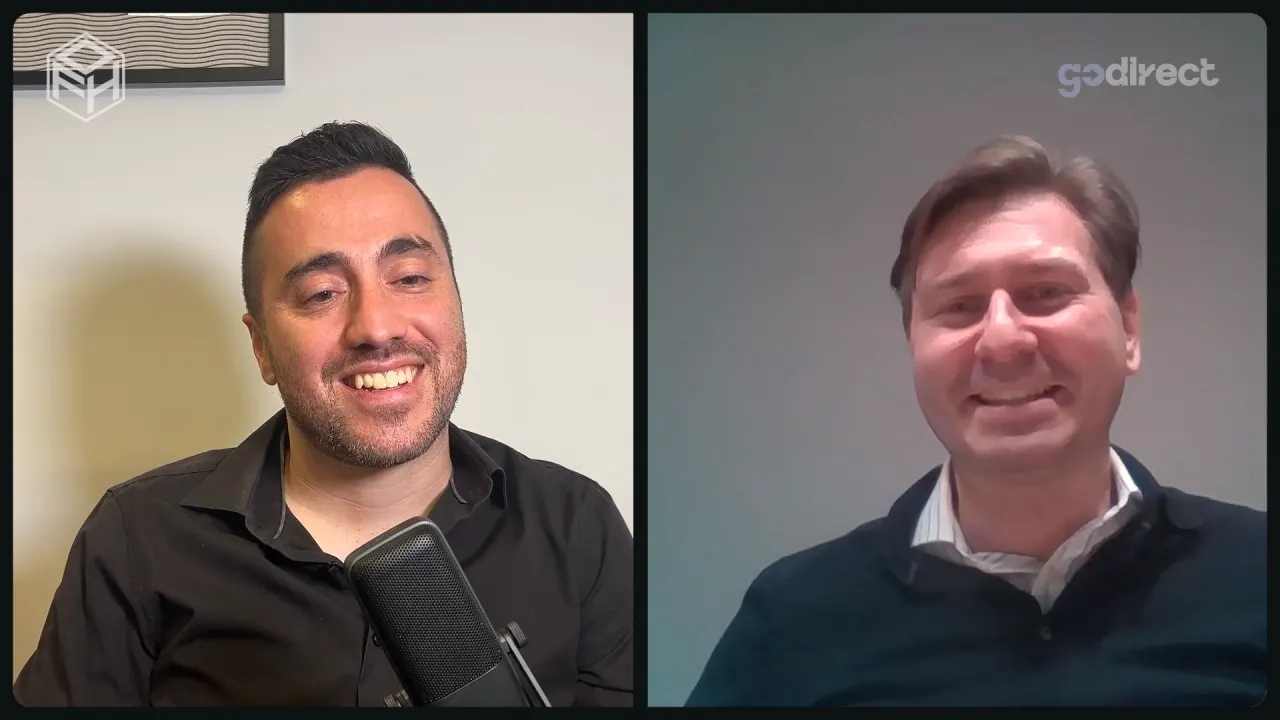
Pierre-Louis Bellanger and Maxime des Monstiers of Capital Hospitality Europe bought La Pérouse, an iconic boutique hotel overlooking the Baie des Anges in Nice, in 2021 while COVID still had the transaction market on hold. They walk through the full cycle: the underwriting that won the deal, the decision to cut the room count from 56 to 53, a full refurbishment delivered in roughly seven months with building costs up 30 percent, and an F&B relaunch that turned the restaurant into a lifestyle offer and added a rooftop barbecue. EBITDA went from roughly 1.5 to 1.7 million at acquisition to close to 4 million at the sale earlier this year.
 Pierre-Louis BellangerHead of Acquisitions & Development
 Maxime des MonstiersHead of Operations & Asset Management
KEY TAKEAWAYS
Fewer keys, better asset
Reducing the room count from 56 to 53 broke the price per key instinct and made the product consistent enough to sell well.
Skin in the game
An operating partner co-invests in every deal and manages the hotels directly, so the underwriting and the daily operation sit in the same hands.
Buy the complexity
The assets worth owning have several levers to pull at once, transformational capex, a repositioned guest mix, and F&B that can carry the room rate.
Leave meat on the bone
Selling with one value driver still unactivated gives the next owner a story to buy into and protects the price you get today.
You cannot be a good investor if you are not a good asset manager.
Transcript
Click a timecode to watch from that moment.
00:00From 1.7 to close to 4 million EBITDA
4
Talking about numbers, when we acquired the property, I think we were roughly at 1.5, million of EBITDA, 1.7. When we sold earlier this year, the EBITDA was close to 4,000,000. So it's been a fantastic, jump. Rarely in your career, you can increase as much the EBITDA as as as we as we did on a, let's say, kind of stabilized trophy asset.
00:43Inside Hotel Asset Management: the case study
11
Hello, and welcome to Inside Hotel Asset Management. This is a future of hospitality podcast. So in this series, we're exploring hotel asset management through real hospitality case studies, and we'll have practical conversations about strategic decisions shaping long term value. Because, of course, that's what we do in hotel asset management. Today, we are going to focus on La Pérouse in Nice. La Pérouse is an iconic boutique hotel overlooking, La Pérouse Anges.
And in this case study, we are going to talk about the acquisition strategy, the repositioning, renovation, and the commercial performance of the, of the hotel. But also, we'll talk about the role of hotel asset management in unlocking the full potential of this asset. Joining us today is Pierre Louis Belanger and Maxime Demostier from Capital Hospitality Europe. And together, we will explore what made this property attractive and which decision decisions mattered most and what other owners, operators, and future hotel asset managers can learn from this transformation. Alright.
02:02Capital Hospitality Europe: two Lausanne hoteliers
26
So before we are going to talk about the case itself, let's start with, an introduction of, you know, these, two gentlemen here. And I would like to hear a little bit as well about the story behind Capital Hospitality Europe. Pierre Louis, would you like to start? Yes. Thank you for having us, Luke. We're very flattered for, of this invitation.
So thank you, thank you for having us and, and being able to comment on this, on our platform and on this, superb acquisition and disposals that we made on, on Le Pérouse. So Capital Hospital Europe is an operating partner to larger institutional investors. So Maxim and I have known each other for, a long, long period of time because we were initially at Schroeder's Real Estate Hotel. So we've known, we've known each other at at this moment in time and decided to launch together, what was initially Catalina Hospitality Europe, which has been renamed to Cattell Hospitality Europe, through the share buyback of Cattellar, who was our main shareholder back in, from 2019 to 2023. I'm heading acquisitions and developments, together with Rodolphe, Rodolphe Frege, and Maxime, that I will let, I will let him introduce himself. He's operating operations, which is, an important, if not the major, of the, of the platform.
Thank you. So hello, everyone. Thank you again, Luc, for for hosting us today. So Maxime Desmonter. I'd, just to give you a bit of background on our two profiles with Pierre Louis. We are both, alumni of Ecole Hotelier du Lausanne.
So we are pure hotelier. And, yes, I'm in charge of the asset management segment, let's say, of Capital Hospitality Europe. As as Pierre Louis said, we are operating part partners. So basically, we we cover the full detention circle, let's say, the 360 degrees of the acquisition to the disposal of the asset. And my, my goal, let's say, or my main subject of, of works are, the the the detention period of the of the asset, unlocking the unlocking the, the performance of the hotel through CapEx, optimization of the turnover, and, also, shrinking the charges with the operation operating charges, let's say, for the, making the, making the profitability the best as possible. Great.
Okay. Thank you.
04:49What an operating partner really means
24
So, Pierluigi, you mentioned something, you know, very important, and I don't think we discussed, this on on on on the podcast before. You said you you consider yourself as an operating partner. So what do you mean by that? Yes. So contrary to pure service providers, we are obviously covering that's that specification of service provider, but we have underlying interest with the, with the ownership. So meaning that we are co investing in each and any deal that we are, envisaging to to acquire, because, one, we, believe in, you know, those those investment thesis that we're working on.
And so we have skin in the game into, into the deals. And we are trying to unlock the value through good acquisition parameters, of course, and through, very dynamic asset management dimensions, which are which can be twofold, the asset management as, you know, property management, asset managing, third party management agreements such as with Radisson or with Accor or with Marriott. So we are overseeing, managers themselves and also through, the the direct management because, most of the hotels that we are we own are directly managed by our, teams. So we've got internal resources to oversee all aspects of the, the the daily managements of operations. Understood. So, and maybe for Maxim.
So, Maxim, the you mentioned that you you're in charge of operations. Is your background, mainly operational then as well, I suppose? Yes, Luc. My full background is made of operations. Once graduate graduated from the Ecole Hotel de La Raza, I, I took over the, the operations for, Louvre Hotel, in the in The UK for roughly three years. I was in charge of 18 hotels.
So I've been always in my career in charge of, country clusters and everything. And when we met with, with Pierre Louis, at Alguinq, which became hotels, I I started there as a managing director of a group of boutique hotels in, in Paris, that we launched with, with Pierre Louis. And, and then I took over the full responsibility of operations and asset management over mainly the franchisee, franchise hotels and independent hotels. So, yes, my full background has been, always in, in operations, managing hotel directors or being myself an hotel manage a a a a a managing director of a hotel group. Great. Okay.
07:54Seven years, 15 hotels, 500 million in asset value
33
And and, Pierre Louis, about about, Capital Hospitality Europe. So what makes Capital Hospitality Europe different from other, you know, operating partners or, you know, these types of of service providers? Yeah. I mean, we are an early stage company, so we're not as established as other, you know, competing, operating partners that may have more balance sheets, than us to co invest in. But we're very sort of newborn, of course, because just seven years of, you know, history is still, early in the asset class. As you know, the the cycle of real estate are fairly longer.
So we we need we need time to grow. But I think within seven years, we've accomplished, so much, and I think, it's fair to say that we are positioning ourselves among the top operating partners in, in Europe. When, you know, those operating partners, have a longer history, probably twenty, thirty years of history, with much, a bigger number of hotels under management. But within these seven years and through the, you know, what has been going on with the COVID, what has been going on with the, interest interest increase of 2022, which is coming again, now at, at at a big, at a fast pace. We've grown the portfolio to 500,000,000 of asset value, which are essentially 15 hotels in different locations. So in The Netherlands, in Belgium, in France, I'm myself based in, in Spain, in Barcelona, and trying to cover that Southern Europe, deal flow when, when, when Maxim is based in Paris and also Rodolf is covering the Northern a bit more specifically, the Northern Part of Europe, based in London.
It's it's it's obvious. And we, we have today more or less 15 people, in the team, and ranging different types of, of services, which are from, you know, revenue management, asset management, technical skills, pure management skills as well because these are, people that have, you know, being involved in operations, start operations before, joining us. So we are a very agile, I would say, new born, but very agile company. Okay. And and if I if I can if I can just add something which makes us a bit specific, I think, and is on the market is that we are also able to address many kinds of, hotels, types, let's say. From very small boutique hotels, like 25 bedrooms, very luxury hotels, such as the one that we are overlooking in the Gulf Of Saint Tropez.
And, and our biggest hotel is roughly 300 bedrooms, in our portfolio. So we can address three, four stars, five stars, hotels, residence. And and, and just to add on the on the profile of the of the teams, it's very important when you give guidance to hotel managers, it's, very important to have credibility. And, and so so we need people that have, a real expertise in both management, finance, and or another topic such as the technical, aspect as, Carlu was Carlu was mentioning. Right? And what I think it's very important from the investment side.
Sorry to interrupt, Luc, but to to be a direct manager of hotels makes us very strong in the underwriting of investment thesis as well. Because we believe that we you cannot be a good investor if you're not a good asset manager or manager direct manager because you know the the full cycle and the full, value creation. Where where is coming the value creation of hotels, by being involved in direct operation on the on a daily basis? And let me add one more thing. We do define ourselves as asset managers, but the reality is hotels are mainly made of stuff. So we are asset managing hotels, but by by asset managing hotels, we are managing people.
So this is very important to have, like, managerial skills to, to run that kind of, of, of business. I agree. That's good.
12:39The perfect asset: several levers, not one
21
And so so tell me a little bit about, you know, if I would be a a hotel owner, so what would be the perfect asset for you guys? So so give me an example, you know, if you're if you're what what what's the perfect asset you you you know, capital utility Europe would like to work on? On? So what what does it have to bring, or what's the typical asset asset you love to work on? Well, I will let, Maxim speak a bit more precisely about, you know, unlocking, what what's the typical value and locking, that he likes. It's very personal.
But on a on an investment side, I would say, you know, transformational CapEx, change of brands, yeah, change of contracts. Basically, big size hotels with different, you know, situations of, f and b outlets to be, you know, reshaped, to be rethink, that are well you know, supporting well the ADR growth of the hotel itself. That's the kind of story we like. It's like when you have, like, a three sixty kind of holistic experience on the hotel, and you can work on all those streams to make to unlock the value. So preference for with preference for complexity a little bit. Right?
So you're not afraid of, you know, something with, you know, a lot of, you know, angles to to look at and and things to fix. Yes, Max. Maxine. No. This is, yeah. I think we do prefer, assets, hotels on which we have several leverage to activate rather than only one.
And what makes us very excited, let's say, with PLV and the rest of the team is, hotels on which we can create value, not extract value, create value. We do love assets with PLRUI on which we can unlock the performance, from the top line through a different mix of clientele, through a CapEx program, through a better revenue management strategy, rather than being a very, line by line on the on the operational charges. This is this has to be done also, but this is much more exciting on a daily basis to work on on creating the value through the top line and because that's also lead the teams, on the hotels and make them much more satisfied of their daily works, let's say.
15:20La Pérouse: the small jewel left alone in a portfolio
10
Understood. And I think that's a perfect bridge to to to our case study here to La Pérouse in in Nice. So tell me a little bit about, about La Pérouse. So what attracted, you guys to this to this investment? You know, what was it with where you said, okay. We can do something here.
Yeah. Maybe I'll give you a bit of context before diving into the asset management, initiatives that we, that we worked on. La Pérouse was a bit of an asset left alone in a portfolio of, an institutional investor that focused mainly on the on the big boxes within this portfolio rather than on the small jewel that was in the in the portfolio. So that's where that's where we we thought there was value to be created, and and and we after probably seven, I think, LOI, we convinced the investor to, to grant us with an exclusivity to buy it.
16:24Buying in COVID with cautious projections
10
Of course, this was during COVID, so we benefited from this kind of transactional environment with assets, you know, are at a crossroad of decisions. So, we jumped on the opportunity when it, when it arrived, and many tried to, to to to to buy it. But, essentially, we had the good pricing, of course, but also, cost of capital, alignment of, the shareholders that we onboarded, the investors that we onboarded into this equity story were strategic investors, with a great appetite for the asset class even though COVID, you know, was there and was kind of frightening frightening elements, to many. So we we managed our way through, this this environment and acquired the, the property at great with great acquisition metrics. I mean, great acquisition metrics. At the time in 2021, there was it was very difficult to project yourself into, okay, what was coming as, like, the next, the the the post COVID phase.
Alright? So this this was this was scary, and it was also scary reflecting in our projections because we would took a bit of conservative, stance when projecting because you wouldn't know exactly at which pace the tourism would come back and at which level it would come back. So there was so we had no other option than to be a bit cautious in our projections when submitting, offers. And then we also calibrated a CapEx program that was based on prior, historical performance of what was the market of of NEICE, and what was the the the the market for, you know, the the performance for leisure assets in in general, which were not as, powerful as the post COVID phase.
18:35The post COVID leisure tailwind
10
Right? Because we've seen this kind of emerging asset class of the leisure asset class post COVID. It's been clearly, at the at the center it's clearly at the center of all investment thesis at the moment because the elasticity that you can find in pricing is within the leisure, guest mix rather than in the corporate mix. So, this we didn't see that coming, and that accelerated our business plan as well with an amazing effect. So we had tailwinds post COVID to play with. So I think, you know, this, acquisition has been very well managed.
We've been lucky in some ways having these tailwinds, pushing the pushing the business plan much beyond, what was our initial projections. And then the asset management's, work of Maxim and his teams have been emphasizing this, this effect. So I will let maybe Maxim give a bit of, of also color of, you know, what what happened there and what what did we find when we entered in into this property and what we made, in in probably eighteen months, two years less than two years, what we've created, and that had clear effects on the performance. Maxine?
20:04What they found: 56 rooms and an underinvested hotel
7
Yeah. So when we bought the hotel, it was, like, 56 rooms, hotel, which was not very consistent, to be honest. We had, like, very dodgy rooms, looking at walls, back walls from, close by buildings. The hotel was, underinvested over the past years, from the previous owner. The teams were, to be honest, not very motivated because, a lot of promise promises were made and were not fulfilled by the previous owners, in terms of investment, I'm I'm talking Mhmm. Mhmm.
So the the the first thing that we did work on with Pierre Louis and the rest of the team was, shaping, let's say, the CapEx investment plan for to make it the most efficient possible.
21:00Cutting the room count from 56 to 53
6
We made a very strong decision, which was reducing the room count of the hotel. This is not something very usual, let's say, in our business because we usually sell or buy the hotel by also a figure by room, a number by, a number of euros per room. So we decided nevertheless to, reduce the room count to 53. So we're using by three just to make it much more consistent. Already thinking about the disposal of the asset, saying that when we will sell the asset, the the hotel will be much more consistent, versus the situation in which, we found it when we acquired it. So we decided to run, the the transformation on the hotel on mainly two aspects, a CapEx plan and, and making the F and B profitable, which was not the case in the, in the previous, years, let's say.
21:58A seven month refurb with costs up 30 percent
18
So, for the CapEx program, it was tough because as we already said, all the prices and all the crisis with which, with the with the COVID, made all the prices, from plaster to screws and everything rise up to, by 30%, let's say. So the so so we had to make a very efficient CapEx plan. We chose a a good team of designers, to be honest. That was their first hotels. But we and they were mainly, dedicated, in F and B outlets, which were very successful. So we decided to make the hotel a very boutique hotel, not a massive one, a boutique with 53 bedrooms, but targeting individuals that we are not looking for to be seen, let's say.
If they want to be seen, they go to the Nicholas Cove or some or to other places. So we wanted to have the second gem, a hidden gem in Nice, overlooking the the the Belle D'Ange. So we we we did a a a full CapEx ban. We did refurb the full hotel with a lot of, defensive CapEx, meaning, like, very technical aspects and everything, during, we made it in, roughly seven, seven months. So it it has been to be an a a very tough period. And we did also work very, closely with the team of the hotel in order to make the FNB, as I was saying, very efficient and and very, redeemable, let's say.
So we wanted to have, F and B, selling, to the client, something that reflects NICE and the and the French Riviera. So we had, like, a a lot of, of dishes to share and everything. And that has been a success. It has been a very difficult, CapEx program and transformation of the hotel due to the complexity of the asset because the asset is not, on the on the Promenade Des Anglais. It's a bit above. So we had to, we had to, to run a transformation with, many, many operational, difficulties, let's let's say.
24:16Opening two days before the Monaco Grand Prix
4
But, but we did it, and we did open just prior to the Formula one Grand Prix of Monaco, two days prior to the Grand Prix. So it would have been a nightmare if we were not ready, But we were we we've been ready. And, and then as, Pierre Louis said, a combination of, a good FNB product to attract the locals. So a good product as, you know Talking about the FNB.
24:43F&B relaunched as lifestyle plus a rooftop barbecue
34
So is it, did you change the concepts, or did you, you know, add a Yeah. We changed we changed the full concept. Yeah. We changed the full concept going from something that wanted to be a luxury style, in the previous years to something much more not affordable, but much more convivial, let's say. How would you say that in English? So More lifestyle.
More friendly. Authentic. Yeah. Lifestyle. So in order to both attract, as I was saying, the locals and the hotel clients. And we did recruit a very good chef.
He did a super job. We did recruit the, the the full team and and, and, and we did also create an outlet on the rooftop of the hotel, which, was hosting once per week, barbecue or, barbecue event with privatized tables and everything. And that was, one of the, most viewed, let's say. That's that was a very instagrammable, offer, let's say. We we had a lot of good solution. Proposition of the account.
Yeah. Exactly. The the the so, yeah, the the the f the F and D was, was profitable and very, very profitable when we, dispose the asset. So combination of good F and D product, good, repositioning, very good strategy in terms of revenue management and sales and marketing distribution, plus, remotivating all the teams, behind that, behind that goal, plus as, can we, was saying, the tailwinds of the, of the market, that made the the the good combo, let's say. Right. So, actually, it's, you know, thinking about about this strategy, very often as an hotel investor, you're trying to think about, ways how to increase the room room count.
And you guys did the opposite. You you reduced the room count. You're thinking about, you know, how can we maybe concentrate, the food and beverage operations a little bit. So maybe trying to to combine one or two outlets or, you know, closing an outlet even, but you guys added an outlet. So that's this is it's it's it's quite a bold, strategy. So very, very innovative.
So congratulations. I mean, this is, that's fantastic. Because, you know, I've been looking a little bit about, you know, at at at at the results here. And, yeah, you wanna you wanna share a little bit about, you know, how how how successful this strategy in the end was?
27:31EBITDA from 1.7 to close to 4 million
8
No. It's true. It's talking about numbers, when we acquired the property, I think we were roughly at 1.5, million of EBITDA, 1.7. When we sold earlier this year, the EBITDA was close to 4,000,000. So it's been a fantastic, jump. Rarely in your career, you can increase as much the EBITDA as as as we as we did on the, let's say, kind of stabilized trophy asset, because this hotel was iconic in this, was, echoing, to a lot of international guests, US guests.
So, yeah, it had already equates reputation on, on the on the market, but was just not needed a needed a boost. So so that's what we've, that's what we've made.
28:29Selling at close to a 6 percent yield
10
And yeah. So we we sold earlier this year on this crazy EBITDA figure that enabled us to, you know, because when you look at the price per key, then very often when it reaches, like, you know, those those above 1,000,000, per key, Very very often, you don't get the yield for that price. Right? But here, the story was very different because you you would offer a close to 6% yield to the investor. So maybe we've not sell high enough. That's another question.
But, you know, we thought it was a good moment to, to sell off, to dispose of the asset. And I I think we've been right in doing so because just an instance after we sold there was this geo geopolitical crisis in Iran, and, you know, it could have impacted, clearly the the the disposal, process. So, again, we've been lucky in the cycle because we acquired with very good, parameters in 2021. I've, I've I've done a fantastic job on the asset management, benefited from this post COVID tailwinds, and and sold, and we sold at the what we consider is the very good momentum and the very best moment.
29:53Holding one more year to settle at four
15
So within a biz a business plan that has shortened because we were supposed to keep the assets a bit longer Mhmm. In the business plan. So we sold and we even thought about selling one year earlier, but we thought, okay. Let's take the risk to really consolidate that performance and increase it instead of selling on a, you know, 3,000,000 EBITDA. Let's reach let's reach four, and let's let's settle four. So we had also to convince our, investors to to stay with us for one more year when the the the, you know, the sales proceeds that would have come out from the sales process one year earlier would have been amazing.
But we did even better by waiting for another year, which is which is also very, normally in, you know, this private equity environment, you would extract the value as as as as as early as possible. And, you know, you know, Luke, before you you were at DCP, you know how these people do things. So this this is the same environment we were in. So we had a family office, but very financial family office in the shoulder together with a private equity fund. And they and they listen to us to keep the asset a bit longer. Yes.
Indeed. Now I can imagine that must have been a little bit of a tough sell, but, in the end, it paid up very well for them. So that's that's great.
31:27The KPIs: RevPAR, reviews, staff retention
20
Maxime, so what what were the, you know, what are the KPIs, you know, you are most proud of? You know, if you think about measuring success and and what you achieved in this hotel, which KPIs, you know, is there something you can share with, with the audience here? What are the KPIs? Well, basically, first, the the the level of EBITDA that, Pierre Louis was mentioning. That's one of the one of the one of the best KPIs, I think. Yep.
The the second one would be, the level of, revenue per available room, which was above, again, as a clarification, the La Pérouse was, classified four star hotels. And we did overperform quite a few five stars on the destination of this. So, that was something we are and we were very proud of. The level of quality, the grading on booking.com, Google reviews and everything, which was, like, up to the stars. We were very proud of that. And, and something we are also very proud is the staff retention because, in that kind of, in that kind of assets, when you, made when you make your own notary on, on quality, you, you you you, as Pierre Louis was saying, the the was already well known in the on The US market, and people were coming back also for the attention of the staff and everything.
So when you keep the, when you have a good staff retention, that has also its benefits, in term of, create creating consistency in the, in the welcoming of the guest and, and and and and getting a lot of returning guests. So, those, those indicators were, very satisfactory to be, to be honest. Yep. So and now thinking back, you know, because, you know, you you we completed the full cycle here. Right? So we we we or you you bought the assets.
You came up with initiatives in order to increase the performance that was implemented, the CapEx program, and then, the investor sold the asset, in in, you know, recently. So so, but thinking back, you know, to the whole process here, is there something you say this this is something, you know, we should have done differently or, you know, something for for for the for future projects where you say, this this is something we we could have done better or differently?
34:11Leaving meat on the bone for the next owner
13
If I may, I think it when you say it's very important to leave a bit of, meat on the bone for the next investor to project itself and and get a sense of, okay. I'm I'm taking ownership of the it's not the pure legacy. Of course, it's buying a legacy of things that have been, done in history over a hundred years because this hotel had, like, been it was opened in in the thirties, in the nineteen thirties. So, you know, it was a historical asset. So as as Maxim was mentioning, there was some you know, we started to open an outlet, but on more events orientated, formats rather than, like, full, 24, not 24, but, you know, seven days a week kind of open outlets. So that wasn't the case.
That was the next kind of step we were, starting to to consider. We wanted first to consolidate the current performance and then leave those things a bit for later. And there was, like, technical aspect that were very hard to, to navigate because you would have you would, you would require the authorization of the municipality to open a backdoor and, and have guests, public guests, escape in case of, you know, fire, in case of you you need your escape routes to be, to be clear. So there was different technicalities that would prevent us to open, seven days a week. But that was the intention, and that was the the story also that we, that we gave out to the market, which was very palpable because there was already an exit route, that was just closed because for some reason in political, political matters, but it was just a matter of exploring further, those those those value creation, drivers, which which we left for the next acquirer as meat on the bone again. And together with a great running yield, entry yields, is because 6% on a on an asset On such an asset is already a very good, profitability ratio.
But but, potentially, you would you could increase it through the activation of those value creation and drivers.
36:42Advice for hotel school graduates
38
And, alright, we have a few more minutes left, four or five minutes. So, maybe let's talk about a few more, you know, general questions here. So, congratulations on on La Pérouse. I think, you know, you've guys you guys have done an amazing job here. If you would, you know, give advice to to young, to to people who are, you know, finishing their hotel school? I mean, you've both we've the three of us, we've been to, I call it the.
So what would you give, as an advice for people just finishing their their studies? What what would you say in them? Because, you know, I have that question a lot. You know, I'm finishing my hotel school. So what do you think, is is the, is the best next step if I want to be working in hotel investments or asset management? Maxine?
Maxine. What do you think? I think the there is a small difference between investment and asset management. So I'll start with the asset management, and I will leave Pierre Louis, finish. As I as I am always saying, a school, maybe maybe more hotel school, I don't know, but hotel school at least, give you all the tools. And then you need to practice the tools, let's say.
So I would suggest to anyone finishing a hotel school, wanting to, to go into asset management. As I was saying before, I think into asset manage, it's you need to get a bit of credibility, to be honest, either on finance, either on distribution, either on revenue management, either on the on the on management, a department on a on a hotel. So I would suggest to anyone wanting to go into the asset management in hotels to practice a bit, get a bit of experience into the hotel, into a hotel or a a cluster of hotels, because then, it's much more easy and and smooth, let's say, in order to, to to to move on to the, to the asset management. So, yeah, get get get gain a bit of, gain a bit of experience on the on the field or or at the headquarter of, hotel group, let's say. Yeah. And I would I would maybe add, definitely do a three sixty of operations before considering any, any asset management.
But also look at who is the, what what's the ownership? Is there a degree of, no exigence requirements, professional professionalism that would, you know because being raised in operations with the demanding ownership is the is the best gift you can, you can offer to yourself because you would have the proper management above you. You would have the proper, you know, reflex and and and tools to, to navigate through demanding operations and then shifting towards asset management. So always look to just don't just look at hotels themselves, but look at what's behind it and what's what is making what's the capital behind it, how is the how's the capital steering operations, and and imposing this kind of demanding environment, professional environment because that's that's key to your, to your career and and just, like, your, natural benefits. Fantastic. Thank you very much, Pierre Louis.
Thank you, Maxim. Thanks for joining joining us here today and sharing the short the story behind La Pérouse. This case study was really a very strong example of, you know, how asset management connects with investments. I thought that was, that was that was really fascinating. Thank you very much. So thank you everyone for watching or listening to the, Inside Hotel Asset Management podcast, which is part of the Future of Hospitality series.
If you like this conversation, please follow, the Future of Hospitality podcasts and, subscribe to the series. And now I'm gonna say bye bye to everyone, and I'll see you in the next conversation.

