

















 EPISODE · 28 MIN
How a hybrid lease creates hotel value: the Tivoli Oriente case
Adrian Flück co-heads hotel investment at Invesco Real Estate, which owns 34 hotels across Europe, every one of them held on a lease rather than a management agreement. In this conversation he uses the Tivoli Oriente in Lisbon as a case study: a 2019 sale-and-leaseback with Minor Hotels, a hybrid lease that pairs a minimum guaranteed rent with a turnover top-up, a partnership that held through COVID, and a two-phase refurbishment of rooms and corridors that lifted rate and performance. Along the way he explains the FF&E reserve and the demarcation list that decides who pays for what, how ESG runs on BREEAM, GRESB and measuring every kilowatt-hour, and when an owner decides to exit or keep holding.
 Adrian FlückCo-Head of Hotel Investment, Invesco Real Estate
KEY TAKEAWAYS
Leases shift the operating risk
Under a lease the tenant owns the operating company and the employees, so the landlord carries the building, the rent and the turnover, not the day to day.
Hybrid leases capture the upside
A minimum guaranteed rent protects the downside while a turnover top-up lets the owner share in a hotel that performs.
The demarcation list ends the who-pays fight
A clear list splits refurbishment between the tenant funded FF&E reserve and the landlord technical works, here close to fifty-fifty and without argument.
ESG runs on measurement
Collecting 100 percent of energy data and benchmarking with BREEAM and GRESB turns sustainability into an improvement you can track month by month.
It will not change your ADR, but it helps with your tenant engagement and your employee satisfaction
Transcript
Click a timecode to watch from that moment.
00:00The value that never shows up on ADR
5
We have just fully refurbished canteens, changing rooms, things which are not necessarily adding value on the first site because it's not guest facing. It will not change your ADR. It will not improve your occupancy. But it helps with your social and with your tenant engagement. With your tenant engagement, but also with your employee satisfaction.
00:31Inside Hotel Asset Management: the format
11
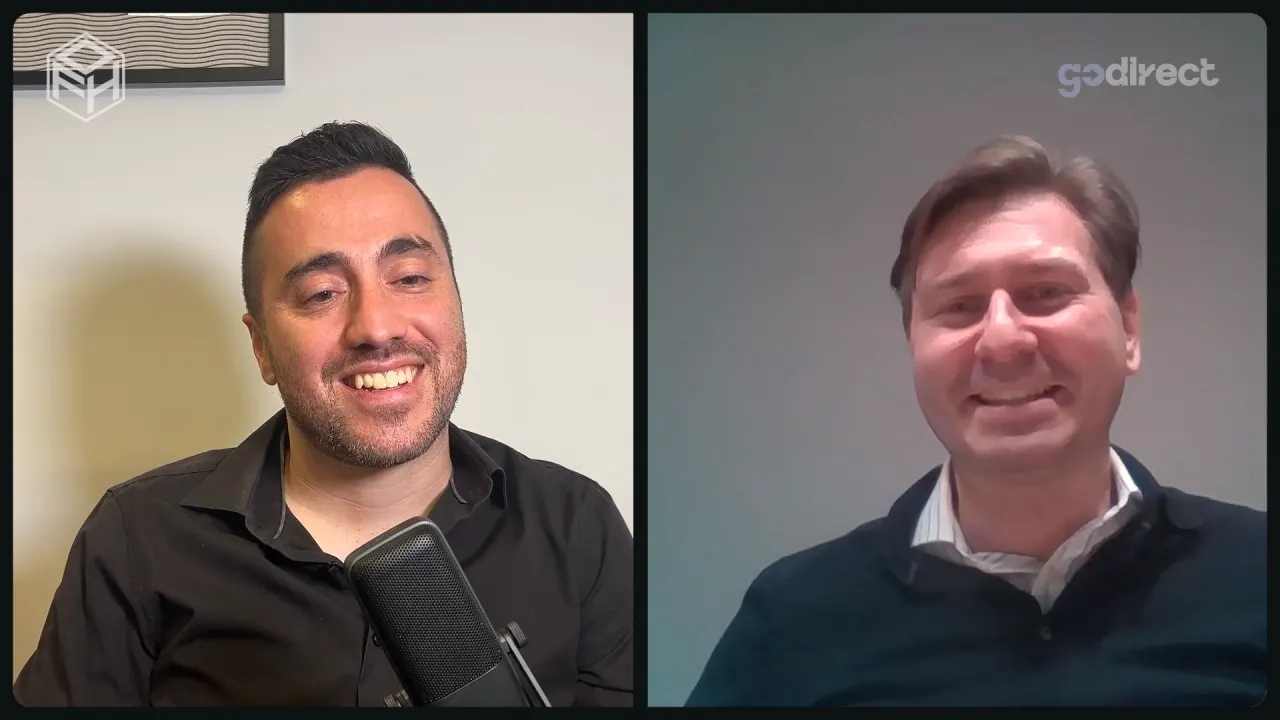
Welcome to Inside Hotel Asset Management. We are a future of hospitality podcast. So in this series, we explore hotel asset management through real hospitality case studies. And we'll have a practical conversation about strategic decisions and, more importantly, in how creating long term value for hotels. So today, we have Adrian Fluke, the co head of hotel investment at Invesco Real Estate with us. Hello, Adrian.
Hello, Luc. Great to see you. Yeah. Good to see you too. Thanks for having me.
01:08Meet Adrian Flück and Invesco Real Estate
19
Thank you. So maybe you can start with, you know, introducing yourself, how you started, you know, in this beautiful business, and talk a little bit about Invesco. Yes. I'd love to. Look, I said Adrian Fluke. I'm with Invesco now for, eleven years.
I haven't always been at Invesco, and I haven't always had the same role. I've grown from asset management, into my current role as co head of hotel investment. Previously, I was on the advisory side. So I started my career with, CBRE and GEMSLANG LaSalle going through the the advisory school before joining, the owner side. Just for background, I'm a I'm a graduate of, Eco Hotelier de Lausanne, and that's where my hotel, career started. At Invesco, I overlook, Invesco's hotel investment strategy.
We currently own 34 assets across Europe. And I think what's quite particular, at Invesco, we own all of these assets and subject to lease agreements. That said that in all of these hotels, we have either lease agreements directly with hotel brands or with intermediary operators who then have the franchise with one international and international brands. But maybe we can come bit more detail to that later, but that's sort of as as as an outset of what Invesco is. Invesco globally, you might have seen or might know as a global independent investment manager active across the ETF space and and other financial sectors. But my focus is solely on on real estate and particularly hotel real estate.
Okay.
02:56Why Invesco owns hotels on leases, not HMAs
8
And I think, so very interesting, you know, with Invesco is that, you typically have leases. So, you know, in previous podcasts, we usually talked about HMAs. And, of course, you know, there's a big difference between an HMA and and a lease. So, and that's why I think it would be a good idea if we can discuss one of your recent assets you worked on, and you can explain us a little bit how you can create value through, you know, assets with a lease. So, I think you were planning to tell us a little bit more about the Tivoli Oriente in Lisbon. Right?
Indeed. Actually, that's that's the case study I prepared for today.
03:44Lease vs HMA: who carries the operating risk
10
Okay. But maybe let's just take one step back when we talk about leases and maybe that's just, for the audience, quickly show the difference between an HMA and the lease. Right? So in the lease, we we the tenant, our tenant leases the entire building from us, and there is various ways of of these leases. Right? But in general, what we can't carry is the risk of employees.
Right? We can't own employees because that's due to capital restrictions, from our side. And as such, the operations is solely owned or the operate the operating company is owned by our tenant. And our tenant is, is operating the assets on a lease agreement.
04:33The hybrid lease that creates value
7
And lease agreements can take various forms. They can be fixed, they can be fully variable, and they can take a hybrid form. We typically at Invesco, we like the hybrid leases because exactly to Luke's point, this is how we can create value because we have secured income through a minimum guaranteed lease, and we receive a top up through variable as such, we can participate in the success of the hotel. But our downside is protected through a minimum guaranteed rent. Okay. So that's that's how it's set up.
And it and that's actually very much the case for the the Tiburon, the the the case study I prepared for today.
05:16Tivoli Oriente: a 2019 sale-and-leaseback with Minor Hotels
12
We acquired this asset in 2019, and, actually, we did a sale and leaseback, meaning that we bought the asset from the company who was gonna be gonna become our tenant. And in that case, this was Miner. So Miner, as something you might know is a global hotel operator and owner, and they have sold this asset to us, take it but leasing it back at the same time with a long term lease agreement. That lease agreement is is set up as with a minimum guaranteed rent plus a variable component on the basis of turnover. Okay. So that's a typical sale and leaseback situation.
Right? Exactly. I mean, that is or a sale and manage back or whatsoever. You can do that in various forms, but in our case, it's a lease back because the sub the company who sold it to us remained as a tenant in place. And, we have secured as such, secured the building to their brand for the long term. Got it.
06:22Why Lisbon was the right market to enter
10
And so why why do you think, you know, that Tivoli Oriente was a, you know, an attractive acquisition? Why exactly that hotel? Well, at the time 2019 and still today, Portugal is somewhat a fragmented hotel market with very little institutional product available. And in an institutional product, I mean, a hotel with a long term lease agreement or a long term HMA, Few of these are still very few of them are present in in the market. And as such for us as an institutional investor, it was an opportunity to enter a growing hotel market. And, Portugal has been on the rise and Lisbon in particular has has seen a lot of growth over the past years.
And, we were fortunate in 2019 to acquire these assets to benefit from this growth. I think Lisbon is not the same place as it was ten years or even six years ago. And, yeah, for this, this was an an ideal opportunity to to enter this market and at the same time securing a long term lease with an established and institutional tenant such as Miner. Okay.
07:32COVID, the tenant partnership, and a full refurbishment
14
And so tell us a bit more about the business plan as such. So Well, the business plan for the asset 2019, we entered in a market which was which was growing very fast, which was growing well. And there was a few things that during the diligence that we had to sort out and which we did very quickly in the first couple of years. Then as we all know, the COVID pandemic hit and the hotel market for a couple of years looked very differently. Thankfully, with Miner, we have we have a long term partner, which we've done various deals in the past, and we have very found very suitable arrangements during COVID for both parties to ride through these challenging times and come out and come out much stronger at the end. And, we've done couple of investments and during that COVID period and afterwards realized that actually, it was time for a bigger refurbishment.
And so, over period of about nine months, we've been planning heavily together with the tenant, a joint investment program into the asset and, and then executed, in two phases, a full refurbishment of the hotel, both rooms and corridors. And, yeah, now are riding and and and seeing an uplift of rate and performance on the back of this and have seen a lot of improvement on the guest satisfaction through the new room product and are are very delighted. So that's that's where we are in the cycle for with the asset at the moment. We are analyzing various opportunities, whether it's a time to bring the the asset on the market and exit or to keep holding it, and to continue, benefiting from the upside, which now is coming through through the variable rent. Right? Since we have a variable component in our lease agreement, we are now fully benefiting from the increasing performance, through the refurbishment.
That's where the value Which was the motivation for the refurbishment. Yep.
09:42The FF&E reserve and the demarcation list
22
Right. And so about the the refurbishment in a lease situation, so would you as an owner pay for everything, or would there be a portion paid by the, the tenant? Well, as as in a as in a HMA, right, you have an FF and E reserve in a lease agreement. The difference is that in a HMA, the the the friend the the FF and E reserve is money being put aside from the owner's cash flow. Right? It FF and E reserve is actually the owner's money, which is is put into a bank account and reserved for refurbishment.
And in the lease, because all the profits of the cash flow, of the hotel after the rent payment is towards the owner to the tenant, right, this is actually the FF and E reserve. It's sponsored by the tenant. And as such, when we've invested into the asset together, we have utilized some of the FF and E, which was it's a clear clearly defined what for. There's so called demarcation list in our leases, which identify which part of refurbishments on the buildings is within the ownership and responsibility of the tenant and which ones are the landlord. And so we have very clearly been able to set out, which part is funded by the FF and E reserve and which part was funded by the landlord, which concerned mainly installations, technical equipments, etcetera. And so we went into this refurbishment with nearly a $50.50 balance who was paying for what.
And, yeah, and there was never any big discussions about about who had to pay for what. This is thanks to a clearly defined demarcation list. So this demarcation list, that's really one of the main, you know, differences as well between a lease and a, and an HMA. Indeed. Because, yes, as you rightly said, exactly in a in a in a in a h in a HMA, everything is paid for by the owner. Yeah.
Right? Be it from the FF and E reserve, which is their money. At the same time, anything which is technical is also the owner's responsibility. Yep.
12:00ESG in practice: BREEAM, GRESB, and energy data
26
Okay. And, Adrian, we have a lot of discussions in the past about ESG, for example. Right? So, you know, you are probably one of the most knowledgeable persons in our industry I know, you know, to talk about that topic. So how important is ESG, you know, in your investments and maybe in particular to the to this hotel? Look, I think ESG is is playing an important role.
I think we've we've we've come a very long way from I remember our discussions pre COVID, right, when we were talking about ESG and how to tackle it. And I think the industry has come a very long way from where we were before. I was yes. I put a lot the very beginning of this movement, I was very vocal about it, and I had a very, interesting role also to be able to to push that topic and, and get us to where we are today. At Invesco, we we really use ESG, and are now at the level where we are in the first quartile across our competitors. We have very good results across the various benchmarking platforms, such as Pressby for our funds.
And we take pride in that for all the hard work we've done. What really is the importance is what our clients, at the end of day, require. And the focus for us is really on on being in the top when it comes to our competition and offering our the best the better improving the assets to the highest standard. What we use as a tool, is across our real estate is BREEAM. BREEAM is a certification, that we use to benchmark our portfolio and to measure our improvements, across across a period of time. And as you know, Europe is not is not the same all across different jurisdictions, just different regulations.
And as such, we have found in Brienne a certification or a measurement tool, which allowed us to to bring all assets on the same level. Right? And from that basis, we can then show our improvements going forward. We are also proud that we now collect 100% of all the energies across our hotel portfolio. So we we measure on a on a platform. We collect all the energy consumptions across all our portfolio.
And as such, we can measure directly on a day by day or a month by month basis our improvements through, the investments that we're taking or the technical improvements. So that's that so that I mean, that's good, you know.
15:01The social side and green lease clauses
26
So but so this is really about, you know, measuring the consumption, the energies, or I would call that, you know, the e in ESG. Right? So how important is the is the s, you know, the social part, and how do you measure that? The social is an important part. And when it that's a little bit different to a lease than to a HMA. In a lease, the the employees are very much with the tenant.
Right? Yeah. So that's where we apply the pressure or we this in our one to ones with our tenants, we ensure that they take care of their employees. Right? That the social part is is looked after, through the tenants. And our tenants, they all have, employee engagement programs.
They do surveys, and they they, from time to time, also share that information with us. At the same time, we can support our tenants and we have done that in the past by strategic investments into the social areas of the building. Right? We have just fully refurbished canteens, changing rooms, things which are not necessarily adding value on the first site because it's not guest facing. It will not change your ADR. It will not improve your occupancy.
But it helps with your social and with your tenant engagement with your tenant engagement, but also with your employee satisfaction. And so that is where we can where we can support and we play we place a lot of emphasis that our tenants are professional operators and that they are, paying attention to their employees' satisfaction. Do you do you typically have an also clauses in these lease agreements, you know, which cover ESG, for example? We we we certainly look to include clauses. I think that's it's a very important aspect, and you hear that across, all and real estate classes that, that green clause, so called green clauses are getting more important and are being are being highly viewed when they are included. And these green clauses can start with energy consumption to reporting certifications.
Also, it can also cover aspects such as the social aspect where certain employee satisfaction, reportings, etcetera, are required. Okay.
17:24Reading the market: when to exit or keep holding
41
Alright. And so my next question is about so you you bought the asset, you know, you have your business plan, you renovated it, you see that the variable part of the rent went up. At what moment do you think, okay, now is a good time to go to the market and to exit? You know, what is that? What's driving that decision? You know?
I think obviously we have an underlying business plan when we bought the asset. Right? That was a certain whole period and that can that can be a trigger. Right? But it's also understanding the investment market at the time. Right?
You need to be able to be flexible to to preempt a sale or maybe to push back a sale given the investment market. And, the investment market is not an easy one at the moment. Right? I think we we we know where the interest rates are not there, where they were 2019. Right? And the the the buyer pool out there at the moment is looking for opportunities of growth.
So stabilized assets, core assets are difficult to sell at the moment or is particularly at the prices that you're looking for or that you might have had in your original underwriting. And as such, it's it's diff it's a it need requires a careful assessment of of your portfolio to understand where we can sell a business plan which continues to grow and show value increases where whereas you might sell an asset which is stabilized and and identifying the right the right parties that could could look at this investment. So it's it's not a very easy environment at the moment, and it requires very careful assessment. Okay. And just so so I'm just thinking about, you know, so I suppose at one stage when you decide to to sell, you're also trying to think about, you know, how the next owner can can create value. And but but so how do you determine that?
You know? So how do you determine when is, you know, what what you could leave, so to say, for the next owner? Well, I think that's it's not every not every asset that offers that. Some assets do. And, and And maybe some some owners might be interested in just the long term solidly. It depends on the owner on the Absolutely.
And I think that's what I meant with the assessment. Right? You need to understand who's out there in the market. Is there the appetite at the moment for a stabilized asset? Right? Or do I sell an asset which, as you rightly said, there is an extension opportunity.
Right? Like, for example, at Tivoli, we we at Oriental, we have the opportunity to extend the building, the floor area, and that could create that can create additional value. So do I provide this to a future buyer so that he can actually lift and improve his his asset value through a moderate investment in the short term and create more, value in the long term? And this is really the important assessment to understand who is out there in the market, what the capital is currently looking for. Are they looking for long term income stabilized, or are they looking for opportunities and projects where they can drive value?
21:07Hold period and looking back on the plan
35
Okay. You mentioned the hold period. Is there like a typical hold period for Invesco or is, you know, more Well, I think our general hold is between seven to ten years, our base business underwriting, but it depends also again on on the type of capital you have available. Right? If you some some capital look for IRRs, total returns, and higher total returns. So they look at the shorter window.
You come in, you refurbish, you reposition, you sell. Other capital sources look for longer term holds and income, and they look at business plans 10 plus. So that really depends on the type of capital that you that you represent. Okay. And so to close the the case study on, the Tivoli, orienting Lisbon. So is there something you would say you would do different today than, you know, what you initially planned or something, you know, you would say might have needed, you know, a different approach?
Or did the whole were you able to implement the business plan exactly like you initially planned? Well, I think that the business plan had a lot of hiccup from from within the very first period. Right? Like, the moment COVID hit, everything makes upside upside down, and and you you live from one week to the other because regulations changed, and and you had to be very flexible. I think what we really are proud of is is is the relationship with our tenants. Right?
We had a very strong relationship, and we've had the open dialogue, and we found found very good, arrangements during COVID. I think that looking back, it it hasn't always been easy. We've been able to be flexible towards our tenant, but we've been paid back everything that we deferred, very quickly because the market also, required very quick very quickly. And, I mean, Lisbon was one of the markets which boomed after our COVID. Right? We've seen revenues increase by 30% compared to 2019.
So all of it, which was deferred or delayed in in payment, we we gained back very quickly post COVID. Not every market in Europe reacted the same way. If you look at Northern Europe, this has been more challenging. Southern Europe has certainly been blessed with, with a lot of demand post COVID and that focus on leisure. And as such, I think many many things worked out, very well. And I wouldn't necessarily change anything what we've done until today.
Right? I think, maybe we could have pushed some of the refurbishment, a bit quicker, and and anticipated some of the works. But it is what it is today, and, we're finalizing some of the the corridors as we speak and, look forward to to the future growth of this asset. Well, thank you very much for talking to us about this, you know, fascinating case study, and congratulations. I mean, that's a that's a that's a good that's a fantastic job.
24:25Career advice: put in the hours and stay curious
48
Maybe now a little bit more I have a few questions more in general, you know, because a lot of our listen listeners are students. You mentioned that you went to Ecole Hotel Rosanne, like myself, which is great. But, you know, there's a ton of very, very good schools out there. So what would you, you know, tell students nowadays, you know, to students who want to go into asset management, what advice would you give them? I've what advice, Georgi? I'm also, as you as you know yourself, also part of the mentor program at at HAMA.
And what I tell, the mentee has always, I really enjoyed my advisory career. Right? And it you have to put in the hours at the very beginning of your career because that's where you learn the most. Right? It's, it's difficult to find, opportunities on the owner's side very early on in your career because what you require is experience. And the only experience you can gain is through being out there in the market and seeing as many things as possible.
And for me, doing the advisory work at the very beginning gave me access to many markets. Today, I overlook 34 assets. When you are an advisor, you look at a 100 projects or more a year. Right? You very quickly see a lot of different business plans, a lot of different, assets. You understand markets.
You you do research. And still today, I benefit highly from from these experiences made at the time. I have a basic understanding how the different countries and cities work, etcetera. And, that has been very, very beneficial. And so my recommendation is always take an opportunity, which which allows you to see many things, in a short period of time and, and and do the and do these extra hours, which which you will then benefit from at a later stage in your career. And are there particular skills you think students should develop in order to to be successful in hotel asset management?
I think there is obviously the typical skills you've been taught at school through financial, etcetera. But I think it's also being being open and curious, being welcoming, managing these, or looking to nurture these relationships with your partners, with your peers, building a network. Yeah. And, and going through the world with an open mind and, and friendly approach so that you can soak up as much information as you can. Because I think as an asset manager, you have to be open and you have to be willing to to share ideas, know how. You have to be able to speak to your general management manager in in any hotel, be it on the lease or HNA openly understand the challenges, understand, be open about their sorrows and how you as an owner can support them in in improving improving them.
I think it's it's so versatile. And I think maybe even in a HMA even more because you are you're exposed to operations, to the employee challenges, you're the full the full suite. Right? Whereas in Elise, my focus is really on on turnover and rent being paid and the building, etcetera. But on a HMA, if you're on the owner side on a HMA, you are exposed to to all the challenges that you're faced. And I think you have to be very open and curious and and and willing to listen.
I think, you know, I like a lot that you mentioned curious in the beginning. Right? That's, you know, and, you know, we've been both on the mentoring program from, from HAMA, the hospitality asset management association, and that's exactly, you know, what I tell my mentees as well. Right? Be curious. Ask questions.
And and I think the you know, one of the main skills of a, you know, a good and a and a and a and a great, or the difference between a good and a great asset manager is sometimes also how you ask the questions. Right? So first of all, I think it's very important to try to understand, you know, what happens, what is going to happen in the future, how is the business working. And I think that curiosity is a is a very important point for for students, but also for asset managers. Right? So that's, that's a good point you made there, Adrian.
28:58Close and thanks
10
Okay. Well, thank you very much. Thank you, Adrian, for having this discussion. I thought it was very, very interesting. So thank you, everyone, for watching and listening inside the Hotel Asset Management podcast. And if you enjoyed this conversation, please follow the future of hospitality.
Subscribe to the series and you you can, of course, always share it and talk about this series amongst your colleagues or friends. So I will see you next time in the conversation. Thank you, Adrian. Thank you, Luke.


