
















 AFLEVERING · 41 MIN
De onderschatte kracht van goede receptionisten
Emma Wunderink laat zien waarom training in emotionele intelligentie de hotelreceptionist tot echte sterspeler van de gastbeleving maakt. Ze gaat in op emotionele intelligentie, upsell-strategieën en hoe hotels de check-in in iets magisch kunnen veranderen, zelfs zonder groot budget.
 Emma WunderinkManaging Consultant
BELANGRIJKSTE INZICHTEN
Receptionisten als omzetmotor
Train receptionisten om bij de check-in voorkeuren en context van gasten te verzamelen. Hun kennis voedt gepersonaliseerde verblijven, legt upsell-kansen bloot, verhoogt de omzet en bouwt loyaliteit op door kleine, specifieke acties.
Geef alle medewerkers ruimte om te handelen
Geef elke afdeling eigenaarschap om op signalen van gasten in te spelen, niet alleen de receptie. Kleine gebaren van housekeeping of de technische dienst, mogelijk gemaakt door heldere richtlijnen, creëren memorabele momenten en verbeteren het moreel en behoud van medewerkers.
Train op emotionele intelligentie
Combineer SOP's met training in emotionele intelligentie, zodat receptionisten zich kunnen aanpassen en tegelijk consistentie waarborgen. Leer ze gasten te lezen, creatief en commercieel te denken en zet vervolgens automatisering in om tijd vrij te maken voor echte connecties.
Een goede receptionist begrijpt echt dat zij degenen zijn die alle informatie uit een gast halen, wat leidt tot een goed verblijf en waarmee je upsells kunt herkennen.
Transcript
Klik op een tijdstempel om daar te kijken. De opname is in het Engels.
00:00Introductie en achtergrond van de gast
10
Emma stelt zichzelf voor en deelt haar passie voor luxe hospitality, gevormd door de loopbanen van haar ouders in de branche.
Emma WunderinkAll those things combined actually make a really great receptionist. So emotional intelligence, really be able to read who you have in front of you. Does the guest need a lot of attention? Do they just want a quick check-in? Are they staying here for business?
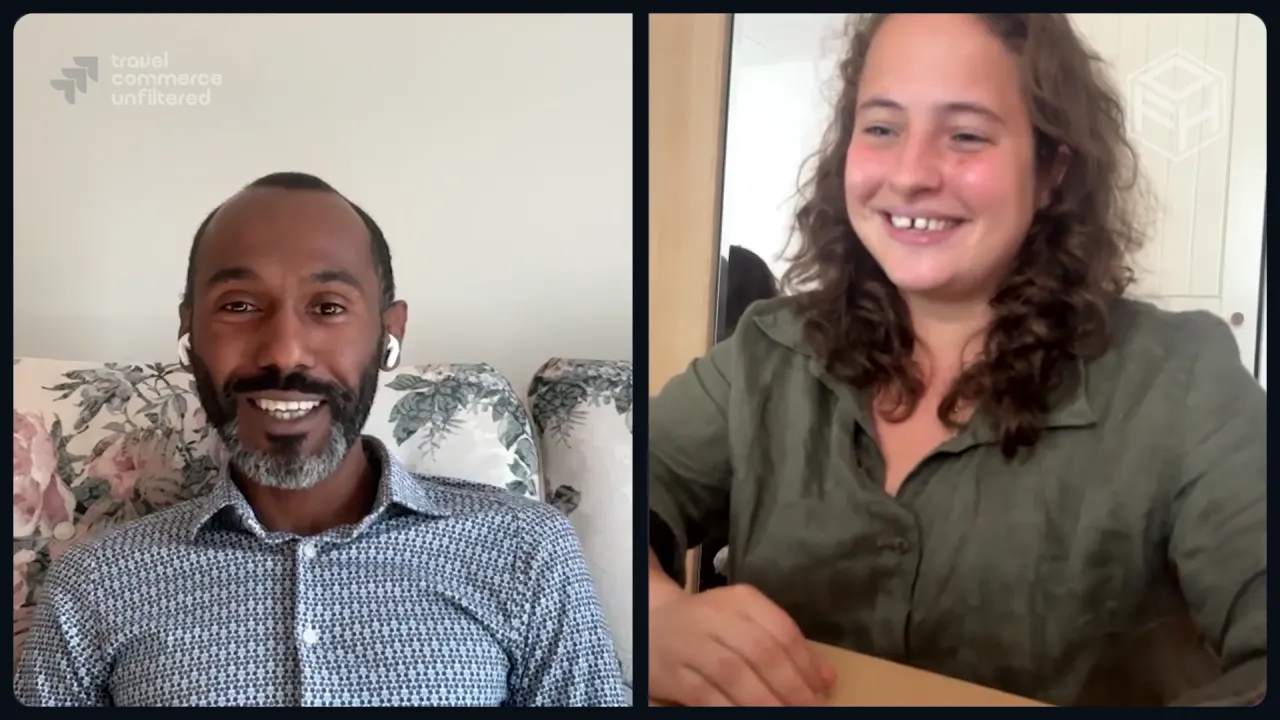
the Future of HospitalityWelcome to lead the experience, a new series from the future of hospitality. And in this series, we talk to the people setting the tone on the floor, building systems behind the scenes, and leading teams to deliver memorable moments. Our first guest today is Emma Wunderink with a background in front office leadership at brands like Sofitel Legend, the Grand Amsterdam, Wolder Vastoria Amsterdam, and she brings a sharp and honest view on why the receptionist is still one of the most underrated roles in hospitality And what it really takes to lead the guest experience from the lobby outwards. So, Emma, really nice to have you. Yes. Looking forward to this episode.
the Future of HospitalityCan you maybe introduce yourself a little bit? And I know that we spoke, of course, a little bit, that you are really, as you call yourself, a hospitality freak. Right? You're you're you're so passionate about it. Yeah. Maybe tell us a little bit more about about your background.
Emma WunderinkOf course. Well, first of all, thank you very much for inviting me on the podcast. It's my first time. We, of course, have been in contact several times, but it's really nice to to be here. And, yeah, about me, hospitality freak is indeed a very good way of seeing myself. I think it's definitely one of my biggest passions, if not my biggest passion in general. I have indeed, yeah, worked in the Amsterdam and Sofitel Legend, the Grand in Amsterdam. Specifically, I really do think that luxury hotels is one of my biggest passions. I think for me, yeah, being younger and really studying hospitality was not the the craziest choice as both of my parents have been involved in hospitality.
Emma WunderinkYeah. It was it was definitely a comfortable choice for me, but the uncomfortable choice for me was luxury hospitality. So walking into a big hotel, all these international guests, all these languages that I didn't know, the marble floors, the luxury smells, and all the the well groomed receptionists definitely sparked a a different interest in me. So Right. Yeah. That is definitely an introduction about myself living in Amsterdam for, I think, eight or nine years now. I'm visiting hotels all the time, visiting restaurants all the time. Also recently started my own hospitality consultancy, consulting boutique hotels on the operational level. And, yeah, apart from that, yeah, just being hotels in hotels all the time and seeing all the little details that I can be obsessed about. So, yeah, that is me. Yeah.
the Future of HospitalityNice. Nice. And and what makes you fall in love with hospitality? Is it your your background from your parent side, or is it something that you felt when you started?
Emma WunderinkGood question. What made me fall in love with hospitality? I think it definitely started with my parents.
the Future of HospitalityYeah. I do my my task. I'm sorry? What did they do with your parents in hospitality? My father
Emma Wunderinkwas a chef, and my mother worked as a waitress. So the the the typical relationship that that always starts at that point, I guess, for many, many people working in hospitality at some point. And out of that came me. But, yeah, of course, when your father is a chef and your mother works in hospitality, you go out for dinner a lot. Even when you're small, you're you are surrounded by, yeah, by by people who talk about hospitality all the all the time. You visit restaurants that maybe you wouldn't visit if you're a usual nine year old. And, yeah, I think you really get acquainted with it in a way that maybe some other children, so to say, would not. I think the moment that I really fell in love with hospitality is when I studied hospitality.
Emma WunderinkI really wasn't the best person in school, so to say. I didn't really care for school that much. And it was the most logical choice for me to study hospitality because that was the thing that I at least was acquainted with. And then in my first year, we visited actually the Sofitel Collegiate in Grand in Amsterdam. And I remember, I think I was 17 years old, and we indeed walked into the lobby. And I saw these marble floors, the very impressive courtyards, and I thought, oh my gosh. Is this something that I could do, or is this something that I could spend eight days or eight hours a day at every day? Or, I mean, sometimes every day, but five days a week. And, this is just happening in The Netherlands.
05:00De realiteit van hospitality en veelgemaakte fouten
13
Emma bespreekt hoe werken in hospitality je kijk verandert en benoemt kennishiaten als een veelvoorkomend probleem in de gastbeleving.
Emma WunderinkWhat a great thing. And from that moment that I stepped into a luxury property, I knew that that definitely was something that I wanted to be involved with my entire life, I think. Yeah.
the Future of HospitalityYeah. So if you see that at 70 years old, all the luxury stuff and it feels so big Yeah. And, yeah, I I can understand that you want to be part of it. Yeah. And kind of I think that from the outside, because I I'd never worked in hospitality. So I don't for example, I don't know which but you and other people I interviewed went through. But I think that if you, from the outside, look at hospitality in hotels, you have a specific feeling about how it is on the other side. But when you really start working there, I'm pretty sure that that some things the view on hospitality and some things about hospitality, they changed. Right? Because if you work in the front office, probably probably you've you've went and see all kinds of stuff, and it changed your view also on hospitality. Right?
Emma WunderinkAbsolutely. Yes. I I definitely think that makes a big difference. I mean, if I travel with my friends abroad or even in The Netherlands or even go out for dinner, you know the straightaway that I don't really get to enjoy it as much as they do because I notice everything right. Even if we we stay at a nice property, I right away, unfortunately, see sometimes what is missing instead of what is adding, instead of the things that actually make a checking interesting or what the lobby looks like or all the things that are great. I usually very quickly get attracted towards the things that don't necessarily add up because I'm I always worked in luxury hospitality, which inevitable inevitably always makes you a perfectionist.
Emma WunderinkSo if the pillows are not not fluffed up correctly, if the the the receptionist comes across like they don't really get don't really know all the information about all the facilities in the hotel yet, the type of language that they use, the luxury language or not. Unfortunately, I noticed. Right? So they don't they don't really have anything to hide behind with me, which is also not so great for me because I also would like to experience it the same way as maybe some of my friends who have never worked in hospitality before. So I definitely think in
the Future of Hospitalityyeah. It definitely creates a different experience or a different insight, so to say. Yeah. I'm kind of curious to to understand that. What kind of mistakes do you see? Like, what are the most common mistakes that you see, for example, when you go to such a place?
Emma WunderinkI think knowledge. I think I think the lack of knowledge is definitely the thing. Yeah. People or staff that had just recently joined that has not been trained well enough or at least not the time has not been taken to train them well enough, which results in a lack of confidence, which results in, yeah, lack of information, which basically, yeah,
the Future of Hospitalitygoes through the entire experience. Yeah. Yeah. Yeah. I get that. And is that also important at the front office? The knowledge gap? Is that Yeah. Extremely. I think
Emma Wunderinkit is it is extremely important to have a certain level of knowledge all across the hotel in F and B, in housekeeping, and you name it, even sales or marketing. But front office really is the the role on decks of the hotel. The most and most knowledgeable employees should be working at the front office. Because if you're staying at a hotel and you have a question, who do you go to? Right?
the Future of HospitalityExactly.
Emma WunderinkYeah. So when you need anything arranged or you need something to be taken care of, the front desk is definitely the the part of the hotel that should know everything. Yeah.
the Future of HospitalityI I always kind of ask myself this question that if I, for example, go to a hotel and a lot of people from abroad, for example, in Amsterdam, a lot of people working at the front office, they're not like you from The Netherlands. They're from outside of The Netherlands. So it's important for them to know a little bit about the area because I I guess that most of them, they they come to work, work in the front office, but they don't even know maybe they know the, you know, the simple stuff about Amsterdam, but they don't know the real insights, they cannot really tell what passion because they haven't been there themselves. So is it important to know the area as a front desk
Emma Wunderinkworker? Yeah. That's a good question as well. I think you can answer that both ways. It also really depends on what type of property you stay at. Because, for example, usually, star luxury hotels in Amsterdam who have, let's say, more than a 100 rooms usually have a comm shares. So, of course, you can do a really good job as a receptionist. But if you are not comfortable advising a guest, you should definitely send them over to the concierge. Of course, the simple questions you can answer, like, oh, where are the canals located? Not very difficult. But, I mean, far people who stay in Amsterdam usually have more specific questions about restaurants, about areas, about I mean, you name it, even transport.
Emma WunderinkSo, yeah, in in not all not all hotels, it is necessary to be as knowledgeable about the area, but I do think this is also another example of training staff well and really taking the time to train people well enough. I mean, invest time in them and have them borrow a bike from the hotel and let them cycle around an area for twenty minutes. And that Nice. Twenty, thirty minutes that you invest in them having a look around in the area also makes them enthusiastic about it themselves, which results in being able to give the best advice. Right? If you're if you're enthusiastic about something, it shines through. So that really creates a good experience for our guests as well. Yeah. 100%.
11:00De rol van de receptionist: belang en uitdagingen
9
Verkent waarom de rol van receptionist cruciaal is maar toch afneemt, inclusief de impact van COVID en de behoefte aan passie en kennis.
the Future of HospitalityThat sometimes I I feel it sometimes when I go, for example, to a restaurant and I ask them what is your favorite? Because I I'm when I look at the restaurant meal, I want to eat everything. So I ask sometimes the the waiter, what what do you think is best? And they just say something, but I I feel on the way they tell it that they didn't even taste it themselves or they they don't really like it. So the same, I think, for the front desk. If you you cannot tell somebody go to this and this if you haven't you you of course, you can tell, but it doesn't come from the heart. You don't feed it as a guest. So that Right. Yeah. Definitely makes a difference. So nice one. And before we started the podcast, we've talked about it that you said the receptionist is kind of a dying, a very crucial role.
the Future of HospitalityLike, why why do you think that that's the that's the point? Like, why why is that role so important, and why is it dying? Why why is it so difficult to get them?
Emma WunderinkYeah. Absolutely. I think, first of all, why is it a dying role? What I have personally really experienced, and I think everyone across the globe in hospitality, three, four, or five properties have noticed is that COVID as we everyone in hospitality also at some point starts talking about COVID. Right? But, I really think that it is the case that a lot of people who have a hospitality degree, a bachelor or any other type of degree in hospitality, who worked in hospitality and had to leave hospitality either temporarily or for a longer time because of COVID, started working in a different industry, went back to school perhaps to obtain a different degree so they could do a different job during COVID or after COVID. These people never returned.
Emma WunderinkI think most of these people never returned, unfortunately. And I myself have noticed this as well. The quality of the people that we were able to hire before COVID and after COVID is night and day. So in that regards, it is a dying role because they are still available, but perhaps not at the not always at the quality. Or the passion, which is also very important in hospitality, the passion that one might expect from someone who wants to work in a hotel because it is hard work. It's difficult. It's long days. Maybe not always the best pay, so there needs to be a reason for you that's different than those things wanting to work in hospitality or as a receptionist.
Emma WunderinkAnd, yeah, I think why is it a crucial role, as we just previously spoke about, the fact that the knowledge that that a good receptionist carries really, really, really makes a difference difference during a stay. And next to that, they are really the driving force in a hotel. They are the first impression that a guest gets whenever they come in. They are the first person to get to know everything about a guest. I mean, what other person in a hotel has as long of a conversation with a guest as a receptionist has? So True. Receptionist really should a good receptionist really understands that they are the ones to get all the information out of a guest, which leads to a good stay, being able to identify upsells, which is also good for the revenue of a hotel, and as well as the guests. I mean, if you can stay in a night room for a good price, who doesn't like that? Right? And Yeah.
Emma WunderinkYeah. If you get to know the preferences of a guest during the stay, I mean, what type of flowers do they like in the room? Something that housekeeping needs to know. What type of food do they like for breakfast? Something that F and B would like to know. And all these details can be collected during check-in, and the receptionist, I think, has the responsibility of, yeah, really creating that magic for a guest to experience that Nice. And to be creating a loyal guest in that regard. So a very crucial role, I think. Yeah.
the Future of HospitalityYeah. But you said it nice that that creating that magic, because that's basically what it is. Because I think that if you are working at the front office, you have to be kind of obsessive about creating creating that magic, because otherwise, it's becoming such a long checklist that you have to think about every time. Like, I have to say this, do this, ask this, revenue this, flowers that, then it's and then it's not fun anymore. So you have to be really, like has to be something in yourself that you want to create that that kind of magic. So Yep. One example for for example is that in regards to upsells, I I what have I what I've heard from other people is front desk workers, they they aren't compensated on on upsells. I don't know, maybe something changed, but but that's also kind of a problem that I know a lot of general managers want their front office to talk with guests about, can you leave a review? Do you want to go to the spa, to the restaurant, blah blah blah? But if you're not compensated, don't get any anything from it, then you think like, I don't want to sell because they want they they don't like to feel salesy, a lot of front office people. So how what's the best practice there? How how would you do it?
Emma WunderinkI mean, I definitely think you're right. I personally my personal opinion on that is that I definitely think that receptionists should be compensated for doing upsells. True. I think a good receptionist in any job, I think you should really challenge yourself wanting to grow, wanting to evolve. And I think receptionist being a good receptionist is not just easy work. It is hard. But why would you not take the opportunity to indeed develop yourself commercially in that regard as well? Do your research before a guest arrives and sit down in the morning for fifteen minutes and look up the guest. Are they CEO of a company and they book the standard room? There's your opportunity for an upsell.
Emma WunderinkThere there are different reasons for that why you could challenge yourself as a receptionist more. And on the other side of that, yeah, the original question indeed, should they be compensated for that? Yes. I definitely think so. Why not? Right? In any sales job you get, usually, you get compensated for for the the work you do, the the bonus bonuses or commission you make on on the amount of sales that you do. So I if that is not the case, I do understand why people are not as motivated to do that. Because why wouldn't you Why would you? Yeah. Speak why wouldn't you speak with them for an extra twenty minutes during a check-in so you get the tip instead of a commission. Right? Because at the end of the day, that is how people think, and I think that's fair enough. You should be compensated for the effort you put in.
18:00Vaardigheden en teammanagement voor receptionisten
17
Emma schetst belangrijke vaardigheden van receptionisten, zoals emotionele intelligentie en commercieel bewustzijn, en hoe managers consistentie en individualiteit kunnen balanceren.
Emma WunderinkAnd, otherwise, it should be compensated in a tip maybe, or people get creative at the end of the day, and Yeah. That is what happens. Yeah. Yeah. You must must give something at least. Exactly.
the Future of HospitalityYeah. Money at least recognition that they did a great job and sometimes but Yeah. Yeah. Yeah. Nice. And and what makes a great receptionist, for example? What what what are the skills needed to to be great at at that?
Emma WunderinkYeah. Good question. I mean, of course, everyone has their strength and differences. Receptionists are indeed very commercial. They do the research and and and think ahead of how they can make the most upsells in a day. Some receptionists are very emotional intelligence. For example, they really are able to read someone well. And someone steps in with five suitcases and six children, and they're like, oh, goodness. Okay. Maybe they need a cup of coffee for the children to be able to sit down and for me to really just take care of the process and not talk too much. I think all those things combined actually make a really great receptionist.
Emma WunderinkSo emotional intelligence, really be able to read who you have in front of you. Does the guest need a lot of attention? Do they just want a quick check-in? Are they staying here for business? It's important to recognize and to read who you have in front of you. True. And next to that, I think, just really simply also really have the motivation to create the best experience for the person that you have in front of you in whatever way is possible for you. So I think creativity, emotional intelligence, and a commercial aspect, those three things are the holy grail, I in my opinion of what makes a good receptionist. Yeah. It makes sense. Makes sense.
the Future of HospitalityBut how how do you do it? For example, let's say you are a manager of few receptionist, and I I think you you want some kind of consistency and some kind of, let's call it the playbook or this is how we do it. But on the other hand, you talk about emotional intelligence and it's about reading the room, reading the people, and that's really hard to to, you know, put it in a because it's it's something that you have to feel. You have to you cannot say if the guy is two meters, you have to say this, and if he's a one point six meter and a great beard, you have to say it's not like that. So you have to so how how do you build that consistency and, you know, that that the team has the same, like, the same qualities that you that you build, like, perfect receptionist based on what you want and specific kind of let's call it a playbook, for example. Right.
Emma WunderinkI think in a managerial position, and if you have the authority to hire people, at the end of the day, you work with people. Nobody is going to be the same. Nobody is going to have the same emotional intelligence. Nobody's going to have the same drive, and nobody thinks the same way. So I think as a good manager or as a good leader of a team, you should be able to identify all these different qualities that someone has and also maybe also not so much qualities of someone else. It should be like a symphony. Some people really are able to bring out the best in one another.
Emma WunderinkAnd apart from the fact that you work with people and everyone is different, there should indeed be a playbook, some SOPs, operating procedures that everyone abides by. Apart from the fact that everyone is their own person and has their own strengths, there should indeed be procedures for everyone to follow because there should be consistency. Right? Everyone should be especially in luxury hotels, people have to expect from whoever is in front of them if they're either a very yeah, funny person or, for example, very serious person, they both should be named by their surname three times during check-in. They all should be asked, what is the reason of staying in Amsterdam or in any other city, or they all should be asked, yeah, basically, all questions that are needed to ask for for to make them their stay
the Future of Hospitalitythe best. Yeah. So it's basically the the the points in this like, it's not really that you get a script, but the points that you have to say, you have to say. You can blend it in as you want. But the the script is like yours, you can you can do basically whatever you want if it's in the guidelines. So you can showcase your own personality, but you have to you have to do a specific kind of stuff, and that's like the the playbook. Right? So if I get you right, you say you can be yourself, be your own personality because that's also what makes it fun, I guess, as a front office.
the Future of HospitalityYou know, if you have to be like a robot, then you become like a GPT with all kinds of knowledge. That's not what you want. So you have to learn the personality with the SOP stuff. Exactly. Yeah. That's definitely
Emma Wunderinkyeah. How the way that you form it is definitely at least the mentality or the way that I look at the way that a front office should be
the Future of Hospitalityled. Yeah. Nice. And I guess that a lot of young people, of course, are working in in front office. Is that is that kind of do you see, like, a change in like, is it difficult? Is it other? Is it, like, difficult to work with those younger people, or do they have different kind of needs? Like, do they, I don't know, want to be be valued more, want to be heard more, want to be more freedom, want to have more freedom. I don't know. What what what is the the younger people? Because that's that's what's needed to understand them in order to to get there. Right? Right.
Emma WunderinkDefinitely think that a lot of younger people work at the reception desk also because usually it's been being seen as a, yeah, starting position within a hotel. Right? I think the the changes that I've seen recently in that regards is that a lot of people of younger age who start working in hospitality really want to make a lot of steps very quickly. So if they understand one part of the job 50%, they already want to make a promotion. They're like, oh, I want to have more responsibility. I wanna have more responsibility. And some things you can't learn that quickly. Right? I mean, of course, if you have a checklist of 10 points to do in a day and you started in a position six to eight months ago and you finally achieved the fact that you can do all the 10 things on the checklist, but you still don't have the, let's say, emotional intelligence to indeed do these incredible check ins that a luxury property or maybe even also four star boutique hotels want to see, you're not ready yet.
Emma WunderinkAnd I get that it's frustrating for people because you really cannot pinpoint what change you want to see in someone. Sometimes it's difficult to explain to someone, especially if you're younger because maybe it's your first job or your second job. Maybe you simply haven't met that many people yet. If you just look at it literally, you haven't met this many people on higher level yet, CEOs or or or or directors or you name it. And you just simply don't know what they want. Right? But that's something you need to learn, and that takes time. So I think that is definitely something that younger people in hospitality in general, not just the front desk, struggle with.
Emma WunderinkAnd that is also a theme that I have seen. So it's in important for you as a manager or as a leader to be able to explain that to them in a way that make make sense and to also, of course, have them stay working for you, which is also a high yeah. I think this is also a reason of, yeah, why hospitality can have a high turnover because it's not always feasible, the things that you need to do to promote. True.
the Future of HospitalityBut it's funny that it goes kind of two ways because on the one side, the younger generation needs to understand the older generation, like the the guests and how to but on the other hand, also the opposite, the older generation and the managers and that kind of stuff need to understand those younger people because otherwise, you're not listening to your own guests, and then then you are you are the people working at your hotel. Because they're also kind of some kind of guests. Right? But but also kind of it's it's kind of a football joke, not really a joke, but something what what I talked about with my my older brother.
the Future of HospitalityAnd we always say, like, the the best trainers, so if you put them on the on the 18 year olds, when you, for example, lead the Ajax Amsterdam, or on the younger ones, the, you know, six, seven, eight. So the most most of the times you think, like, I have to put them on the young on the on the older ones. Right? Because they have more skills and kind of stuff. But my brother always said to me, you have to put them on the young on the younger ones because they still have the you know, they need the best coaches because they still need to develop and that kind of stuff. So, basically, why I'm saying this is that it's funny that you at the front desk, people hotels, they put their their young people, they put their people without a lot of knowledge and a lot of experience, like it's kind of a junior role. But on the other end, it's one of the most important roles because you can expect this their first impression, you expect them to get the reviews, you expect them to do the upsells, they can make a lot of mistakes, and it's it's in a lot of a big impact on the guests. And like you said, they have the most time talking with guests, so it's kind of not unbalanced because it's the most one of the most important roles, and on the other hand, it's one of the most linear roles. So that's
Emma WunderinkYeah. Yeah. Yeah. I think you definitely hit the the the the hammer on the nail right there. Absolutely. I think, yeah, just to add to that, I definitely think that the best teams you hear these jokes sometimes, right, that you have a work best friend of 60 years old, for example, when you're 20 yourself. Yeah. I think that is incredibly funny, but it's true. I mean, you can learn so much from people from different ages, the other way around as well. If you have been working in hospitality for thirty years and you work together with someone who just joined from from a hospitality school or for a from a bachelor that I just obtained, for example, in hospitality management, and you get all these new ideas from each other. You get the knowledge and the the self awareness maybe from someone who's been there for a longer time.
29:00Eigenaarschap en gastbeleving over teams heen
8
Bespreekt de True Waldorf Service-aanpak, met nadruk op het versterken van medewerkers en kleine gebaren die de gasttevredenheid vergroten.
Emma WunderinkAnd you also learn from someone who's younger, who's just, maybe, for example, works with AI or teaches you how to maybe instead of you spending twenty minutes writing a an email to a to a guest who complains about something quite complex, you just go to chat GPT, and they help you right away. So it's a two way street, and I think the the the balance of of, yeah, age in a team can sometimes be extremely important to take into consideration.
the Future of HospitalityYeah. Yeah. Nice. And and I'm kind of curious now. What what is one thing that you've learned that you think, like, other hotels can really learn from this? At the, for example, the Sofitel or Waldorf Astoria, Amsterdam. What is one of the things you say, like, this one really stuck to me, stuck with me, and I really think that other hotels can if it's a luxury hotel, whatever, can learn from this mindset or best practice or whatever.
Emma WunderinkI I think you have something at the Waldorf Astoria, for example, they work with something they call TWS, true Waldorf service. And that is something that every everyone in the hotel is trained on, not just reception, but really everyone is. And what you basically learn is to take ownership of the information that you are able to obtain of a guest. So housekeeping walks into a room, and they see a little tiny pink suitcase of a little girl that is probably staying in the hotel with their parents. So what do they do with that information? You can ignore it, but you can also as even as housekeeping. Right? Someone that the the people that are work probably hardest in hotels and don't get enough recognition through that TWS, through all their service, they are being given ownership and the freedom to act on little points of information that you see. So what did they do? They place a little little teddy bear with a Waldorf themed teddy bear in the room and a little note of, oh, he wants to stay with you, and you can take me home as well. Warm regards, housekeeping name, whatever.
Emma WunderinkSo I think the thing that I learned through TWS, through wall or service, is that everyone in the hotel should be given freedom and ownership to act on information that they see. Because of that, also think, in general, you have greater retention of staff because people really enjoy their job. If you just clean your room, let's be fair, it's hard work. You don't really get recognition. No one it's nobody's. Maybe it is, but for most people, it's not necessarily their dream job. But if you're able to get recognition from the guests, from the hotel itself, and, actually, you really do something nice for someone, Who doesn't love that? Right? So True. I really think that's something that I learned that it is important for a hotel to understand that everyone has a crucial role in guest experience from maintenance to housekeeping, from marketing to front desk.
Emma WunderinkEveryone has to take ownership and responsibility. And,
the Future of Hospitalityyeah, I think it's sometimes missing. Yeah. Yeah. So may may let them have let them have have an opportunity to make an impact on that guest. Right? So the it's not like a day in, day out, the same day, and they cannot do anything about it. But how like, in a practical way, because I understand in the Waldorf example, it's, of course, a very luxury hotel, and the margin on each guest is is very high. So, you know, if something from a maintenance brings in a teddy bear and it costs a few dollar, nothing happened because there's still a lot of margin in that, you know, in that in that place. But if, for example, a smaller hotel, boutique hotel, you cannot, of course, tell each and every person working in the hotel, you can give give away teddy bears if you want or that kind of stuff. So how how would you do that? How for example and if you talk about the receptionist, for example, how would you how would you give them that that space to to make more impact on on the guests?
Emma WunderinkI mean, you can also do it with time, gen generally. I mean, for example, if you don't have the budget to indeed purchase all these things like teddy bears or yeah. Sometimes you really buy expensive more expensive gift gift gifts for guests. Right? So, yeah, what what you're saying, I do understand. And I think maybe in in different hotels that don't have the budget for that, it can definitely be done differently. So for example, you speak to a guest at 03:00 in the afternoon, and they ask you, I really want to eat a good strobe waffle in Amsterdam. Where do I go? And you say, you should definitely go to the Albert Cuyp Market.
Emma WunderinkThey have the best. And for example, you you have some strobe waffles laying around or usually they are being served with your coffee. Well, you collect some, and you write a little card. I hope you had a good day at the Albert Cuyp Market. I hope I see you again tomorrow. I want to hear all about it. Something like this. Doesn't cost you anything, but five minutes to write a card even if you don't have strap levels to give with it. I mean, attention is also extremely important. I think people in general are want to yeah. They really want to be seen. True. It's an important emotional factor.
34:30De toekomst van hospitality en AI-integratie
9
Emma ziet AI administratieve taken verminderen, waardoor receptionisten zich kunnen richten op emotionele connecties en gepersonaliseerde gastenservice.
Emma WunderinkSo if you just acknowledge the fact that you think about them or that you have understood how much they have been looking forward to spending a day in the Hobart Koch market. Those those emotional touch points can be extremely beneficial to a guest experience in general. Yeah.
the Future of HospitalityThat's nice. Yeah. So it's it's basically about making them feel seen, and, yeah, that that doesn't need to cost any money. Of course, you can buy something, but if you spend your time and spend your smile and you the emotion, that's also kind of a gift. Right? Absolutely. Yeah. Absolutely. Nice. Nice. And if if we talk about because, of course, the podcast is called the future hospitality. So do you think that the the role will kind of evolve to something else? Because, you know, a lot of more and more things are going with AI now. Data is getting, you know, selfless check ins, and you can get a lot of data with AI, and maybe, I don't know, the role of receptionist is evolving into something else. Like, how how do you see that? Your own personal view.
Emma WunderinkYeah. Good question. I think it's definitely the case that the administrative responsibility that the receptionist used to have, I think, ten years ago or even five years ago still, is going to be reduced because of AI or because of automation in general, or at least I hope so. And, yeah, I think the receptionist will be will have more time. Hopefully, it will be benefited. That the time will be benefited in regards to having more time to create these emotional connections with the guests, to spend more time. Nice. Because how nice would it be if AI or automation could be used to actually increase the time that people can spend together. Right? So I think that will definitely happen.
Emma WunderinkAnd I think also in that regards to the receptionist, we'll be working more together with automation and AI. So, let's say, pre arrival experiences that AI is able to, generate, that is something that you, yeah, need to be aware of. So how are you going to read that information that is being given to you pre arrival? And how are you going to work with, yeah, post stay AI that is being used. So for example, certain certain feedback that you get differently this time. I think automation and AI is definitely the future of hospitality. And I think we are not just going to or receptionists are not just going to be administrators anymore, but more Exactly. Emotional connectors and more yeah. Maybe also AI geniuses. Who knows? Yeah.
the Future of HospitalityYeah. But I think that's a that's a nice part, and I think that at a younger generation, with AI and technology, therefore, they grow up with it. Like, GPT for for my parents, if I say GPT, they still go to Google instead of to GPT. And type in Google, they type in GPT. And yeah. Really. But I hope they don't listen to this episode, but anyhow but that's really it's their their strongest point from the younger generation is that they're really tech. That's their thing. You know? Tech, they so I think that the if the admin is done with AI and everything is automated, they can really focus on absorbing that information and and creating that emotional connection with the guest. I think that's a that's a great win win for everybody, for the guest, for the hotel, for the staff.
the Future of HospitalityA 100% agree. Yeah. Absolutely. Yeah. Nice. Yeah. I'm really looking forward to to that happening in hotels. So, Emma, we're we're almost out of time. Do you have something else that you want to add about about this subject, something that you want to share? Can we anything?
Emma WunderinkWell, a good one. Something that I want to share. I mean, I think this might be a good opportunity and hopefully, also, maybe some people who are listening and considering a career in hospitality or maybe switching back to hospitality. I hope to motivate people in general to yeah. As a last manager to really understand that hospitality is a real serious career, not just a recept as a receptionist, but also any other position within a hotel. I think it's one of the most beautiful industries, and I really hope that yeah. With with also the fact that this podcast exists, but also, in general, I hope people really consider how fulfilling a career in hospitality can be, how even if you are not planning to stay in hospitality forever, I mean, you never know what life brings you, but it is one of the most beautiful times of your life perhaps. And I do really think that it is such a great place to be in. So and maybe as a last message, I would really say, work in hospitality.
the Future of HospitalityYeah. Amen. Amen. Amen. Yes. Yeah. Yeah. Great. Thank you for for sharing all these insights and your energy, and I can really feel that you are passionate about hospitality. That it's not just a job for you, but a kind of way of looking at things and living. And, of course, your parents, they they have those fraternity backgrounds, so you can feel that that is in in you. So thank you, Emma, for for being a guest. Really loved it, and
Emma Wunderinkthat's it for today. Thank you very much. Thank you. Nice to nice to be here today, and thanks.