
















 EPISODE · 38 MIN
Turn Skipped Cleans Into Profit And Trees
Floris Licht, founder of Hotels for Trees, explains how guests who skip hotel cleans for trees fund global reforestation and reshapes hotel sustainability. Discover how a simple guest choice has led to nearly 700,000 trees, boosts staff engagement, and spreads across 40 countries. Practical tips for hoteliers and the movement's next steps are shared.
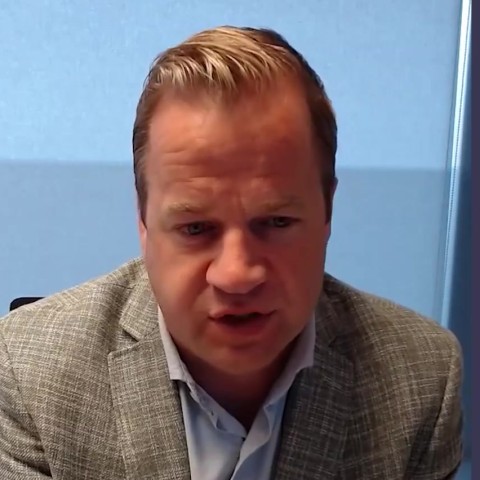 Floris LichtFounder
KEY TAKEAWAYS
Trees funded by skipped cleans
By asking guests to skip stayover cleans, hotels convert outsourced housekeeping savings (often €8-12 per clean) into a planted tree. The program turns routine operational savings into verifiable climate action.
No-contract low-friction model
The initiative uses a no-contract, no-fee model: hotels join via hotelsfortrees.com, use green door hangers or PMS integration, and only fund trees when guests skip cleans. Many hotels went live within 48 hours.
Tree planting builds staff engagement
Organized planting days engage staff and hoteliers: teams plant bigger seedlings with local communities, boost biodiversity, and create shareable moments. Younger employees value working for purpose-driven hotels.
And from that money we can plant a tree. That's as simple as it is.
Transcript
Click a timecode to watch from that moment.
00:00Introduction and Concept Overview
16
Floris Licht introduces Hotels for Trees, explaining the initiative of planting a tree when guests skip room cleaning to promote sustainability in hospitality.
"the Future of HospitalityOkay, okay, three, two, one. Welcome to our podcast, The Future of Hospitality. I'm your host, Arjen Ekeleboom, and today I'm joined by Floris Licht, hotelier, entrepreneur, and founder of Hotels for Trees, a global initiative that plants a tree every time a hotel guest skips room cleaning. With a career spanning Hilton, our core and now sustainable innovation, Floris is changing the way the hospitality industry gives back. Floris, welcome to our show.
Floris LichtThank you for having me.
the Future of HospitalityAll right, we'll dive deeper into Hotels for Trees in a minute, but first could you draw us an image of what it is and why you started Hotels for Trees in the first place?
Floris LichtYeah, I think you already captured it quite well. It's a very easy concept. We work with hotel partners across the globe and they all offer their guests the opportunity to skip the in-between room cleaning or stay over cleaning as we call it within the hotel industry. And every time that is done, that of course generates several types of savings. And in return, the hotel then plants a tree on behalf of the guests. And that's an initiative which I started some four years ago now. year, yeah, next to my job as a hotelier.
the Future of Hospitalityfour years ago. Okay, why was it that you started it? Just maybe one or two sentences. We dive deeper into it later, but.
Floris LichtYeah, sustainability has always been a key passion of mine. And I've always had this idea. at some point, which we'll come to in a second, at some point, there was an opportunity, know, a special moment in time where I said, okay, if I don't do it now, it will never happen. And then I just, you know, took a leap and here we are.
the Future of HospitalityI love it as a solar energy advocate myself. can only say wonderful, great job. I got three quick fire questions for you before we dive into it. What's more rewarding running a hotel or planting trees?
Floris LichtThank Whoa, that's a tough one. That's a tough one. Wow. I don't know. I like the combination of the two. No, but my prime job is still being a hotelier and that has also helped me build hotels for trees. But at this point, I'm still very much a hotelier.
the Future of Hospitalityall right. Okay, it goes together. think it's on the same level. I see what you mean. How does skipping a room, skipping room cleaning, it may be one or two sentences. How does skipping room cleaning lead to a planted tree?
Floris LichtYeah. Yeah, so they many of the hotels not all but many of the hotels work with a third party or an outside partner for the room cleaning. So they hire people to clean their rooms. So you know, the cost of cleaning a room here in Europe are anywhere between eight and 12 euros depending on the star rating and the size of the room and whatnot. So if then a guest says, you know, I'll clean up after myself during this four day stay and I don't need someone to you know, clean my sink every day. I can make my own bet, then of course that can generate two, three, four times this eight or 10 euro saving. And from that money, we can plant a tree. That's as simple as it is.
the Future of HospitalityOh, yeah, you know, I had blackouts here that suddenly boom, all the light goes out, you know, so it was a... thought, oh, in middle of a podcast, and I to plan that has to happen, but that was a few weeks ago, was a heavy storm and boom, the bar fell on the line, because everything still above ground I still it, but anyway. I had indeed...
Floris Lichtupdates. Yeah.
the Future of Hospitalityfeedback from partners. What kind of feedback are you getting from staff and partners?
Floris LichtYeah. Yeah, what's really nice to see is that it has a lot of wind. So this whole concept has a lot of wind. So the staff like it, especially younger generations like it because they want to be part of something bigger than them and want to work for an employer that also is taking care of the planet, so to say. They love the tree planting days, of course. So they like that hotels go above and beyond when it comes to being sustainable. So that's nice. Guests like the fact that they can somewhat compensate the impact of their travel. I mean, we're not claiming CO carbon compensation or whatever. We say we don't claim we plant the tree. That's what we do. But also meeting and event planners and corporate meeting planners and companies, they also like the fact that if they have an event, 200 people, three days, they can agree that for those 200 rooms, for two of the days, always the stay length minus one. they will plant trees together so they can even announce, say, we're not gonna clean your room, but together as a group, you know, we're planting 400 trees by skipping this. So there's a lot of wins. And what we actually see is that out of all the, because we now have close to 270 partners, out of all the parties that have joined us, like only three or four have stopped because of change of ownership or because they became a home to refugees. or because they went bankrupt. there's not really, there's not an awful lot of hotels that join us and then stop again. And if they want, they can because there's no contract and there's no cost involved. can just return us the door hangers if they have them and then thank you.
the Future of HospitalityI can imagine that people want to be part of this movement. It's a great movement, especially indeed the younger generation would like this a lot. What is your long-term vision for Hotels for Trees and its global impact?
Floris LichtYeah, I mean, I very much hope that we will become a global player and that at some point, you know, one of the mid-size or larger hotel change, you know, will reach out to us and say, are you interested in, you know, us rolling this out across the entire, you know, brand, so to say. We do have branded hotels, or like we do have hotels, also Hilton hotels or Acura hotels, but they're also always on the franchise side of the business. Yeah.
03:12Floris's Hospitality Journey
36
Floris shares his background, education at The Hague Hotel School, and his career path through Hilton, Accor, and back to Hilton, highlighting key roles and experiences.
the Future of HospitalityMm-hmm. Great initiative. What's been your biggest wow moment since launching Hotels for Trees?
Floris LichtI think the way it has taken off with actually very little, well I wouldn't say effort because we have put in an effort, but we are only a small team. So together we are like 1.1 FTE, me and all of my colleagues. And so far we have planted close to 700,000 trees already across the globe.
the Future of Hospitalityokay.
Floris Lichtacross about 30 different projects in various countries. So I think the return on investment on how many trees we've already generated with how many people we have working on this, I think is quite impressive.
the Future of HospitalityIt is impressive. I'm eager to hear a lot more about it later on. Tell us first why and how did you start in hospitality? What's your story? Hotel school, I imagine.
Floris LichtYeah, yeah, I don't know. I think it was, you know, it's a bit more it's a bit of nature and nurture because my my mom, she she's always been a caretaker. So at some point when it still existed, she was the head of the yeah, the the how do you say it, the housekeeping school. So she thought she taught women how to be like a household wife, mother, caretaker, etc. She's always done voluntary work. Still at the moment, she still works at a hospice. She's always, you know, taking care of people, organizing things. So that has always been in my DNA. So I always loved organizing stuff as well when I was small. as of the age of eight, I was already running around on birthday parties, taking people's orders for coffee and tea and running around with cake and... Yeah, and I enjoy doing so. So I think it's yeah, it's just part of who I am. And it has never been a question actually, I have never wondered, you know, what will I go and study and what would I like to become? My dad is is a doctor in mathematics and physics. And I have a bit of his blue analytical brain as well. So he at some point, you know, you can also go to university.
the Future of Hospitalitygood combination of both.
Floris LichtYeah, I'm lucky. But he at some point said, oh, you can also go to university, you know, study, I don't know, economics or whatever. I said, no, that I want to be a hotel. want to be a hotel. No, he tried it. tried it. Yeah. Yeah. Yeah. Yeah. I don't know. It could have also been Maastricht or Leeuwarden, which at the time were the three biggest hotel schools in the Netherlands. So
the Future of HospitalityHe tried it though, he tried it. So you went to the hotel school in The Hague, right? Tell us some more about that.
Floris LichtFor me, was, think, more the Hague in my perception, you know, had the most appeal. I visited one of their open days and it appealed to me the most. It could have also been, you know, either of the other two, but, you know, I'm from Amsterdam, which is close to Amsterdam. So I'm a more big city guy and both Leeuwarden and Maastricht, you know, it's a different type of culture, different type of people. The Maastrichts more southerners, the Leeuwarden are more northerners and I'm maybe more of a central Amsterdam type of person. So I go more at home at the hotel school in The Hague.
the Future of HospitalityWe are different, indeed. Okay, so at hotel school, The Hague, that's where you were educated, molded, prepared for the hotel hospitality industry. Can you tell us a little bit about your experiences shortly after that and how you rolled into your current role? So I know there were several hotels, just guide us through your story.
Floris LichtYeah, yeah. So during at the end of the hotel school, there was one more traineeship to be done. And then there was an open day from the team of Hilton, followed by some, you know, short like job interviews for, you know, these traineeships. So I got in touch with Rogier Braakman, who at the time was F &B manager for Hilton Amsterdam. And he ended up hiring me as his trainee for this traineeship. And then the general manager of that hotel helped me get into a graduate management program called Elevator Program. So I spent nine months in London and nine months in Frankfurt learning everything about every role within the hotel. So that was really an amazing program. And after that, I started traveling the world with Hilton. So I stayed in Frankfurt for a bit, became revenue manager during the World Cup soccer there, which was highly exciting. Then my wife and I, my girlfriend and I, at time now my wife, we wanted to see more of the world. So we went to Adelaide. I became front office manager there. We spent two years there. Came back to the Netherlands. I worked in the Netherlands for a couple of years. Moved to Munich where our second child was born. And in total I spent 12 years with Hilton. And then my career with Hilton came to a temporary stop and I switched to Accor.
the Future of HospitalityHmm.
Floris Lichtthe French chain, worked for them for seven years, opened the No Hotel Amsterdam Schiphol Airport. And then three years ago, I returned to Hilton, where I am now general manager of the DoubleTree by Hilton Hotel next to Amsterdam Central Station.
the Future of HospitalityYeah, we all know that property. It's out and you have the perfect view of sale that's going on right now.
Floris LichtYeah, yeah, yeah, exactly. I look at my window now, there's like tall ships and boats, you know, coming and going. we had sailing yesterday and the event lasts until coming Sunday. So it's a very exciting time for us this week. Lots happening around the hotel.
the Future of HospitalityMy social media is full of people in Amsterdam sharing pictures and videos of because it's once every five year event. it started in 1975, that's 50, 50 years ago. That was the first time. My first time and my last time, unfortunately, because I keep missing it now again, was in 1985, sale 85. I remember I was a young, I was 18 years old.
Floris LichtMm-hmm. Yeah. Yeah.
the Future of HospitalityAnyway, beautiful. I hear Hilton, Hilton, Hilton, Hilton, Adelaide, Frankfurt, Amsterdam, Hilton, Amsterdam, that's the property in South, right? That's the iconic building. Beautiful. How was your, I want to hear bit more because you were trained as a F &B manager or tell us a little bit more about that.
Floris LichtThat's nice. Yeah, beverage, food and beverage trainee. My boss was in charge of everything related to food and drink at this hotel, which you you know, it's a lovely property. It has this amazing Italian restaurant called after the former general manager Roberto Baier. And it has a beautiful terrace and a garden.
the Future of HospitalityYeah, yeah. yeah, on the water.
Floris LichtYeah, I actually ended up getting married in that garden. So the hotel has quite a special place in my heart. It has a lovely pavilion and amazing meeting rooms. And yeah, so I was the right hand of the person in charge of food and drinks. So I was all over the place, know, room service, mini bar in the cook. They also have a really nice coffee bar. So I spent some five months there, I think, working on all sorts of different projects.
the Future of Hospitalityreally? wow.
Floris LichtBut was so exciting. I I loved the atmosphere. I loved the general manager at the time. Actually, I was still in touch with him yesterday because he was also on the boat doing sale. Paier, he's retired, but I think he's one of the most iconic Holtoyers that the Netherlands has ever seen. And he has really, you know, also further increased my appetite and my enthusiasm about the industry. He's a very passionate, very creative guy, very strong eye for detail. And yeah, he also helped me grow a lot, you know, just by observing him and seeing, you know, how we would engage with guests and how he continuously was working on his product and hiring new people with new ideas. So there was always something going on. So, and he helped me get into the Hilton Elevator program, for which I'm still very, very grateful.
the Future of HospitalityYeah, it's not the organization itself. It's just the individual franchises.
Floris LichtYeah, because all of the big brands, they have their own strategy and their own philosophy and their own experts when it becomes comes to sustainability. So they tend to be a bit more hesitant and they want to make sure that it's, you know, trustworthy, so to say. So so far, much of our growth has been with standalone hotels, smaller chains, so like nine hotels, 12 hotels, know, 16 hotels. So we're hoping to soon, you know, catch a bigger fish and then really, you know, really take off. And I also hope that we will be able to hire some market managers in like key growth markets for us that will then really help us, you know, because so far I think about 60 % of our partners are in the Netherlands. But we see great potential in Germany and in France and in Spain. And I mean, we have partners across 40 different countries, much of which is thanks to our partnership with Muse who are like present globally. But we see that, you know, everything that you give attention to, you know, grows and we give attention to the Dutch market and we are present in the Dutch market. And that's why there is, I don't think there's a single hotelier, you know, in the Netherlands who doesn't know about this ID. But there are still a lot of hoteliers in Germany and in France that have never heard of this ID. So I think there's still a lot of, yeah, there's still a lot of opportunities. So we are actually soon going to hire a sales manager as well. who will really be going to these markets and visit like fairs and really connect with hospitality alliances and associations in other countries to really bring this message across. At the moment, like I had a look yesterday, we planted close to 1,100 trees on one day. But I think if we put a bit of effort in, we can quite easily double that in the year to come. And yeah, that will be the next step, so to say.
the Future of HospitalityWell, can, this is part of the growth strategy, perhaps could be part. mean, where people, hoteliers who are listening to this or watching this podcast, where could they sign up?
Floris Lichtthe sign up is very easy, actually. So if they go to hotelsfortrees.com, there and then there's a button there in the in top right hand corner where they can register their hotel. And, and we are we are that is very straightforward because you look up your own hotel on Google and every hotel knows where to find their own hotel, and then say this is my hotel and then we will confirm that with you by an email but then we automatically have the location of your hotel we have the We have the images, we have the text, which we then translate into all of the languages in the world. So there's actually, there's very little to do because the Google listing of the hotel is actually what the information in that we capture and we use on our platform. So we've had hotels, you know, joining us within 48 hours after saying, I want to join being online within 48 hours. Yeah, because it's very straightforward. Yeah. You need the hangers, you put them on the bed and off you go.
the Future of HospitalityBecause it's so easy. It's easy to join. You said it yourself. Yeah. Great. Last question. And this is about your current position as a general manager at the DoubleTree in Amsterdam. Beautiful location, I'll it again. What is your projection for the next few years in Amsterdam? Amsterdam is super busy. How do you see Amsterdam evolve when it comes to tourism in the city center and for your hotel specifically?
Floris LichtMm-hmm.
the Future of HospitalityBecause it's busy, always busy.
Floris LichtYeah, I think we have a unique advantage linked to our location. So I don't think there's a hotel with a better location than our hotel. So we are located right next to Central Station in a residential area. So it's very quiet, very safe. But you cross two bridges and then you have everything that makes Amsterdam Amsterdam. know, the exciting stuff happens across the bridge type of thing. So I think we're in a good spot. I think the bigger Amsterdam market
the Future of HospitalityMm-hmm.
Floris LichtThe future is somewhat uncertain. mean, there's a strong anti-tourism sentiment amongst many parties that are in the municipality. And because of that, you know, a lot of initiatives have been launched and are currently being rolled out. So we've had the increase of the city tax. We've had, you know, less... ships stopping at the passenger terminal and at the Mövenpick Hotel who are now stopping in in Eimhouten. They're doing stuff on the traffic, making everything one way traffic, making it quite impossible for hotels to welcome their guests and welcome buses and get their deliveries, etc. And now, of course, on top of the highest city tax in the world after Honolulu, we are also now facing the VAT increase, which for international Congresses and conference organizers or for corporate travelers will not make a big impact. But to go from 9 % VAT to 21 % VAT as an individual transient leisure traveler is actually a lot of money. we are a bit worried about what this will do to the appeal of Amsterdam in the international arena. versus cities like Barcelona and Berlin, for instance.
the Future of HospitalityIt's a challenge. I'm going to do a podcast soon with the city about this. to be continued. Floris, it was a pleasure to have you on our podcast. Thank you so much.
Floris LichtYeah. Thank you for having me. .. "
12:06Leadership and Work-Life Balance
10
Discussion on how international roles shaped Floris's leadership style and his approach to balancing a demanding career with family life.
the Future of HospitalitySo, and that brought you to places like London, Frankfurt, Adelaide, all four Hilton. How did those international Hilton roles shape your leadership style?
Floris LichtYeah, I think the key thing is that through working in various different countries, you become a bit more of a global citizen. I mean, of course, you can also finish your studies and travel the world for a year. But being a tourist in a country and working in a country and working and living with the people in a country are fundamentally different things, in my opinion. So I learned what it is to be Dutch in the international arena. how the French stick and the German stick and the Austrian stick. then, and through all that, you become a bit more balanced maybe. And I mean, I'm sure that people will very much still recognize me as a Dutch guy. You know, I speak my opinion and I'm present and you know, probably somebody, some people would label it as too direct and arrogant.
the Future of HospitalityThe typical Dutch directness. Yeah, I know.
Floris LichtBut you do, you you learn a lot and you find a bit of your place in the whole international arena. And I worked with people from, you know, 50, 60 different countries in all types of different departments and saw a lot of the world. So yeah, that really helped me grow as a person as well.
the Future of HospitalityYeah, I bet. What was it like balancing a global career like that with family life? And you have children also.
Floris LichtYeah, yeah, I mean, I think it's also it also depends on, know, if you have a feeling about how this balance should be and live by it, or if you try to live by a certain standard that you already see. And by that, I mean, is, you know, you can also set a new standard or lead by example. So I'm very much a person who likes to I need to be here when I need to be here. I want to do my work and do my work right. But I also want to enjoy my private life and my family life and have time for sports, et cetera. And actually from the moment that I've started working, that has always been my approach. So I have been in roles where people around me work 80 hours a week, but I was maybe putting in 45 or 50 hours a week. As far as I'm aware, that's never raised eyebrows because I always had my quality and my output was always up to par or even above par. So I think I've always had a very good balance between my private life and my work life. There was a point where we were in Munich where both my wife was also still working very hard on her career and also traveling a lot, doing a lot of international travel. And we had one child already who was then also there in daycare. And yeah, my wife and I both recall that that was quite a hectic period, you know, when we were both still working five days a week and we had a small child. So at some point we also found a better balance between, she still has a very successful company as a sales trainer, but she now does that in about three and a half days a week, which has created a better balance also for us as a family. So we've found our equilibrium in that way. But I think overall it has never been a big challenge for me to balance all those different things, to be honest.
the Future of HospitalityYeah, work-life balance. also, when you were explaining this, had to think about, I mean, the Dutch are known for directness, but what I learned myself is also efficiency with our time. Instead of spending 10 hours at an office, which still happens in London, in the US, making long days is more important, apparently, than work efficiently. mean, me myself, I always like...
Floris LichtYeah.
the Future of HospitalityHow much work can I do in only seven or eight hours? And try to be as efficient as possible. And that's what I'm hearing with you. All right. What were you most proud of? Because you mentioned Novo Hotel Schiphol, which is very known property. What were you most proud of while building and running Novo Hotel Schiphol?
Floris LichtYeah, exactly. Oh, the culture that we created there and the fact that we were nominated with the Dutch Hotel Award only one year after the opening and we became the number one on TripAdvisor and the culture. So the hotel, the full name of the hotel was Novatel Amsterdam Schiphol Airport, but quite quickly we became Team NASA. So our acronym was NASA. mean, how cool is that? And the culture that we had there was like one of a kind. And we really at some point had people on a waiting list to come and work for us in certain roles. So we never had any challenges finding stuff. And we had good review scores and we had amazing owners there as well. And there was a lot we could do. very entrepreneurial general manager. So I'd like to, you know, build, et cetera. And there was also a lot of room to do so. And I was also already there a very strong focus on sustainability. So not only in the way that that building was built, but also how we were running it as a team. And that was also very much supported by our owner. It was very much driven by myself and the team. But also Accor has a chain, have a very strong focus on sustainability, as does Hilton, but Accor has a very strong program called Planet 21, where they really have like an online dashboard, which has like over 150 initiatives across various topics that you can implement as a hotelier in your hotel to really make a difference. So it says, okay, you want to have a bee garden or you want to have a green roof or you want to do this XYZ.
18:08Novotel Schiphol and Sustainability Culture
14
Floris reflects on opening Novotel Schiphol, building a strong team culture, and integrating sustainability practices supported by Accor's Planet 21 program.
the Future of HospitalityMmm.
Floris Lichtand then shows you information, inspiration, best practices from other hotels. Yeah, so there was really a tool to drive this. No, but the culture, the culture above all, there was a truly amazing time. And openings are magic. mean, hotel openings are magic. know, that whole lead up being in this empty hotel and at some point the first guest comes in and we were like fully booked three days later. So we went from zero to a hundred in like in three days time. It was amazing.
the Future of HospitalityI like that. Wow, exciting. Why did you make the move from Hilton to Accord and then back?
Floris LichtWell, I very much, very much enjoyed working at Hilton back then as I do now. But every now and then, know, within Hilton in continental Europe level there's like a Stoelen dans, like a chair dance, you know, people move, this person goes there, tak tak tak, and I had sort of missed that carousel and I was looking for a opportunity. I wanted to become general manager of a hotel. I was hotel manager at the Hilton in Munich and I wanted to become general manager. So I still had an area general manager in Munich, like above me. And yeah, the right opportunity was just not there with Hilton. I applied for a couple of roles for which I wasn't successful. And then at some point the phone rang and somebody asked me, oh, they're opening a new Novo Hotel at the airport. Would you be interested in having a chat? And I very much fell in love with Acor as a brand, which I think is an amazing brand as well, but also with the owner. We really connected and he said, know, Flores, I want you to open this hotel and I trust you. And he basically gave me the key and a bag of money. And he said, okay, you go do your thing, which works well for me. I don't really like being micromanaged.
the Future of HospitalityThat was the catalyst.
Floris LichtWho does? yeah, but yeah, so that's how it came about. So I wasn't really intending on leaving Hilton because Hilton had been very good for me and I started my career there and I did this elevator program. But, sometimes things go as they go. So I spent lovely seven years with Acor and at the Novo Hotel.
the Future of HospitalityYep, entrepreneurial.
Floris LichtBut always in the back of my mind, I kept feeling I was a Hilton boy and I wanted to return to Hilton at some point. And then this opportunity came, which was a dream come true, to be honest.
the Future of HospitalityWas that the moment also that you started to, or you decided to do an MBA at Nyerode?
Floris LichtYeah, so the NBA night order was after I'd spent about three years at Novotel Amsterdam Schiphol Airport. And, and, and I, and I started looking around again, because as an elevator trainee, you're always, you know, growing and working on your career. So after, after preparing a budget for a hotel for the third time, I had this type of pre-programmed restlessness, like, okay, I now know this, you know, I now need to move on again. But then I realized.
the Future of HospitalityMm-hmm. Grow, grow, grow.
Floris LichtI was actually very happy where I was and I really enjoyed the hotel I was in, the owners that I had and this hotel was in Hofthorpe. I lived in Amsterdam so I spent 15 minutes in traffic instead of some people spending one and a half hours in traffic. it also helped my work-life balance. And then I thought, why do I need to move again? then I connected with my owners and I said, okay, I would like to stay but then I would like to grow further in a different way. And I asked them if I could do an executive MBA at Nyerode, which they agreed to. So I was allowed to do it in their time and not in my private time. And that was a two year program. then we agreed, okay, I would do the MBA and then I would stay on for another year after completing the program, you know, as a bit of loyalty and because it wasn't cheap, of course. So that's how like three years became six.
the Future of HospitalityMm-hmm. groups.
Floris LichtAnd then COVID hit, so then there weren't many auto-ya's moving anyway. So that's how it ended up becoming seven years.
22:36Founding Hotels for Trees During COVID
2
The idea for Hotels for Trees originated during Floris's MBA and was launched during the COVID-19 pandemic, leveraging his hotel network to quickly onboard partners.
the Future of HospitalityAnd then COVID hit, said, and that was also the moment that you had time to reflect and you came up with the idea for Hotels for Trees, correct?
Floris LichtYes, yeah. So I the idea for hotels for trees originated actually from my executive MBA. So during this program, I had a course called sustainability management from a very inspiring professor called Andre Nijhoff. And now I had to write like a paper about the sustainable idea that I had and gave me a good grade and I put it on a pile and you know, I moved on. And then and then during COVID at some point in my hotel in in Hofdorp, we had 341 rooms, we had like four rooms occupied and the hotel was still quite new. So there wasn't a lot of backlog on, you know, maintenance and online websites and systems. I had something I had very little to do. And then I thought of this idea that I had and my reason for not starting Hotels for Trees earlier was I didn't have time, you know, I didn't have time to do this. But now I had plenty of time. So in May, this was in May 2021. I said, okay, you know, if I really want to have an impact, positive impact on the industry, and if I really want to contribute to making the hospitality industry as a whole more sustainable, then Hotels for Trees is the idea and now is the time. So I went to a notary, I founded the foundation. And then first of July, 2021, we took off with 10 hotels.
24:15Operation, Impact, and Future Vision
15
Explanation of how the program works for guests and hotels, tree planting partnerships, positive feedback, and plans for global expansion and increased impact.
the Future of HospitalityAmazing. How does the concept work in practice from both the guest and hotel side? And also I want to know how did you get to 10 hotels in such a short notice?
Floris LichtYeah, the 10 hotels were all hoteliers that I had in my network, right? So that's why, yeah, where me being a hotelier myself, of course, helps because I know a lot of general managers and hotel managers, at least across the Netherlands, but also across Europe. So yeah, I had, I need like two days and, you know, 20 phone calls. And then I had the first 10 up on the board and it's an no cure, no pay system, right? So if. If a guest doesn't skip the clean, then you don't need to pay for a tree. So it's not like the hotels needed to pay. There was no contract. You know, I said, there's no contract. ask me for contracts. There's no contract. If you want to stop, you want to stop. And the guests, they informed the hotel that they want to plant a tree by placing a special door hanger on the door. So, you know, these door hangers saying, you know, do not disturb or, know, and give me breakfast, whatever.
the Future of HospitalityOkay.
Floris LichtSo there's a special green door hanger with a QR code on it. They can scan it and they can see the results of that hotel on Hotels for Three so far. And they put that on the door. But other hotels, you know, if they have a certain type of property management system, PMS, they can also do that already during the online check-in. So, Muse, which is a cloud-based PMS, I think the biggest across the globe, they have sort of, well, sort of they have adopted us as, as, they're one of their prime CSR partners, sustainable partners, and they have really integrated what we do in their whole guest journey. So if you stay at a Muse Hotel during the online check-in, you can already decide that you want to skip the clean and plant the tree. And then housekeeping already knows, front office knows, they can even already adjust their roster. And they might still use this door hanger, which is then more like the analog version. But there's a lot of integration opportunities with various partners in the hospitality ecosystem as well, housekeeping systems, property management systems. But it's very straightforward. You do not clean and then we plant the tree.
the Future of HospitalityAnd do you plant the trees yourself or how does that work? Oh really? was just making... Because I was like 700,000 trees.
Floris LichtWe do, we do from time to time. Yeah, well, not every day, no, Yeah, no, but we do have, we do organize a lot of tree planting days. So we work with a foundation in the Netherlands. We work with a foundation called Trees for All. And we also have, we have somebody who supports us for the US and Canada and somebody who supports us for Australia and New Zealand. And they have other tree planting partners.
the Future of HospitalityOkay.
Floris LichtBut for Europe, Middle Eastern Africa, we work with a foundation called Trees for All. And they actually help us source the projects and they actually help us, you know, buy the trees and find the land, et cetera, et cetera. But together with them, we also organize tree planting days, which are days where we invite hoteliers and employees from the hotels that we work with to come and join us to actually plant the trees themselves. So we've done that now a couple of times at Leersum near Utrecht. So last time we were there with 50, 60 people. And that's really when the magic happens because then people actually see the tree and they actually feel connected and they take pictures and they share it on social media, et cetera. And it's also important that people see that it's really happening, right? There's always, is this trustworthy and does the tree actually end up getting planted, et cetera?
the Future of Hospitalityhappening yet.
Floris LichtYou can click a tree, you can buy and click a tree online for a dollar. But the question is, know, will it ever get planted? How does it get planted? Where does it get planted? Is it on land that is maintained? Will it be, you know, protected from wildlife? How long will it be there for? So there's a big difference between planting trees and growing trees. And we are very much about growing trees. So whatever we plant is between 50 centimeters and a meter tall.
the Future of HospitalityI like that.
Floris LichtWe plant with respect for the biodiversity in the area. So no mono cultures, with biodiversity in the area, where possible or relevant, we plant with the local community. So we have a couple of projects in Africa, for instance, the farmers, they're chopping down the trees to use it as charcoal. And because of that, you know, the desert keeps expanding. So then it's also very much about education and this becoming part of the community as well.
the Future of HospitalityYeah.
Floris LichtAnd that's why we like working with trees for all and I mean they are not the cheapest tree planting option out there, but we feel that they
the Future of HospitalityOf course. What kind of feedback do you get from staff and partners? Okay. Something is wrong. You froze up. that is. are you still there? it's gone.

