















 EPISODE · 53 MIN
Purpose Over Process: Leading Luxury Hospitality
Yaron Jansen of De l'Europe reflects on two decades in luxury hospitality and the leadership strategies behind it. He shares lessons on direct leadership, operational rigour and keeping teams accountable while nurturing a service-minded culture. Practical perspectives for leaders facing change, technology and high expectations.
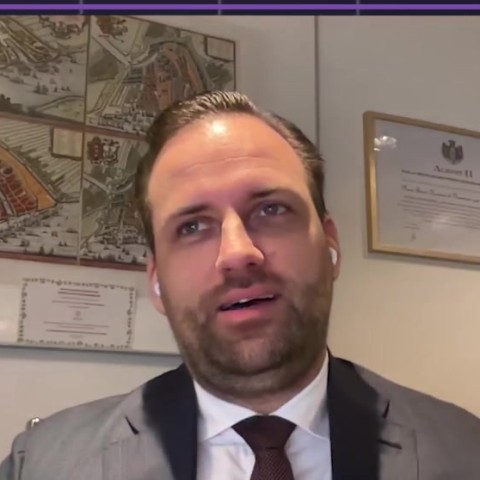 Yaron JansenDirector of Operations
KEY TAKEAWAYS
Always be solution driven
He advocates a solution-first mindset: in luxury operations always find alternatives rather than excuses, be direct and transparent with staff, act with good intentions, and admit mistakes instead of hiding them.
Balance occupancy and flow
Aim for roughly 85 to 90 percent occupancy to keep operations manageable; 100 percent can work but needs managed flow, strong cross-team communication, and ready alternatives for guests when issues occur.
Build complementary leadership teams
Assemble a leadership team that fills your gaps: mix styles to cover gaps, translate executive demands into realistic timelines, agree expectations together, and hold people accountable without micromanaging.
There is always a solution and you're very solution driven in general in hospitality.
Transcript
Click a timecode to watch from that moment.
00:00Welcome and Leadership Journey
14
Introduction to Yaron and his evolution as a hospitality leader over nearly two decades, reflecting on early career experiences and leadership style.
Yaron JansenIt's important to also understand altogether that we have different leaders in hospitality. You you can't all lead the same way.
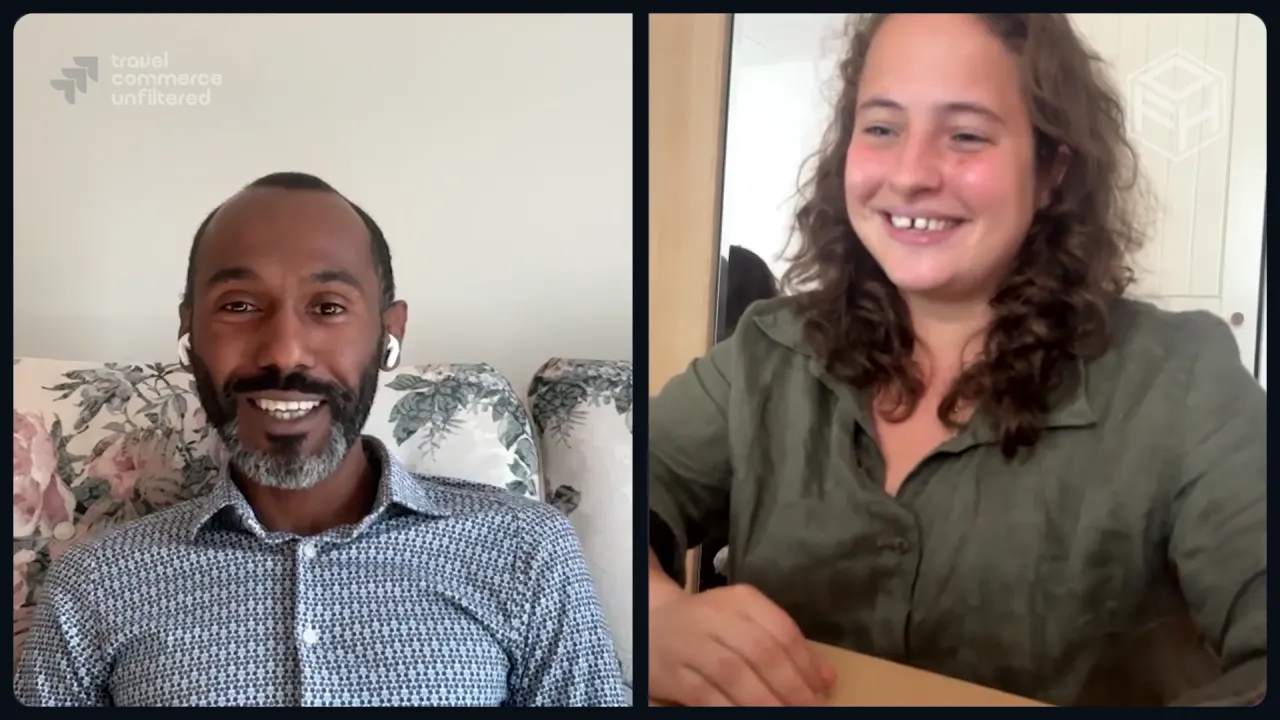
the Future of HospitalitySo welcome to lead the experience, part of the future of hospitality podcast. This series is about the leadership choices that shape culture, standards, and leadership in luxury hospitality. My name is Emma Wunderink, and today's conversation is a special one for me. My guest and I go back many years. We actually worked together at Sofitel Legende Brandes. When I was still an intern, Jaron is currently working at Hotel de L'Eureux located in the center of Amsterdam, a property that has recently been rewarded with three Michelin keys. Jaron has great operational responsibility being the director of operations of this historic property, And and, yeah, since our early days, he has grown through the ranks of hospitality, building deep experience across food and beverage operations and senior leadership roles. Along the way, his view on people standards and decision making has clearly evolved, shaped by time on the floor as much as by time in the executive hospitality environments.
the Future of HospitalityIn this episode, we'll talk about how those very operational years still influence the way you lead today, What changes when accountability expands and how you stay grounded while running complex, high expectations environments? So, Jarron, how are you doing today? It's nice to speak to you again. It's been well. Thank you,
Yaron JansenEmma, for that amazing introduction, first of all. That's I mean, it's I'm a bit flabbergasted by all the nice words. But so I'm doing great. Thank you. I'm doing great. Nice.
the Future of HospitalityNice. So I have known your leadership style from an intern perspective many, many years ago. How would you say you have you you have evolved as a leader? I think we started working together. I I I look till we look at it today almost a decade ago. So
Yaron Jansenbeen that long. Guess. Yeah. So that was my one point o version of my leadership, I would say then. It's been a while. It's been for me, for myself, it's been a very interesting journey, of course, in hospitality for almost two decades. But of course, in being in Amsterdam for over fifteen years now, in various positions, in various hotels, but especially also across the globe within the hotels, only in F and B, I would say. So that's been very interesting for me, and I've been very thankful for all the opportunities I got along the way because it's always good to be able to keep on pushing yourself forward and developing yourself and the people around you. Exactly.
the Future of HospitalitySo specifically, if you really look back to ten years ago, how would you say what is the thing you can really pinpoint on maybe insecurities that you had to had to win over or or most that you're many look at from a different perspective, not even if you have grown as a person as well. You're you've gotten older yourself as well. Right?
Yaron JansenMean, I think there's a few things. Ten years ago, first of I had no kids. So you have all the time in the world to focus on your career and also to focus on developing yourself and the product around you. And I think in especially in my early days, I also wanted to prove myself a lot. So you really push for results and push yourself for that for that result. Think also if what if if you look at it in the general sense of mentality ten, fifteen years ago, the expectations were also different from from yourself, but also in general in in hospitality. So you also go with the flow, I would say. And I think where, especially in a five star luxury environment.
Yaron JansenWe do everything for our guests. And, you know, you don't say no to anything. You always come up with solutions, and you learn that in a very early stage that the only answer there is is a solution and not a problem. And I think that that that really shaped me and also stayed with me along the way that there is always a solution, and you're very solution driven in general in hospitality. And and that I think that's a very good thing. Myself as a leader or as a manager, as a person, I'm very direct. So my leadership style is also very direct, which is especially when people get to know me, it can be a bit intimidating.
Yaron JansenWhen you don't know me that well, it can be, yeah, it can be a bit intimidating, but it always comes from a good heart, I would say. So fifteen years later, I am very aware of my style. So it's not so much that I changed my style because I think a very for me, it's a very good style because I am very direct, but I'm also very transparent. I'm very honest in that sense. So whatever answer or what what you see is what you get. And I think that's, for me, along the way, is very important to show people to whether it's guests or other colleagues or your peers to be honest and to to show them your real intentions and and not work with second or third agendas along the way.
Yaron JansenSo yes, sometimes that can be a bit harsh, but it's always with good intentions. And it's business. It's not personal. So we're here to improve. We're here to improve the the the the general guest guest journey. I think that's from that sense, we need to take that in into perspective and act accordingly.
the Future of HospitalityExactly. So that's really been something that, obviously, you just told me you've been in hospitality in general for almost two decades. And it is important to also evolve as a leader, but I think being a leader for a longer time, maybe over a decade already, you also have to be aware of things that are also your personality, but it's also something that you need to be aware of to also have other people understand how you lead. Right? So with you, you're you say you're quite direct, but it is with intention. So if people know that the intention is right in general and people maybe sometimes have to learn that about you or that is the way you lead, that can be very important, I assume. So self awareness in that, I guess Yeah. Is extremely important, and I think that comes with years. And so, yeah, very interesting
Yaron JansenIt's important to also understand altogether that we have different leaders in hospitality. You you can't all lead the same way. So, you know, is you you also need to gather people around you in your leadership team that also basically fill in the gaps that I miss because that which is Okay. I think it's as long as you are aware of where you stand as a leader and what are your strong suits and where are your pitfalls or your your, you know, your your downfalls. If you gather a management team around you that that that fill those gaps and that you can work with and develop altogether and also learn from, of course because then again, I am also still learning, of course.
Yaron JansenSo I think that's that's you should not gather only people around you that have the same leadership style because then it becomes a bit of a, you know, one single type of group group of employees or team, which will also not be for the benefit of the guest journey.
10:00Managing Operations and Occupancy
7
Discussion on balancing occupancy rates in luxury hospitality to maintain operational excellence and guest satisfaction.
the Future of HospitalityFair enough. No. Definitely. That's that's an interesting perspective. And you mentioning that you have have been present in the hospitality space for so many years. What would you say? What what part what part of your work today gives you the most energy even on harder days, more challenging days? What is something that really gives you the feeling?
Yaron JansenI think the busier, the better. Sorry, what? The busier, the better. The more vibrant the environment is, the better it is. I mean, for me, my best days in hospitality is when everything runs like a well oiled machine. It's so much fun to see that when there's just a good flow and good energy and you feel the energy in a building or in a group of people, you feel how the energy is. When there's a great energy and it's busy, but still it's manageable and you know, you don't need to busy doesn't mean that people are drowning. It's good to be like exactly on on point of capacity, but that everybody has to push a little bit. But when you also see the results, there is a great feeling of satisfaction altogether also within the teams.
Yaron JansenAnd for me, those are the best days where you can add those tiny little gaps that are created. But overall, it's just everybody has that sense of belonging, and it runs like a well oiled machine. Nice. That's the goal.
the Future of HospitalityYeah. I can understand that. And, of course, you working in luxury hospitality, five star plus luxury hospitality as we call it, I've always been told that 100% occupancy is not ideal. I mean, obviously, operations in a five star luxury property is completely different. So many more touch points that you have maybe than than in a three or four star property. What is your perspective on that? So you you just told me that at a certain capacity, you operate at at Yeah. Well oiled machine. Is there a certain percentage or perspective that you have on occupancy of a property that maybe can challenge It
Yaron Jansenall depends on the property, of course. And from a commercial perspective, you want everything at 100% because that may then there's the, of course, the or 95%. Especially with rooms, of course, it's always the balance between the room rate and the occupancy. So being at 100% could also mean that your room rate has been a bit too low. So it's it's finding that that balance. I think in like, in general, what from my experience in the hotels that I've worked in, let's put it that way, normally around 90%, between 85% to 90%, everything goes the best in the best way possible. When you hit that 100%, it also means that nothing can go wrong anymore because you have no alternatives to offer.
Yaron JansenAnd especially in a luxury environment, you always want alternatives to offer because there's always guests that have certain demands. Or when something breaks down, you need to be able to to give an alternative because you can't say no. So you want to be able to offer that alternative. But then again, from a commercial point of view, you want to sell that seat in the restaurant, and you want to sell that room that is vacant. So it's it's always it's always a it's always a bit of a balance, I would say. But I think, overall, it's it's it's very important to to manage the expectations. So in your restaurants, you don't want all your guests to come and join you at the same time.
Yaron JansenAnd that has to be managed by the restaurant manager or by the reservation system or by whoever is in charge of doing that. But it's crucial for a good flow that the booking pace is managed. And the same accounts for if you I mean, it it hardly happens, of course, that you go from from 20% occupancy to a 100% over one night. But if it happens, also there, you want a good flow in your arrival experience because if all the guests come at the same time at 12:00 and the rooms are not ready, it's gonna be one big mess. And then then that well oiled machine is not there. So communication with your guests, but also amongst the other teams, is crucial to get that even though you're at 100 capacity, to get that flow and to have that perfect well oiled machine is entirely possible with 100% occupancy as long as you manage the flow.
16:00Leadership Challenges and Mistakes
11
Yaron shares insights on leadership missteps, the importance of directness, and learning from past experiences.
the Future of HospitalityFair enough. As long as the communication between the teams, of course, has also been done quickly to to ensure that. So, I mean, we're talking about a well oiled machine and and and operational excellence in that regard and occupancy wise as well. I can understand that sometimes things also, even if five star properties go wrong. And, yeah, looking back on the leadership your leadership role and your leadership journey so far, what leadership mistake are you comfortable talking about now? And and what stayed with you from it? Or what have you learned from it, maybe?
Yaron JansenI'm I think I'm too young to have a certain moment in time or at least it did not happen to me that I can recall as such where it really stayed with me for years that I made it like this crucial that I really did something completely wrong and in hindsight and still, you know, looking back on that black day in the past where No, I think in general, I mean, of what I mentioned earlier, directness is definitely something that has worked against me in the past. Being politically incorrect sometimes really worked against me. Being too fast in decision making and being too opinionated and outspoken about it definitely has worked against me.
Yaron JansenAlthough I don't think I ever regret it, I have become, of course, better at it. And
the Future of Hospitalitybut yes, that's Now when to speak and when to sometimes
Yaron Jansenalter Still sometimes, I don't. But I think it's also there, it's part of the character, right? So as long as what you say, you don't regret that you said it because then it's just stupid. Like, that it works against you that, yeah, that might happen. But at least, you know, you have shared what you wanted to share, which I think is is just as important. But if you regret what you have shared, then, yeah, then it's then it's definitely a mistake because then then you're jumping the gun too quickly. Because I'm also one that that when I'm wrong, I I'm very comfortable with admitting that I'm wrong. So if somebody you know, if in in discussion or something turns out, you know, against me, totally fine.
Yaron JansenI'm very you know, I'm I'm not somebody to hold a grudge against that or
the Future of Hospitalitywant to proud.
Yaron JansenNo. No. Not in that sense. I'm definitely proud,
the Future of Hospitalitybut not in that sense. No. No. Only in only in a positive way. Yeah. So, interesting enough, I mean, also looking back on the on the past few years, we've spoken about this earlier. I'm curious to see when you compare leading teams today versus ten years ago in hospitality, what feels fundamentally different, not just harder or easier, but really different than in comparison?
Yaron JansenI mean, I don't think it ever gets easier or harder in that sense, indeed, but definitely different. I think when I started in hospitality, it's you show by working, You show by being there, being present, but also making your making your hours and and making sure you push harder than everybody else in order to show that you are, in that sense, better than other people or wanting to push more for your your self development. And hospitality is a people business, and we need the people. But we also need, especially in a luxury environment, we need people that really want to deliver that five star service to their guests because showing up is not enough.
Yaron JansenAnd I think that especially if you look at it like fifteen years ago, there has been a mentality change in general where I am very used to be able to you know? When there's a challenge, you just push harder. And when there's a challenge with a guest or with a situation or, you know, you need to turn a a room around in in two hours to make sure that you go from an empty empty boardroom to a full dinner setup of 200 people. I'm I'm used to that challenge in a sense that, you know, it's just something that you do. It's not something that is optional or that can be discussed as, you know, we can we are we able to say no?
22:00Changing Workforce and Leadership Styles
18
Exploration of generational shifts in hospitality, balancing team involvement with effective decision-making.
Yaron JansenAnd nowadays, it's more towards you really need to ask people everything, and it also feels that everybody wants to know why about everything and anything. Whereas, you know, if you look at the very traditional leadership from years ago, you do as you're told by your manager. I'm I'm not sure as if that's the best way to lead a team because you, of course, want their involvement. You want their support, and it's called team for a reason. And it's not I, the manager, and them having to execute it. So I think that doing it as a team is very important, but you can't run the whole hotel or the whole operation with the whole team as a manager because I mean, what's the purpose of a manager if everybody is involved in all the decisions and wants to be with all the meetings and wants to be always everywhere. And then when you had a meeting and you need to be able to explain everything that's been discussed in the meeting and also explain why we came to certain conclusions and so on and so on and so on. I mean, there's no work being done anymore if we're just gonna talk about why we do everything.
Yaron JansenSo it's finding that balance with, you know, giving the information that people nowadays require to work effectively, but at the same time, don't get lost into a complete business model where every decision or every course of action is being challenged and therefore completely ineffective and also takes out the efficiency of the team.
the Future of HospitalitySo would you maybe say that leaders in general have to be clear about purpose and not just standards? 100%.
Yaron Jansen100%. I think just standards and SOPs are useless without purpose. While I also think ten, fifteen years ago, you could give a book of standards and say, this is how we do it, and we stick to that. And it would not be questioned, maybe in a way like, hey, can we improve it, but it would not be questioned why are we doing this without coming with a solution because there's you know, there's different types of questioning, of course. And I think questioning something, a process or a procedure in with the intent to improve it is always good because at the end of the day, we there's new technologies, there's new ways of working, so we should always stay on top of the ball.
Yaron JansenBut questioning it without having thought of it yourself, I mean, that's a very hard discussion to have because if you say why I need to do this, but you have no idea why you're asking the why, then it's a very challenging situation. And that's occurring,
the Future of Hospitalityyeah, more
Yaron Jansenthan ten years ago, I would say. Exactly. So
the Future of Hospitalityinteresting interesting point because you've mentioned working in general. I mean, we are working with a different generation in hospitality at the moment. And you've mentioned that there's also something how you call it is generation y.
Yaron JansenYes. I mean, it's a four day working week, fifteen years ago, I mean, I don't think we ever thought about that. And when you were in working in events, like you did very long days, you could do days of fourteen hours, sixteen hours. It's not that you then say like the next morning, oh no, I only had like six hours of sleep and there's like seven hours in between my shift. I can't be there at seven in the morning because, you know, there's not enough rest in between. Nowadays, that's more present. Not always, but it's more present. And it's it's also it's also a good thing. And because, there also needs to be time for other things than just work.
Yaron JansenBut it also should be a bit of a balance. And at the end of the day, we need to work to also be able to enjoy our free time. Without working, there's not a lot of enjoyment in your free time unless you're already loaded with something from the past. But the majority of us is not. So yeah, you need you need to you need to work. And and sometimes it looks like the the the younger generation prioritizes the the free time over the work time. But then again, they still need to work to provide their free time. So there's there's a bit of a yeah. It's it's not really Balance in that regard. It's not it's not very balanced, I would say. No.
the Future of HospitalityBecause, for example, I mean, we've worked together ten years ago when I was working in events, and indeed, those days you're talking about, I had done many of those. And I would say, looking back on it, if I compare the two mindsets, so to say, like, the generation y that we've talked about just now, I see that around me as well. And I do think it is a good thing as well, being more aware of your the time that you rest, the time that you sleep, the time that you are you are able to, process the day that you've had to also, think about things, process them indeed, but also maybe learn from certain things. Because if you are just focused on working seven days, having eight hours of sleep in between, I don't think that is the most ideal situation.
the Future of HospitalityBut also looking back on it, when you are younger, I was I think I was around 16, 17, 18 years old back then, I do look back on those days really having shaped my mentality now as well because my perspective is different. If I look ahead of me, when I have a busy busy week, next week, for example, I feel more confidence in myself myself as well having known that I've been through those times as well. I think it's really also a mindset thing. So do you also maybe agree that it's I think it is the best thing to take the generation y into consideration,
Yaron Jansenbut also to look at those really, really hard days and maybe find a middle way. I but I think it's you summarized it perfectly. I I I I mean, for me, I I love those days. And still looking back on it, I really love that period where you do all these events and you just keep on going. And yes, of course, after high season of three months in a row, you are exhausted and you do need a holiday break. And then after two weeks of being at the beach, you could go again. And it also has to do with your age, of course. But I completely agree that it shapes you as well into having a mindset where have busy days and you have more balanced days, which is good. And while you get older, you find that balance more and you prioritize different things in life.
Yaron JansenBut I do need I do truly believe that it's very important to have that period when you are young, when you are very capable of doing it and when you don't need that much sleep when you're young, to push a bit harder than you're comfortable with to begin with. And I think pushing that that pushing is is missing now because there's there's a quicker the the people are quicker in resistance to it. So they also don't challenge themselves in that sense to see until where they can go and also get that mindset.
the Future of HospitalityRight. If you don't challenge yourself enough, you don't know sometimes how far you can go. Right? It also gives you a certain confidence rest of your career as well. Absolutely. Yeah. It's an interesting perspective. And I think also for the new generation, that is something to maybe think about. And that's it
Yaron Jansendefines itself when there's two you have two types of people. When there's when we're hitting 100% occupancy or a major event, You have a group of people that really looks forward to it and says, can't wait for all those people to come here, you know, when we have like an event of 500 people. It's going to be so much fun. And you're gonna and you have a group of people that is really like stressed about it because will everything go right? You know? So many people, so many events, so many yes, so many that.
the Future of HospitalityWhat's that sense?
Yaron JansenYeah. I mean, I think it's it's very important to to try and shape yourself in a way that you look forward to those moments because you also have way more fun that that way.
33:00Decision-Making and Accountability
15
The impact of top-down decisions, managing expectations, and the critical role of accountability in leadership.
the Future of HospitalityExactly. Interesting perspective. So when leadership decisions backfire, I mean, I guess, in in in all those years, you have made maybe certain decisions, or you have seen decisions being made that maybe backfired and or did not work out in the way that you hoped they would have worked out. Is there a general thing, or is there usually something that you find missing that was missing in hindsight?
Yaron JansenI mean, when you have decisions that are made you know, top down, it could very well be that they are not very feasible to execute or that in in the already ongoing operation, they are not very practical or manageable. So, you know, when when saying when you have this very classical type of leadership where top down decisions are being made, that that works against you. And I think especially I mean, that's then the good thing of this generation when people do need more explanation and and and they do want to understand what the purpose is of what they're doing and why they are doing it, it also gives you more insight in where you should adjust a a certain strategic decision.
Yaron JansenBut overall, I think it's very important that you keep your eyes on the horizon or reach for the stars and not be blindsided with too much ad hoc decision making or too much daily challenges because you need to trust your leadership teams that are behind the desk or in the restaurant or wherever. You need to trust them to to solve it in the best way possible and then together see where we can improve for the future. And the future is not tomorrow. It can be tomorrow, but it's mostly next week or next month. And when you're when you're making decisions too radical, they mostly backfire because you focus too much on the problem that is then occurring and you're not taking the full scope of the decision or the change in strategy that you make. And I think in the past, that's that's always has been a bit my struggle where, you know, especially when I was in a leadership role and not in an executive role, you you were led by the executives and being too sensitive for ad hoc changes really disrupts a a a leadership team in general and the operational teams.
Yaron JansenSo for me, that is that is really something which I am very mindful of of not being too invested in in really the the the day to day yeah. How do you say it? Like, day to day. I will not say day to day management because, of course, it is day to day management. But not being too, yeah, micro not
the Future of HospitalityNitpicky
Yaron Jansenor too, like Exactly. Nitpicky would would be good.
the Future of HospitalityYeah. Yeah. But do you also think because I have been in a leadership position as well, but also have been operational for a very long time. Do you think it's also very important as a leader getting instructions from the executive team as you you are now in executive role, but before when you were not, do you think you should also sometimes be pushing the brakes a little bit from the expectations being set from the executive team, filtering those, expectations through as a leader to your team because too radical of a decision can also if those decisions are being made too radically, too often, I can also imagine that the team loses trust in a leader, right, if if things are backfiring.
Yaron JansenYeah. Absolutely. I think that's I mean, the the people in the leadership teams, those are the the ones really taking the ether on a daily basis because they're in between. They're in between their operational team and they're in between the executive team. And they're always I mean, I think those are really I mean, I don't want to offend anybody, but those are really the most challenging roles in any business where you are responsible for a team, but you still have to be responsive to what the people above you say. And it's and coming from myself from a very broad spectrum of operational roles, I always try to keep this in mind.
Yaron JansenAnd I always, you know, when you talk with your leaders and you know, you don't wanna you don't wanna be unrealistic when when you say, like, this has to be solved today or tomorrow. It needs to be manageable. And, you know, you can you can jump very high and say, I want it solved. But if you set an expectation which is not reasonable, it's not gonna happen. And it's only gonna lead to a lot of frustration with your leadership team. Your leadership team is gonna be frustrated towards the operational team, and your operational team, they don't know why everybody is frustrated, but they will get frustrated because everybody around them is frustrated.
Yaron JansenSo you need to be very mindful of when you want things to be done and how you want to have them executed. So accountability is a very, you know, a very important aspect here where you, together with your leadership team, you set a certain you make an agreement, you set a standard, you take a strategy, but also, you know, the the the the the timing needs to be discussed. And but when discussed, it also need people also need to be held accountable. And that's also something which is is you know, it's not always nice to have, you know, to keep people accountable for what they do.
Yaron JansenAnd especially nowadays, it's a bit more challenging because you need to be very mindful in the way you keep people accountable for what they should do. And but, yeah, important to see where we can support them to make sure that, yeah, we follow through.
the Future of HospitalityYeah. So but do you think hospitality has become too cautious in its leadership approach, or is that a necessary Sometimes, yes. In today's workforce?
Yaron JansenYes, but it's the chicken and the egg. So if the softer you become as a leadership team or as an executive team or whoever, but the more softer you go, the more softer you the workforce is going to be in two years, in three years. Like it's it all slides down in that sense. So I think we we should be you know, sometimes should be able to be a bit more strict and direct and, you know, tell it how it as it is, how it is because it it's it is what it is, you know? And
the Future of HospitalityAnd there are things necessary, right? There's sometimes Yes. That are necessary, especially in luxury
Yaron Jansenthat are And sometimes, you don't have to like every decision. It's not optional to like it or dislike it. Sometimes, it's just it is what it is, and we can explain why we made that decision. And you can understand it. You can question it, and we can talk about it. But at the end of the day, it's the decision. The decision has been made, so we need to execute it, and we can adjust accordingly, but we still need to execute it. So that sometimes, I think, is misinterpreted with decisions. They're not optional. Need to go in a certain direction. Otherwise, you know, change is always the the biggest fear of everybody. Right? So you wanna keep it in the same direction, and you wanna keep the same work.
43:00Future of Hospitality and Leadership Mindset
20
The role of AI, valuing mindset over experience, and confidence in the next generation of hospitality leaders.
Yaron JansenBut we need to change With all the technology that's going on around us, with AI, of course, and and now we said it because it's mandatory to say in every call that, you know, AI is there, but it is there. And I think we in hospitality are, in general, very far behind. And of course, you have a few very nice companies and very future driven companies in place. But in general, I think we're still very, very much behind. And that has two reasons because we are a people business. So it's very hard to have that taken over by AI, but I also don't think that's the purpose. The purpose is to work with it to create a better guest journey altogether and to enhance that guest journey and take away the work that we actually don't like anyway, filling out spreadsheets and filling it, taking surveys and so on to and then put those surveys into guest profile so that when the check-in is there, that we know what the survey has said that so if you can all automize all those processes where it gives us more time to really focus on the guests and have that interaction and have that connection.
Yaron JansenIt only helps us forward, but it's very challenging because there's so many separate different systems. And and, you know, you don't have one reservation system. You have many, and you have many booking sites, and you have all those connections. So it's I think in general for hospitality, it's a challenge to get that all connected in a right way and in an authentic way because if you know it's driven by AI, you also lose interest very quickly in general.
the Future of HospitalityPeople in general do usually feel when AI, I think, is maybe being overused, right, when when the sincerity
Yaron Jansenisn't there anymore. No. And that's for us the key. Because especially in five star luxury, the the the human connection is is key. Having you know, making the guest feel like they're belonging and that they're home. You know? Right. You want to have that connection.
the Future of HospitalityI think with that also comes, we just spoke a little bit about I AI, but also about the people who work at the property from from operational positions to executives to managerial positions. It's all very important to have a certain mindset. I think that is extremely important. And taking into consideration mindset, do you believe, for example, that the industry still overvalues experience and undervalues mindset when it comes to leadership roles?
Yaron JansenI don't. I'm not sure about the industry. I think mindset I think in general, the hospitality industry, and especially the good leaders, will value mindset over experience. And of course, you need a certain amount of experience because, you know, you also see in hospitality, especially in leadership roles, that if you are a great waiter, you are a great supervisor. And if you're a great supervisor, you're quickly a great manager. But that's not the case. So not, you know, you you can be a great host and a shitty manager. So I think it's, you know, it's it's very important to
the Future of Hospitalityare different Very skill
Yaron Jansendifferent skill sets. And being a great host with your guests and being the person that they come back for and being, you know, being that full scope of experience for them doesn't make you a great leader. And that's, I think, one of the most common mistakes in hospitality is that those two are being mixed up. And when we see that somebody is a great, great, you know, floor man and a great leader on not leader, but great visible person on the floor, that it also becomes the manager and then needing a different skill set where it doesn't doesn't add up. So I I I do think that mentality definitely is yeah. I mean, you need to give people a chance that have the right mentality because they want if you want to grow, you can grow very quickly.
Yaron JansenYou can have all the experience in the world. But if you are if you're unwilling to grow, then it doesn't add it's not gonna add any value because you need to be an inspirator for your teams as well. You need to be, yeah, you need to be a leader,
the Future of Hospitalityand you need to lead them talent wise, it's important. Right? Because some people really have a personality that fits better with the leadership role. I think people in general who start in an operational role and who see several things that need to be taken care of, some people really have the personality that just take on more things in general, who feel comfortable giving people instructions or helping people, assisting people, or having other people succeed within their team even without being a leader. I think, at least my experience in hospitality, and I don't know how you see that, is usually you are you already are a leader before you are promoted, so to say. Yeah. 100%.
Yaron JansenYeah. Fully agree. Yeah. So
the Future of Hospitalitytaking into into consideration, I mean, the podcast is obviously called lead the experience. So, it's also important for me to know, as a last question, what gives you confidence about the next generation of hospitality leaders?
Yaron JansenI think especially, I mean, it's what you just said. You You have a large group of people that want to do more and want to do better. And even though the landscape is changing and the workforce is changing, you always have a very large group of people that want to see other people succeed or take energy out of guiding other people and making them more successful. But also, you know, improving that guest journey, which is for us in a five star property one of the most important things, of course. So you always have people that step up and move forward and try to do new or different things than other people in order to stand out and lead the way.
the Future of HospitalityExactly. Well, it's it's a very interesting perspective, and I I myself have always found it very important for people still really wanting to work in hospitality. I think it's a fantastic industry. I think there's so many choice so many option options, so many choices to to take within your career in hospitality. Even if your career is not in hospitality after a few years, it's a great foundation.
Yaron JansenAnd It is I think very broad.
the Future of HospitalityRight? Exactly. And then becoming a leader in hospitality and coaching other people within their career and also making decisions to have guests, obviously, also very important. Hospitality experience, what you want them to experience or how you want them to feel or feel at home even is also very important within hospitality industry. Leadership is needed. Good leadership is needed, and I think it's at the yeah. One of the most important things for property to be successful. And, I think you're a very good example of it, and I really want to thank you for joining the podcast today and and giving your insights on leadership in general and how you need and what your style is. And, yeah, I really want to thank you for your perspectives. And
Yaron JansenVery welcome. And
the Future of Hospitalitythank you very much.
Yaron JansenNo. Thank you for for the nice conversation, and and it's been great seeing you again.
the Future of HospitalityYes. Likewise. Thank you, Jeron. Thank you.