
















 EPISODE · 40 MIN
Einblick in Haarlems verstecktes Juwel: die Sicht eines GM
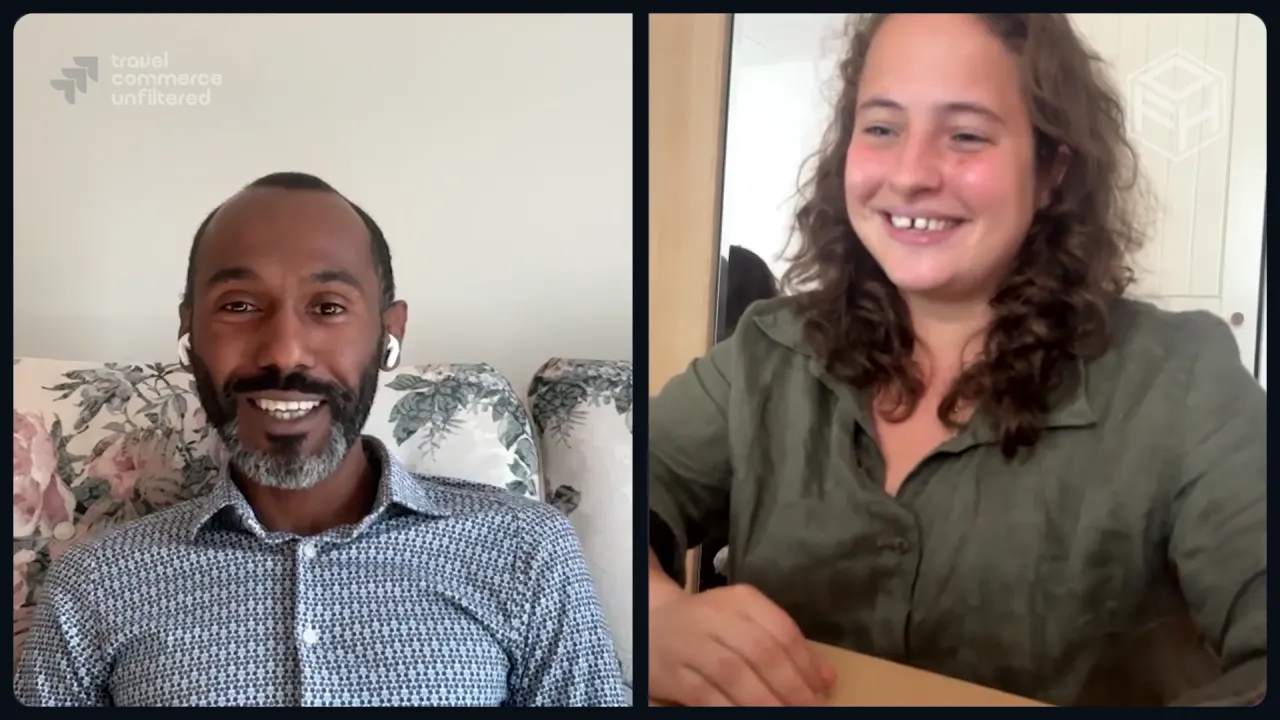
Die Rolle des Hotel General Managers dreht sich nicht nur um die Zimmer oder die Gerichte, sondern um das Erlebnis und die Menschen dahinter. In dieser Folge teilt Mark Welbers, General Manager des Carlton Square Hotel in Haarlem, seine Einblicke in Hospitality-Trends, Gästeerwartungen und die sich wandelnde Rolle der Technologie in Hotels.
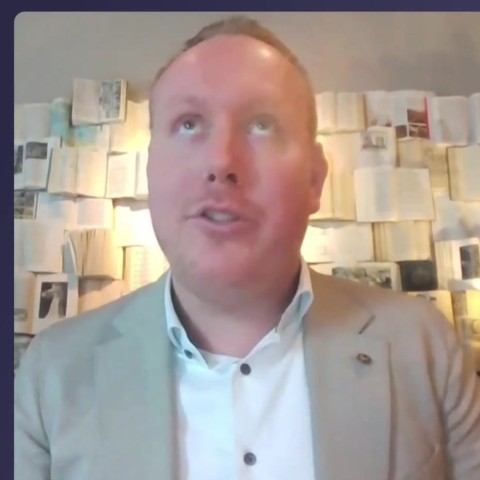 Mark WelbersGeneral Manager
Transkript
Auf eine Zeitmarke klicken, um ab dort zu sehen. Die Aufnahme ist auf Englisch.
07:53Is that playing a what role is that playing in, offering or leaving a memorable guest…
12
the Future of Hospitalityyour food and beverage department? Is that playing a what what role is that playing in, offering or leaving a memorable guest experience to guests?
Mark WelbersWell, I should say that the the F and B is is is basically, of course, the most tangible thing that you could offer a hotel guest there. Mean, a hotel room and the service in there are pretty static. But SMB has has the beautiful thing that it's it's very tangible, and it makes more of a connection on an emotional basis. So a wonderful drink that you enjoy or a meal that you never had before, that's something that, of course, really sets you apart from other companies and other hospitality businesses. It kind of gives color, I think, to a stay of a guest. I mean, we can have the most beautiful dishes and the most beautiful rooms, but it's it's the actual experience of the quality and also the staff presenting the F and B offerings you have that really sets out the difference. So we always say that the restaurant restaurant really really here with us is Bar and Kitchen Zocher, which is not only the hotel restaurant, but also a very local place for local Harlemers to come and have lunch, dinner, drinks, whatever. It really is the beating heart of the hotel. So how do we get sold to a tour? Yeah. What we do. And it's also a place where locals come because you mentioned locals.
the Future of HospitalityIt's not just the hotel guests, but it's also a place where locals like to find? Absolutely.
Mark WelbersThe thing is that in Harlem, we have a very strong base of a lot of good culinary restaurants. So so Harlemers are really used to have very wide options in terms of dinner, lunch, drinks, whatever, where they can go to. And that's a hotel. We are located at the Haut Plang, which is at, just on the corner of, like, where the city center starts, so not directly in the city center. So it's really up to us to make sure those people know we're here and that we attract them to come here to to experience with us what we offer in our FMB. And the moment we, we have them in the hotel, we make sure they are returning guests.
Mark WelbersSince it's it's all day place, we we from from breakfast till late bar drinks, whole day, the restaurant's opened. The different settings, different seatings. Actually, for every moment in the day, you're able to have a good time with us. And yeah. Is that where you are sitting right now? Is that the area where No. That that's that's nice you're touching. That's actually quite funny. We, a few years ago when we created our new restaurant, Bar and Kitchen Zucker, at that time, we still had a separate restaurant and a separate bar, so those two outlets were not in the same area. The moment we created our restaurant, Brother Kitchen Soccer, that was combined, so it would be an all day place. But we still had the the space of the hotel bar available.
Mark WelbersWe left it unused for a while, and after a while, we decided let's make it a conference room or a private meeting room. And it's become one of my favorite places actually in the whole hotel. And I'm just picking Can you show it? Yes, please. Show us. So you're around. It still has some of the elements that the old hotel where I had. So, like, the wooden polish you see and the the book and everything. So it's a very cozy atmosphere you have here, and it's very one of my favorite places to be, actually.
the Future of HospitalityI like the orange chairs. Lot of coloring here and there. Yes. No. It's I love it. I mean, a typical a little bit of Dutch in there. It looks like little tulips. And the curtain off has not even opened yet. Can you imagine? Right. Right. Right. So what is your biggest challenge or one of your biggest challenges when when it comes to the expectations of your guests?
Mark WelbersYeah. I I think nowadays that that's, it it's of all times that guests' expectations are increasing. That's something that that that that will always be. But I think it it especially is around personalization and speed at this time in the Okay. If you look at hospitality here. And I think, personalization is more also in terms of technology that we can use or must use actually to make sure that people do not have the unneeded, things they do upon checking now, for example. Filling in all the registration forms, putting in their their payment details, and so on. People expect those things that they can do it upfront or that it's already known with us. So all the not necessary things to do, they want it out of there, and we also want it out of the guest experience, out of the guest journey.
Mark WelbersSo way more personalized that we know upfront what kind of drink they want, what's their favorite food, which location of the room would they prefer, high floor, low floor. You name it. All the things that you know you want to know upfront, basically, that's something they expect us to know these days. And technology is something that's, that can really help, with that. I do know What are you using? What kind of technology, can can can you do you know? K. Do you know what kind of technology do you use to to make that happen or to make sure you know more about your guests? Sure. Well, it starts basically first with, collecting the right data. That's where it all begins. Data. Yeah. To to make sure that you know more about your guests, you need to collect it and save that data.
Mark WelbersAnd we have some systems, of course, to process the reservations. In the last two years, we really, brought it the use of those, of that technology to make sure that we're able to save and gather information as preferences, date of birth, etcetera. And we we try to do that as easy as possible through, the booking process, for example. The people already upfront give us that information that we can use to put in their profiles into our systems, and also share that with hotels, that they stay within our group. But like I said, it starts with collecting the data, and that's, of course, the something you need to do for a longer period of time before you have a good set of guest data that you can use for a long term, other goals, whether it's recognizing guests on their birthday, whether it is what their favorite drink or their favorite food is.
Mark WelbersBut that really starts with gathering the data. And Mhmm. Nowadays, we have the systems to do so. Yeah? We have the systems to collect that data, and it's up to us as a hotel, again, within Carlton, how we are willing to use that data. So on that side, you have personalization, and on the other side, you have speed. We have, of course, also younger generations are very used to the instant certification. If if I want it, now, I can get it now. So all the things, all the steps they do, whether it's online or offline, need to be in a certain pace. And, of course, especially within hospitality, you wanna do something with care and with attention, that doesn't always go well with the term speed.
Mark WelbersSo that that's always balancing. Okay. We need to find the right balance. Yep. Indeed. So I I think in in in general, the biggest challenges in in guest expectation is the personalization and speed. I think throughout the upcoming years, that will play a a bigger role in eventually guest satisfaction,
14:42Is there maybe a story that you remember, as an example?
18
the Future of Hospitalitystaying in the hotels. Yeah. Yeah. Absolutely. I fully agree. So can you tell me maybe I'm just something pops up popped up in my head, a an experience that you never forgot, by trying to provide the best services? Is there maybe a story that you remember, as an example?
Mark WelbersYeah. I I remember something very well. It it was quite a few years ago. I was I was working already with the Carlton Hotel collection, but with our Amsterdam hotel, and Banks mentioned on the on the Hirdegracht in the middle of the center of of Amsterdam, lovely boutique hotel, And 51 rooms, and really, really focusing on the personal guest experience. And and what what really struck me as as fantastic, and I I always remember there's a wonderful experience that we had guests, I believe, from The United States Of America checking in one day, and they were having this lovely chat at the reception, what their plans were for Amsterdam, what they wanted to experience.
Mark WelbersAnd through that conversation, they mentioned they they always had a fascination. They wanted to try Amstel beer, something we all very much know, very known brands. But at the time, we didn't have Amstel beer at the base mansion. We had a different kind of, also a big brand, wouldn't name it, but then another beards. What And and what happens, the the and then that's something that struck me as fantastic service is that my colleague at the reception who was checking them in, who was helping them, for some reason was able to squeeze out for a minute and, talk to another colleague. Hey. These guests are really looking for that kind of specific beer. Can you run to that and that shop, get the beer, and quickly put it into their room?
Mark WelbersSo that really happened. The other colleague ran out of the hotel, quickly bought a six pack of of Amsterdam beer, and the other colleague was able to keep the guests at the reception, tell them we bought about Amsterdam what they wanted to do, explain the hotel concept, and in between, that other colleague bought a beer, went up to the room, put it there. And when she got back at reception, the other colleague could give the hotel keys, and the guest went up to the room, and they found the six pack Amsterdam in in their room with the little notes. Even before they actually entered the room, one of their desires, one of their wishes was already granted. And, yeah, you can imagine that that one guest were completely stunned with that service, and you had not only guests, but fans for life. I mean That's a memorable experience they never forget. And it's so simple, so small. It's the little things that count. Yeah. True. But that that's something in in terms of what you learn through the years that it's not not the big things that that you offer or the big things that you do. It is the small things that people give give them some kind of a feeling. That's something they will remember.
Mark WelbersSo it's not the the physical thing or the the product thing, but it's the feeling that you give them. Hey. You're special. We give attention to you that will stick to them. And it's an example I still use up to this day. Two new colleagues used to explain to them that what is servers, what is personalized servers. This is one of the examples I, a lot of time, use. Yeah.
the Future of HospitalityAbout, yep, about the the region. I mean, you're in Haarlem in the it's in the city center. Right? We're in in in the center of Haarlem. And people come there. You you you mentioned American, US citizens visiting your hotel. What I know is that most people focus on Amsterdam itself to, to to stay, but, what I see now, the prices in Amsterdam, the the hotel the night prices are the rates are really high compared to the surrounding cities. So, would that be hearing all this would be a good recommendation to tell people, hey. Instead of going to Amsterdam, you might as well just check into the Carlton in in Haarlem. You you're just as close as one train right away. How far is it?
Mark WelbersFifteen, twenty minutes, I would say. It's it's one stop, basically. So it's it's one train you get in and, I believe, one stop if you're lucky, and then you're in the middle of Amsterdam indeed. So distance isn't really a thing, and especially if you, if you, well, take again The US visitors. Yeah. If you take a train for twenty minutes in New York, you're lucky if you're in another area of the city, but still, you're in New York, for example. Right? So the twenty minutes ride, it's for us Dutch, it's like, oh, twenty minutes. Oh, it's doable. Our international visitors, it's it's nothing. They're they're used to it. And, yeah, I I think not not only the distance, but also the the policy now, implemented by the Amsterdam local government, it's not really or it's it's really disencouraging people to actually visit Amsterdam, whether it's leisure or business. And, yeah, in in the end, I think that will harm not only the Amsterdam hotel market or visiting market, but the entire Netherlands, because Amsterdam simply is one of the big attractions in in The Netherlands. And if you disencourage people to visit Amsterdam, you basically disencourage them to visit The Netherlands.
Mark WelbersSo I think in the end, it it will affect us more broadly than purely the city of Amsterdam, but it's also kind of missing or lacking a vision of how we would like to shape the the the visiting economy for the city of Amsterdam. You can try to, build a city completely closed with a fence or try to keep everyone out, but for a fact is that the world won't shrink. We won't, like, shrink in number of people. We won't number of travelers. It will only grow. So we there will be a bigger stream and more people will willing to travel, more willing to visit Amsterdam. That's something that will happen. So you're not you're not gonna influence that. The only thing you can influence is is how those people are gonna visit your city, how they're gonna visit your country, how you wanna streamline those flow of visitors, basically. And that's something I believe the city of Amsterdam really needs a vision on how to do so, how how to do that. And you need to have conversations with the hotels in Amsterdam, with all those hospitality companies within Amsterdam to okay. You know your guests the best. You know what they want. You know what they're looking for. How can we make sure that we balance the interest of the people living in Amsterdam and and working there and have their houses there, and how we balance what the visitors want to see so that both of them really are happy with visiting Amsterdam, that the visitors feel welcome in Amsterdam and don't feel like, oh, you know, you're not actually really welcome, and the people living in Amsterdam still feel home in their own city.
Mark WelbersAnd, yeah, it it kinda feels that throughout the years, there wasn't really a vision or policy on that. It basically was, oh, the moment we need more visitors, oh, let's, let's create a movement, Amsterdam marketing, and let's sell the city of Amsterdam. Well, they've done a very good job at that. Things were getting busy. Oh, now it's too busy. Now let's stop with Amsterdam on marketing, and let's try to avoid people for coming here. Yeah. The British house really working.
the Future of HospitalityI I I I spoken with other people about that. It's they they they call it overtourism. And but, yeah, you can complain about overtourism, but Amsterdam is a very popular spot and the surrounding areas as well, the tulip fields, you name it. I mean and that's why you are also an important location, I think, for for tourists to visit the the tulip fields. But the the the visitors the the the travelers I mean, the the amount of travelers will only increase. When we look at China, for instance, the amount of people from China that are traveling is increasing by the millions per year, and they also come to Amsterdam and Haarlem.
Mark WelbersTrue. Now, indeed, in the zone, that's precisely my point. You know that there will be more and more visitors coming, nationally and internationally, and you don't have any influence on that. The only thing you can influence is how you want them to, visit your city and how you'd like to guide that. And, I mean, they they try that in in some way, by making, Sandfort Amsterdam Beach, for example. We talked to push the flow of tourists more into the province of the North Of Holland there to divide it a bit over the cities, and that I think is good. And still, you will have moments throughout the day or throughout the week that people want to be in Amsterdam, but they want to visit, the city. And we're just talking about people actually visiting and staying in the city of Amsterdam, and we're not, even talking about today visitors. People who actually come to the city and leave the same day, which are in in essence, actually, the the visitors that create the overcrowded feeling. But those are the people coming with buses and leaving again, making sure that at some point of the day, you really have to yeah. If you have would have a crowd or people, how do you say, meter to see how many people there are, That's what creates how busy it is and the feeling it's overcrowded. So and that's very and that's very hard to manage. Yeah. I mean, you you can't prevent people for coming to the city by train or by bus, and, yeah, not one wanted to have them there. So I don't really have a very good solution either for for, for Amazon how to do so. It's just to create or develop a vision for not only one or two years, but for the upcoming ten years, to to see how you can manage the flow of visitors to your city and to attract the right ones because I understand that some tourist groups might cause some nuisance on the, let's say, the the Red Light District or any other areas. I know that sometimes there are there is a nuisance there, not only for other tourists, but also for people who live there.
Mark WelbersBut on the other hand, you do wanna attract business travelers to the to the Amsterdam area. You want companies and organizers to go to the Rye Convention Center to organize the big events over there. However, if you look at cities as London, Barcelona, who really are, yeah, trying to pull those organizers to their cities with free public transport, but with with benefits for travelers coming, to stay with them and to do their events there. And then you have Amsterdam who does none of that and actually does the worst job by increasing the city tax to ridiculous numbers. Yeah. Not only are you, not successful at making sure you don't have the visitors anymore who cause a nuisance, but you're also pushing away the visitors you want in your city. So, again, it comes back to the point that you need to create a vision for upcoming five to ten years, how you wanna guide those flows of visitors to your city into, yeah, how you would prefer it would be best. So yeah. Yeah. Talking about this the next five to ten years, because that's actually a question that I had in mind for you. So how do you look,
the Future of Hospitalityat the hospitality industry, your hotel, for the next five to ten years? I mean, everything is changing so fast. But in the end, what I think when it comes down to is the guest experience, that's the most important. I wanna feel welcome. I want to get the the exact the same little things that you do. I don't think those, will ever change. But how do you see the your industry, your particular hotel, how do you see that in the next five to ten years?
Mark WelbersWell, I think the if you look to the Carter Square Hotel, we are, a 100 a 24 bedroom hotel, meeting facilities, restaurant facilities. We are still in in shape and form a hotel where the personal service or personal connection with guests is possible. Staying with us, you're not a number. We know who you are, and and and that is because of the size of our company. I can imagine that if you go to two, three hundred bedroom hotels with bigger facilities, that becomes different. Maybe difficult, but for sure different. But I believe that technology and especially artificial intelligence will increase, their importance in the upcoming year. It's the fact that they will take over, some of the tasks maybe employees or staff do now or that they will make sure that those employees can focus more on personalized service and experiences. And that's how I, in an ideal world, would see it.
Mark WelbersFor example, I don't see a self check-in kiosk here in my Okay. I do not see a robot being here serving people their drinks or their food. Not at all. I'm I'm pretty sure I don't I I believe that's that's not the kind of automization and technology guests are looking for because still, we wanna have the personal connection. I mean, that's something we learned from the COVID period, I think. That's, at the beginning, it was like we're never going back to physical meetings, etcetera. It's all gonna be online. But we learned in time now that people need physical, and we we need to connect with each other. It's essential. It's really essential. It is essential. So I'm really keen on the fact that, yes, we do need technology and artificial intelligence to make processes better and make our guest experience better. But above all, we should never forget that the one thing that guests stay with, especially here in our hotel, it is because of the staff working here. It's because of the people that are working here. And if you take those out, even one or two or the certain aspects, you increase the possibility for people choosing to stay with you.
Mark WelbersAnd then if you take that into perspective, then, yes, you need to make processes more efficient and more easier and to make sure that you empower your staff to be, able to only be working with the guest experience. So I'm not doing all the needed hassle or administration work, but purely a 100% focusing on the guest experience and on the guest. I'm pretty sure then if if you put technology and artificial intelligence in that spot to increase that, then it will be for a 100% a a fantastic development for the hospitality industry. But really thinking on on certain tests to be taken over by machines, robots, etcetera, I don't really see that happening. No. I think that you No. No. You're not that kind of hotel. Do you no. And and it's it's I think if you look over time, we just mentioned COVID period that that how much we realized that we need that connection.
Mark WelbersIt's the same thing, that happened already ten or fifteen years ago. If you look at, Schiphol Airport, for example, or or all airports around the world, I believe fifteen, twenty years ago, the perception was, let's put in or put on the airport those self check-in kiosks. We all know where you can bring your own boarding pass, your labels, etcetera. And we don't need the agent and then the check-in desks anymore. I believe we're twenty we are pretty years in that and nobody likes it. The thing is we're twenty years ahead in time, and still we have the so called floor walkers who are there to assist people that if they ask a question, they don't wanna go to the machine. They wanna go to an actual person. We still have the desks where people are sitting at. So, yes, I'm pretty sure that if you're a frequent traveler, you're used to use it and you are happy to use it.
Mark WelbersBut still, there are so many people who are not comfortable by with using it. And the only thing that could change that, if you look into generations, that's that's the new gen z that's that's are are starting to travel now around the world, who are really a screen generation, yeah, who are more used to talk to people like we're doing now on the screen than actual in person and and and on the phone, they might feel more comfortable in the beginning with using screens. So that could be that the usage goes up, but still, they have a question, if they can't work it out, I'm pretty sure they wanna turn to a human being another robot or a machine. Not a robot. No. I agree. Talking about staff, you mentioned staff a few times. So I'm curious to hear from you,
29:10How do you see that in your hotel or in your area?
21
the Future of Hospitalitybecause in many hotels, especially after COVID, but it started before COVID as well, was a quite a quick turnaround. I mean, back in the days, working in a hotel, was more like of a career for for young people. But what I see in certain areas that it's more like a job or side job, people move from one ho place to another. How do you see that in your hotel or in your area?
Mark WelbersIt it two things. I agree what you're saying. Back in the days, I think the hospitality industry was seen more as a profession, and that was more, like you mentioned, as a side job that you do during an education or when you're in between jobs and sometimes really, have a hard time explaining why you are full time working in a restaurant or why you are full time working in a kitchen. And it's a it's wrong impression, I think, people have from the industry because being in hospitality really requires a certain skill set. It really, needs a certain talent, just like in any other profession or any other branch, but it's kind of undervalued, maybe because it's very, an accessible industry. Yeah? We accept basically everyone as long as you're willing to learn. With us, we can really learn on the job.
Mark WelbersAnd, so maybe that which is a very positive thing, but maybe not in terms of how people value it in terms of being, higher education or difficulty. I I think there there there's there's some somewhere in between there, there there is a misconception about that. So yeah. And and and that that's pretty, pretty hard stigma sometimes to break through. But on the other hand, yeah, I mean, you have the people who are enthusiastic about the industry and
the Future of Hospitalityyeah. Then then then then you're so lucky to have them in in your team. Yeah. We have to see you proud. I can see the happiness in your face. That's good.
Mark WelbersThe the thing is, it's it's what it's what gives me energy. It's but, course, it's our guest and the way that that you work in the beautiful surroundings there. I always say to a lot of times, I say to my my staff, you know, you could be working in a boring office building sitting on your computer all day. And the luck we have that, of course, we have work on our computer to do, but the moment we step out of our offices, we are directly into
the Future of Hospitalityour product, into the service, into everything that we do. It's right there The exciting game. That's what it is. It's exciting game every day. Yep. Exactly. And and nothing is so changeable,
Mark Welbersand and and and differs as as people and as guests with all of the different stories and experiences. And the same goes for staff, and, I'm I'm really happy that that's one of the positive things I think after COVID is that the perception that, hey. Not only have we have to take good care of our guests, we have to take even better care of our employees. One, it's it's it's, of course, coming from the fact that there is shortage everywhere. It's very hard to find new young staff that are willing to work for you for a long time. So we have to adjust. We have to adapt in there, and, we are in a very, yeah, lucky situation, I think, if you look at the time we're living in, that we have kind of four generations on the work floor now.
Mark WelbersThat starts with the baby boomers as the the group that's going slowly but surely into the retirement age, till the Gen z that's, like, the younger, born from two thousand something till now that are starting to, get into the, working process and their first jobs. And then you have the millennials and the NX in between. So it's very different if I look to the style of working with me now and and how different they are from each other.
the Future of HospitalityYeah. It it's it's fantastic to see. It also brings some challenges there because there's big I I can imagine that that that that that brings some challenges. I mean, all these different, generations, different needs, and especially the the the the newest generation because because they have a really different mindset than I'm generation x. I mean, it's totally different, but I love to to communicate with young people because we learn from that. I learn from that, so I can only imagine you learn too.
Mark WelbersWell, it's like you said, Arion, that the you you must be open to learn and develop as well. It I mean, it's it it starts with that you need to be willing to understand the other generation because it is very easy to to to, like, note down what you think that they're doing wrong or not good, and that could be in terms of commitment or in terms from they don't wanna work five days a week with only three or four. And the list goes on and on, and that's something that's that that the Gen x or baby boomers or millennials could say about the new Gen Z, but they're not doing things worse or or or not as good as we do. They simply do them different. Different. And, the key to understanding them is to put your perspective or their perspective on yours sometimes. To give you an example, sometimes you hear around me that people are frustrated that younger people do not respond that frequently on their emails, for example. That they are kind of lacking to respond in a quick way or with the correct answer, and we're like, I emailed you then. Why don't you reply? Or in a certain time frame. And I learned from from a professor speaking about the generations who did a lot of research, and he said to me, the generation zed sees the email, like I said, technology, as the facts of their generation.
Mark WelbersIf to me, and maybe also for you, the facts is a very old fashioned way of communicating, which I hardly or never even used. And if you use that perspective that they have that of the email, the the technology that I use on the database very often, I'm pretty sure you do. But if you have their, perspective that that's how they feel about email, you understand what they would prefer to communicate through WhatsApp or Messenger or TikTok or you name whichever social platform there is. But it really is by changing perspective as soon as you realize that, okay. You know, it makes sense why they value that kind of technology differently than I do. And they use email because, no. Okay. It's quite handy if they wanted to I don't know if I get a contract in my email. It's very handy. It's through there and not through WhatsApp. So, okay. I will respond. That's basically how they see it, but they're totally different value than we do, and that's something you can use in every aspect, basically, throughout work. They value work still, and they're not lacking loyalty or commitments, as long as they feel part of a group, and there is a cause they're working for, that they should have a cause is very important to them. Not working just to work, but if you have a very specific cause and that appeals to them, you have a very loyal and hardworking generation there for you. But it's different than, let's say, generation x or the baby boomers there where you should be happy that you even have a job.
Mark WelbersThat time, not all jobs were were luck were easy enough to find. And if you would find a job, you would stay with a job for ten, twenty, thirty years and say, you had a job. Why change? Don't take the risk of changing. And with this generation having the fact that there is are so many possibilities for them and they don't only have plan a, but they have plan b, plan c, plan d, if they don't like it at some place, go to the next door or the next phase, you know. And, especially that last thing, the loyalty thing, that's something that that I see as a responsibility for my generation or maybe yours for for the other generations.
Mark WelbersThey're not used to giving things time. I mentioned it before. They're they're used to the instant gratification.
the Future of HospitalityI want it now. I can get it now. I I call it also I I would like to call it efficiency. It's not just instant gratification, but I think it's also efficiency. They want to be efficient with their time. Not because they have so much work, but there are so many other things they wanna do.
Mark WelbersPeople But but the thing is that some things that are so important for your personal development and growth aren't very efficient. Things as forming relationships, things as gathering practical experience, those things take time. And you that's something you have to learn if you're not used to the fact that things take time, and you come into a world where so all of a sudden important things do take time, yeah, then you get impatient, and you get like, hey. Why is it why am I not making an impact, or why is it not I'm not succeeding at this job or this role. You know what? I'm quitting. I'm going to the next. And that's the moment where I feel that our generation should step up and put a hand on their shoulder and say, it's okay. We're doing fine. You're making fantastic growth. You're learning new things just in a different pace that you're used to. And if we do that more, if we make more the connection, have more conversations with them, I'm pretty sure you will keep them for one, two, maybe three years within your company, and eventually, they will make a step because they need to, and that's good for them. But then they will look back with a sense of pride, sense of happiness that they fulfilled something and did something good instead of after every six months or seven months changing jobs because it's not going fast enough. So, yes, basically, the the point is I think that we can learn from generation zed and the other generation eventually learn from us. And as we Can learn. We all have the perspective, then I'm pretty sure we'll do just time. But, again, that's the difficult part.
the Future of HospitalityBeautifully said. So my last, question in this is, what advice would you give to the people who want to enter the hospitality industry, start working in a hotel or in behind a bar, and either young people or people who want to change careers because you got people like that as well. But what advice would you give them?
Mark WelbersOh, in terms of advice, I would say that working in hospitality and especially in a hospitality team, it it feels like being in a big family, a big household. And I know it's a phase a lot of, managers or leaders usually said that their team feels like like a family because it's so close. I think if you look to a hotel, we we have a lot of aspects here that you have in a household, that you have in a house. We have a kitchen. We have a housekeeping. We have a reception. There are so many parallels you can pull together that are also there in the big household, basically.
Mark WelbersAnd to find your role, if if you determine for yourself, I wanna work with people, and I wanna make sure they have a good time because that's basically what we do. If you have a passion for that, that's one. That's fantastic. And then it's up to you to to decide, okay, from which role, from which department do I feel I can be the best in what I do. So, if you wanna work in hospitality, please try new things, rotate, go through start in a hotel to figure out if you have a passion for cooking, if you have a passion for maybe the the the backside of a hotel, the the revenue or the sales and marketing. But please go through all the prompts in the hotel to form yourself how a company, a hospitality company works, because I do notice that a lot of people sometimes who only visit hotels as a guest hardly have an idea what goes on, behind the scenes. They have an idea with kitchen. They have an idea with the f and b maybe and reception also, but that happens so much more.
Mark WelbersSo please, if you are a passion for hospitality, rotate through a hotel, learn all departments, and then make your choice what would be your best fit. That would be my advice.
the Future of HospitalityLet's end with that. Thank you so much, Mark, for being on our podcast. I thought it was amazing. Thank you for your advice, for your insights, and for, describing your hotel, the Carlton in Haarlem, and I'm definitely coming coming to visit.
Mark WelbersWonderful. Well, thank you very much for, for this option and for this possibility, Ariane, and, hopefully, we speak again soon. Thank you. We speak we will definitely speak soon. Thank you. Take care.