
















 EPISODE · 37 MIN
Intent Over Attention: Direct Bookings For Hotels
How will TikTok, creators and AI agents reshape bookings? Serge Berezhnoy of InsightArc reveals how hotels can decode guest intent, leverage authentic creators over big influencers, and win direct bookings with real-time personalization. A practical guide to staying in control as distribution shifts.
 Serge BerezhnoyFounder
KEY TAKEAWAYS
Use local creators over influencers
Invite local creators, offer a room or a small fee, and have them make several authentic short videos. Regular creators provide relevant, higher-converting content and often outperform costly big influencer campaigns.
Identify guest intent in real-time
Use first-party website signals to detect real intent, split visitors into micro-cohorts, and tailor content per intent. Personalization means fewer, higher-quality contacts, not just names, to boost direct bookings.
Engage guests in real-time
Treat demand as a day-level window: detect intent and engage immediately. If you reconnect days later you risk losing the guest. Use social acquisition for real-time reach and human service for the final experience.
Personalization is about reducing contact rate but making the contact rate the maximum quality for that specific cohort of visitors.
Transcript
Click a timecode to watch from that moment.
00:00Introduction and Industry Challenges
3
Overview of current hospitality challenges including OTA commissions, AI tools, and shifting guest expectations.
Serge BerezhnoyThe average customer journey consists of, like, 50 clicks of different pages, dates, rooms, etcetera, etcetera. And this is the core difference how to identify among all that thirty, fifty clicks what is the real point of interest because you can have different rates. You can have different offers. You can have different specific bundles, especially for resorts. And if you don't know what is the intent, you perceive all your visitors like the same people.
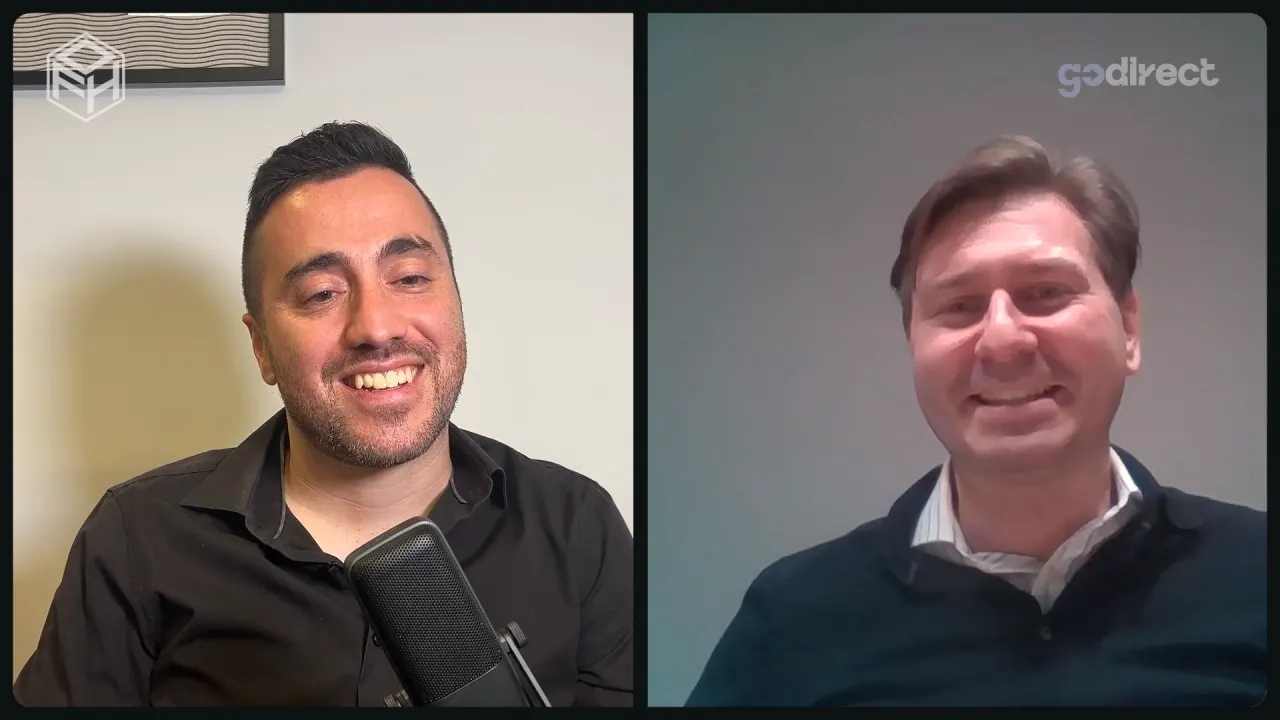
the Future of HospitalityIn hospitality, we all feel it. OTA commissions, changing algorithms, new AI tools, and at the same time, guests expect everything to be personal, frictionless, and inspiring. But the search journey is shifting from Google to, for example, TikTok, from classic ads to creators, and maybe soon to AI agents that book trips for us. The question is, how does a hotel stay in control? Is the real bet on our between OTAs and AI or between attention and intention? Welcome to the future hospitality, and today, we're kicking off a new series called go direct, a series about the people, strategies, and technologies shaping the future of direct bookings. My name is Alain Scoury, and today I'm talking with Sergei Biedersnoy, the founder of InsightArc.
the Future of HospitalitySergei helps hotels and travel brands understand real guest intent and act on it instead of renting attention from OTAs and social platforms. We're going to talk about the new generation of travelers, TikTok as a booking channel, and how AI will change hotel distribution. So, Sergei, nice to have you here. Really excited about this episode. So maybe let's just start about a little bit more about you. Can you tell me yeah. I'm kind of curious. How did you start InsightArc? What what triggered you to start this?
01:50InsideArc Origins and AI Foundations
3
Serge shares his background and how AI technology inspired the creation of InsideArc to better understand guest intent.
Serge BerezhnoyYeah. First of all, thank you for the warm intro. It's pleasure to me, you know, to participate in that podcast because it's really important. The industry really driven by sometimes twenty years old technologies and principles of business, so it's very important to talk about new shifts, especially, you know, the new generations of clients. I mean, generation zed, how they called, you know, popular, they become the really economically active customers right now for hospitality. So this is important to discuss. So about me, actually, I'm a corporate guy who just built, originally built this technology for my company that I ran before. Become before that, I ran, like, fintech company, and then this AI shift happened. This AI shift, the same AI shift, then OpenAI started built their technology.
Serge BerezhnoyThen Google released their, you know, these tensors of the technology that actually allows to to start all the shift right now in AI. I started, you know, around the same time because this technology opens a a a lot of opportunities. And what the story behind the technology, what the story behind the product, I understood, you know, in some day that these deep technological principles that engineers use in their job to build code, to build engineering solutions, to track between service iterations, very similar how customers, real people, engaged with applications, web applications, websites, etcetera. So I get an idea like, wow. We can use same principle, same technology just to help people to deliver, you know, to buy better, to receive better experience, to the companies to sell better, more receive more conversions, etcetera, etcetera. So this is was, like, the story of how I started the prototype of the company. Nice. Yeah. Nice. Nice. So that sounds pretty
the Future of Hospitalityfirst of all, pretty a lot of data, a lot of AI, a lot of technical stuff. So can you maybe take us one step back, and let's maybe talk about the shift that we were talking about in the introduction is that the shift of how people are going to search and how they're searching even right now. So what do you see? Because I I know, for example, when I was younger, I talk about, like like, it's fifty years ago, but, okay, like, three years ago, it was just Google. I will book Google a trip and, you know, go to booking.com, maybe to other other places, and that's it. But what what changed?
04:30Shift in Search Behavior and TikTok's Role
6
Discussion on how younger generations prefer mobile-first, short-form content on TikTok over traditional search engines.
Serge BerezhnoyYeah. Actually, if we speak about, like, a general attention channel, let's call it in that way, attention channel. Yeah? That all the modern generations, actual junior generations of customers, they shift to mobile first experience, first of all. And the second, they tie it from traditional ways to communicate with environment, with news, you know, all that classical TV shows or, like, even YouTube actually seems a bit obsolete for them. Yeah? Because people prefer short films of content. They prefer very simple videos, and TikTok gives the same. So you they did not destroy your brain reading, hearing some smart guys. You just, you know, scroll your line, you know, of news, videos, etcetera, etcetera. And the most important part between, you know, among all that videos, smart companies, like several years ago, already started to implement their content in that of those form of of videos. I mean, it could be independent separate focused videos or natively implemented inside some kind of entertainment content.
Serge BerezhnoySo this is the most important shift. Then if we speak from perspective of hospitality, most of industries still exist that somebody googles something, visit websites, open some kind of independent browsers like Google, you know, search, etcetera, Yahoo for well, you know, Yahoo. Yahoo. Crazy. It's like twenty years old times. You know? But in reality, the new generation of customers, they literally open TikTok and literally search inside TikTok answers, you know, on their questions about school, about university, job, how to do this, how to cook that, how can I travel, where I can find something interesting in my destination point, for example? So talk becoming the number one, really, number one attention point.
Serge BerezhnoyNot intention, attention point.
the Future of HospitalityNice. That's really and it's also if I can add something, maybe I don't know how you see this. But in back in the days, you used to think about, okay, I want to go, for example, to Euro Disney Paris. You look for Euro Disney Paris, and then you book a hotel that you like or that seems nice or the price is nice. But nowadays, I know, for example, I don't have Instagram, but my wife, she's on Instagram all the time. So she it's it's more that we she comes across nice stuff, and then we want to go there. But it's not that I want to proactively go there. It's that she comes across content, and then we want to go there. So I think that's also kind of shifted. Right? That you just come across something nice, and it triggers you, and then you want to go there. Yes. Definitely. Actually, it's better to highlight some numbers numbers because we just did did discuss experience.
Serge BerezhnoyNumbers tells more. Actually, on the last data I saw from the market, if we if we take several layers of audience on HMN, yeah, the most active part is people from from age, like, 18, 24, if I remember right. They takes around, like, 73% of that audience, they present it on TikTok. 73% of people. If you take, like, more close to our age with you, like, 24 to 33, they presented around, like, 60% of of market share. Later, you know, ages of people, they, you know, obviously, they presented in more, like, smaller numbers. But the most surprising thing, if we take and take a look on the most fast segment, fast developer, fast growing segment inside TikTok, you will discover that people older than 45 years for last six years, this is the most active group who grows in 13 times.
Serge BerezhnoySo people in older categories, they really watch videos and influenced by creators. So that's true. So the more we live, the more people engage, the more people go into that kind of channels, you know, entertain short form videos like TikTok.
09:30TikTok Marketing Strategies for Hotels
8
Advice on leveraging local creators for authentic content rather than expensive influencers to drive engagement and bookings.
the Future of HospitalityYeah. That's really true. I I I know from my experience from my own experience, my father is, like, 72 years old. And once he sent me a video of TikTok, and I saw that he has a TikTok account. I'm like, why? How do you have a TikTok account? I don't have a TikTok account, but for sure. But when when we talk about TikTok and for example, I'm a I have a hotel. I'm a general manager of a hotel. I guess that a lot of hotels, they don't do a lot on TikTok. They it feels like it's a new social media. How do I what do I have to do? Like, how do I how do they have to look about TikTok? Because I think it's very also even for me, like, very, very far away from me, TikTok.
Serge BerezhnoyYeah. Sure. Actually, this is a very broad question, to be honest, because it sounds simple, but but in practice, people trying to overcomplicate solution. What is that classical principle? How hotels do solving this issue right now? Usually, they go to some kind of big faces, influencers, asking them to create some kind of beautiful advertising style videos. And, actually, they're paying a lot of money for buying mostly irrelevant audience. Why irrelevant? Because these guys, their audience mostly engage with that influencer are driven by some kind of entertainment style content. They're not specifically interested in your hotel, your property, or if we speak about general hospitality in your restaurant, for example.
Serge BerezhnoyThat's why they driven by, let's say, more high quality luxury style videos where beautiful girls sell beautiful places in beautiful, you know, context of offers, luxury style, actually. And this is the problem because if you go in that way, you receive a lot of impressions, but results in direct sales about zero because TikTok is very personalized style of content. People have perfect recommendations in their TikTok account based on their interest. So if the person living their normal life, usual life, usually usually, they do not receive specific kind of video in their channel. You know? And this is the problem that the best way, in my opinion, the most economically effective way for the hotel is not going to some kind of expensive guys but really find some kind of normal regular creator from your local city, region, you know, sphere.
Serge BerezhnoyInvite him, change, for example, for room, invite for a hotel, party, or cocktail party, or pay it, like, $100 for free video. Technically, free video because it's for for you, it's nothing. Why it's important? Because for that kind of regular creators, they need content. They need cases with hotels. They also interested to work with you. Same time, you wouldn't pay, like, $5,000 or some kind of big names. So it's win win. You can create three, four, or five videos from regular freelancers, and they perform much better than you can expect from any kind of famous guys. This is the the the best advice I can for any hotel from the basics.
the Future of HospitalityYeah. That's I really agree with that. That's kind of we that's how we are taught about what is marketing is to make something look nicer than it really is and to show, you know, woman, like you said, and everything is luxury and, you know, added this a little bit with Photoshop and everything is amazing, but it's not real. It's not authentic. And what you said Yeah. Is that when you have a smaller influencers, like the real authentic creators, you can better do 10 times smaller than one time big, and nothing happens because it's not authentic and it's not real and that kind of stuff. Yeah. Definitely. You know, like,
Serge Berezhnoya week ago, I had a chat with a startup, a Portugal company, who specifically helps with Portuguese restaurants in low season to book, you know, empty tables, and they just exchanged these empty tables on review from local influencers. And the main concerns all the hotel owners, restaurant owners, who told them, like, how this regular guy or girl can create some specific selling video for me if they don't have, you know, professional cameras, light, all the things. You know, some kind of guy from India coming in Dubai restaurant and create on just on usual basic phone video. And surprisingly, it works much better because of these people like that guy, they watch his videos.
Serge BerezhnoySo it's proved it works much better, you know, than in Yeah. That's amazing how that
the Future of Hospitalityit's I know from my experience that it when it looks too good, it looks like an advertisement. And when it looks like an ad, then you don't look at it. So, you know, your brain knows how to skip it because you think this is an ad. But when it looks kind of shit to call it like this, it it isn't shit, but it looks too authentic, then you think, ah, what is this? Then you look at it. And I know that a lot of viral videos on Instagram, TikTok, and that kind of stuff, they had videos that people even made. They took their iPhone. They made a video. They did did it without even thinking too much, and those went viral, got a lot of views, and a lot of stuff.
15:00Intent vs. Attention in Personalization
10
Explaining the difference between capturing attention and understanding guest intent to personalize offers and increase conversions.
the Future of HospitalitySo that's super nice. Now I know that that you talk about intention versus attention. Can you maybe explain a little bit what is the difference here for because, you know, there's kind of a mindset about this, I'm pretty sure. How to look at it? You're
Serge Berezhnoyright. Actually, it it's the same. From one perspective, it's very simple. Yeah. Attention, it's what you to show the person or the visitor. Intention is answering the question why person came to your website. This is a huge difference from commercial perspective, you know, how the stand behind how you can turn your campaigns, social media campaigns into sales engine because it's no matter what to show, the matter why to show some specific content to a very specific person. Because if you take, you know, any complex website from, you know, for a glance, it looks like the person visits it just because to book their room, for example. But in reality, every specific visit has some kind of context behind that. For example, a person could be a business traveler and the context like business visit because of conference in the same location or the person could be just an entertainment traveler, blah blah blah, and this is absolutely different reason to visit. So you should have absolutely different content for that, and you position this person differently.
Serge BerezhnoyThis is what gives you conversions. This is what gives you personalization because, you know, last three years probably, from d two c brands to hospitality, everybody talks about we need to go to to personalization. But people, in reality, can't understand that personalization do not start from using, like, name or or or or some generic things or more emails to the person inbox. Personalization is about reducing contact rate but making this contact rate the maximum quality for that specific cohort of visitors. This is the difference between intent and, like, intention and attention, actually. Yeah. Amazing. My technology. This is I'm working about, yeah, to help hotels to discover intents and build cohorts,
the Future of Hospitalityprofiles around these intents to make So what kind of intent can you seek? I'm pretty curious. Like, what can you see? For example, can you see this is a business profile? This is a local? This is a what can you see? What kind of intents are there?
Serge BerezhnoyActually, it depends on the specific hotel or hotel group or property or hospitality experience because every visitor, if you represent, you know, just a broad explanation probably, but I will try to explain it easy. You know? If you imagine that every person visit the website, the the visitor makes a lot of actions. Usually, like, the average customer journey consists of, like, 50 clicks of different pages, dates, rooms, etcetera, etcetera. And this is the core difference how to identify among all that thirty, fifty clicks what is the real point of interest because you can have different rates, you can have different offers, you can have different specific bundles, especially for resorts.
Serge BerezhnoyAnd if you don't know what is the intent, you perceive all your visitors like the same people. Yeah. This is the core difference. So we identify what is the specific intent based on first party data of the website and help hotels to own that data, splitting, you know, the general flow on the website on that microsegments to help analyze experience through social media channel.
the Future of HospitalityWow. That's really nice that the context makes all the difference. That's real personalization. It's like for example, I am from Israel. I eat kosher. So when I when I go to and I see restaurants all about the non kosher, for example, you know, non kosher food, then but if they show me with kosher meals, they got me. They they got me straight away. This is just a really specific example. But I know that I I used to work in online gaming industry, and I know that the gaming companies, they are they are amazing at this, what you say right now, to to know exactly if this guy likes to play slots, likes to play roulette, likes to play whatever it is, and they know to to segment it in the in niches and sub niches and sub sub niches
Serge Berezhnoyto make the the advertisements more relevant. That's it. Right? That's what you mean? Yeah. Yeah. Definitely. Definitely. You you showed the example of the most advanced industry, suppose, in personalization because I I talked with a couple of gaming companies, and they kept around, like, 600 segments at the same time. You know? It's crazy, crazy, giants. But but mostly, it's, like, artificially driven, but not by AI because they know these rules, and they know the psychology behind the purchase process of dead people. In AI age, it helps to own very similar approach
the Future of Hospitalityto the any average company. This is the point. It's a great example, by the way. Yeah. Yeah. Thanks. And that's really nice because you can, of course, you can go deep and deeper and deeper, and to maximize one conversion is always a lot of money. But what you say, because hotels a lot of hotels don't do anything, so if you only segment, for example, what you said, this is a business guy, this is a a leisure guy. If you only do that, you will see conversions, I don't know, x amount higher. So even if you do a little bit, it can make a big difference. And, of course, you can tweak and tune it, as you can say, with AI makes it even more easy. Right? Yep. Absolutely. And there is another important point that a bit styling of travel
Serge Berezhnoya bit changed because, hotels right now, then especially when we talk about, the direct bookings, very similar to d two c brands in terms of, approach to sales. Because if you especially go into social media, it's like ecommerce style of sales. And the specifics of of the business right now that every business has a very short demand window. If on the previous years, even, like, ten years ago, fifteen years ago, people operate by windows, like, a week, two weeks of you know? Even you buy Audience from some kind of Audience advertising company, they usually deliver you Audience two years oh, sorry, two two years two weeks ago because they collect this general search interest from Google, you know, from the search engines, and sell you a list of people who probably buy your product.
22:00Future of Hospitality and AI Agents
24
Thoughts on AI's role in booking, the importance of human touch in hospitality, and how digital and human elements will coexist.
Serge BerezhnoyRight now, people think by, like, day demand window. If you reconnect person in a week, you already lost person.
the Future of HospitalitySo this is important to identify person in real time and engage as soon as you can. This is That's really important. That's really I really believe in that that you have to be, like you said, now because when you and the faster you do it, if you do the day after, it doesn't make I I I myself, I I also feel that because the like you said, the the memory, it's like short. You you you your cache is just for one, two days, and then you delete it, then you start, like, over again. And I really believe that. And if we talk about because I know that a lot of a lot of people also on LinkedIn, I see it, and I I know myself, I got also triggered by it, that people are kind of afraid that AI will take over everything and everybody will search for in into AI.
the Future of HospitalityAnd if my hotel isn't findable in AI, then I my hotel won't exist, and I don't need a website anymore because everything is via CHEDGPT, and they will book via CHEDGPT. So so how how do you look at that that side? Because it when you hear it, it's kind of scary. Like, why do I need a website? And they say, like, in in a year, everything is is changed.
Serge BerezhnoyGreat great question, actually. Yeah. Because, you know, with the world right now split it on tumors, you know, AI tumors and progressive part of society. I mean, just, you know, like, hundred years ago with electricity or steam machines. I think, actually, it's a bit exaggeration that AI very quickly, AI chats will take demand because if you take on real data actually, I prefer to use the statistics, you know, the experts from the market. One of famous experts, like Ben Evans, was a Sequoia analyst, a venture capital firm who was responsible for all that reports starting from, like, nineties, you know, that who provide reports around, like, software eats the world. He changed his report on AI eats the world. And in in fact, that what we see, that split between a generation of people, like, 35 or 45, like, active economical split of society and who below that age, like, early generations and all the next upcoming generations of economical active customers, the usability by them, the Charge GPT, absolutely the same. The next generation of customers, they don't use Charge GPT more often.
Serge BerezhnoyThey don't use Google search more often. It's absolutely equal splits of search. But what I really believe from, like, a practical perspective, technological perspective, that bigger brands, they have a really unique opportunity to seize this channel just because they have more two important factors that will sell on their to seize this channel for them. First of all, they have a lot of property coverage that follows by a lot of Internet requests. I mean, search request, chat GPT request. Because the logic of how to make your hotel property show more often or ChatGPT answers, you should have two things. ChatGPT is very, let's say, intent driven taking the five minutes above our chat driven. So ChatGPT trying to deliver a response on very specific question of the visitor of user.
Serge BerezhnoySo you should have, first of all, very detailed explanation on your website about that specific user request. This is the third factor. And the second factor, you should have enough questions, requests from ChatGPT users address this specific intent. So the average property has no such high frequency requests and very detailed explanation in their blog, you know, or any kind of data across the Internet. So big companies, big brands, I mean, mostly, obviously, OTA aggregators. Yeah? They have these kind of marketplaces. They can manage it. All other guys, I think, for them, it's not the game because it's quite difficult for independent property or even hospitality management company to run this campaign because it's some kind of artificial a lot of artificial job should be done to promote your specific hotels in specific locations relevant to specific audience.
Serge BerezhnoySo I understand there is a big strategy. For example, if your hotels connect it deeply with some kind of specific magnets of publicity, for example, you provide locations or accommodation for marathon runners in Boston, for example. Yeah? So a lot of guys research, find me a hotel near the marathon in Boston, blah blah blah blah blah. You can play around that topic. But for cost of hotels, if you don't run specific locations connected to some kind of big events, it's quite difficult for you to reach enough number of outside requests to your property you search
the Future of Hospitalityon higher rates, you know, in that list of I know what you mean. Because the the requests are low amount of requests. Yeah. The OTA
Serge Berezhnoycan take display, you know, in your location because it should compete with hundreds of property in your specific locations. That's why, actually, social media, this is a unique channel for hotel because OTAs can't compete with you because it's a very personalized channel. They can't buy demand how they traditionally buy, you know, on Google, paid channels, meta search, etcetera. That's why the hotel should play in that game. This is the strategic leverage for them. Yeah. Really? Because that's the the real differentiator.
the Future of HospitalityYeah. Absolutely. Yeah. Nice. I also read that, for example, GPT and all other AI companies, they take data from, for example, Reddit, and they take it from, you know, authentic conversations. Not like, you know, you tell GPT, make a blog, and then he makes a blog, and then you put it on the website, and then he takes the blog that he made. That's like, you know, he doesn't need to to crawl his own data, but you posted it. But so I think also the more authentic conversations are, you know, for example, reviews, I think, that are becoming really important because I think that AI will scrape, for example, the last reviews on, I don't know, TripAdvisor, Google, that people talk about your hotel. So I think that also if I think that hoteliers, my 2¢, they need, first of all, need to understand a little bit, just a little bit to understand how it works. Because when you know a little bit how it works, then you can take better steps into your strategic alignments.
Serge BerezhnoyYeah. Absolutely. You you mentioned very perfect example how the search of any language model works because you mentioned, like, social driven platforms like Reddit or TripAdvisor. And by the way, very few people probably not a few people do not think about Google Maps because do you know that Gemini, like Google product, driven by reviews on Google Maps? So the the the hotel should own that reviews of their customers.
the Future of HospitalityIt's huge. Yeah.
Serge BerezhnoyTripAdvisor, Google Maps, social media GC, just ask your visitor, guy, please record fifteen seconds video for us for we give you, like, some kind of voucher, for example. It works much better because it would be immediately searched, you know, by any kind of engine. This is what Nice. Really can manage.
the Future of HospitalityWow. That's that's amazing. That's what you said with Gemini is from Google. So So Google Maps, so they they are searching in that machine. Yeah. That engine. It's yeah. Amazing. Nice. And what about if you take another step forward? Because I know that AI agents, that's kind of the the future, what I believe as well. Of course, I don't know in what sense. But how would it work if, for example, yeah, you tell the agent, you know, I want a trip. I have a family. You know, for example, my GPT, he knows my my my kids, my wife. He knows everything about what I like, what I don't like. He knows everything. So I just can tell him in the future, maybe, you know, look at a nice hotel for me. Give me some options. I mean, I don't know, in Italy. And then he will look, and maybe he will even book it for me. So how do you think that that that will affect the the whole shift in regards to because they can also book it. I don't know if I would make an agent book for me if I didn't even look at it, but I'm pretty sure that they can the research part, they can skip a lot for me.
Serge BerezhnoySurely, you raising the question contains of two big trends on the industry. Yeah? First of all, a lot of venture capital firms believe that we live in a of personalized experience around where a company creates oh, sorry, not company. A person creates the family level or personal level software which knows all the context, knows all the experience of that person without purchasing generic video or generic application from the App Store or something like that. From another side, obviously, all that applications will have in the backend any kind of language model, mostly some kind of open sourced because it's a it's a trend among AI developers. They use open source solution, not ChatGPT mostly because of due to different reasons, actually.
Serge BerezhnoyAnd this would be the, you know, consequences because if you use some kind of the same level of language model, you have the same limitations. So this language model would be trained on the same content, trained on large brands, trained on with access on OTA aggregators. So probably you will miss a lot of very authentic local experience you can find through, you know, specifically, like, Google or something like entertainment channels. Yeah. Usually built on your recommendation engine. So, actually, the answer is these AI concierge would work perfectly if behind the AI concierge, they would have a native recommendation engine similar has Google has. Without that, you will have a very basic solution that I'm not sure would work
the Future of Hospitalityperfect to on your personal level. Yeah. And it's really nice. So you basically say, GPT knows a little bit about us. For example, the the the basic data, but the real intent, like you said before, of how we behave on social media because then you show social media companies what we like. We like these kind of videos. We like this kind of content, and they know better who we are than Chechipiti knows. Although social media doesn't maybe know our our I don't know how many kids I have, but they know way more how I behave and what I like. And and that that intent, that's what, in your opinion, makes a difference. Right? That's Absolutely. A
Serge BerezhnoyAbsolutely. Take a step back, like, fifteen minutes back in our chat, ChatGPT owns only around 20% of your human research data, all other data behind ChatGPT. That's why it's obviously limited for you, like a personalization tool.
the Future of HospitalityNice. Love that. Okay. Cool. And then in regards to probably the last question, the podcast is called the future of hospitality, so you probably know what I'm going to ask. How do you look at the future of hospitality? So let's say five years from now, what do you think will be the new luxury or the new, I don't know, the future?
Serge BerezhnoyYeah. I would love to say that everybody would be in digital, driven by robots, etcetera. But to be honest, I don't believe in that despite I have a lot of guys who develop some kind of specific solution for hospitality. For example, two days ago, I talked to the guy who developed the human robot literally, and one of his thoughts to deliver this robot to hotels to make some kind of routine job and room service, etcetera, addressing the really huge problem. But in my honest opinion, this digitalization will work only on low cost segment or some kind of high turnover segments of hotels like motels, hostels, etcetera, where people are paying for basic service but not the quality, not experience.
Serge BerezhnoyAll the industry believe would be human first. No robots, the best service, no generic experience, only personalized experience. You know? Then deeper, we will move to era of robots, AI agents, digital, etcetera, the more expensive and more valuable would be real human touch, you know, touch points and experience. That's why, actually, I believe in digital on the top funnel, like acquisition channels, sales channels, marketing, branding, acquisition, but bottom part of the funnel,
the Future of Hospitalityobviously, should be human driven. Human. Nice. Yeah. I love that explanation that you said. On the top of the funnel, it's digital, digital, digital until we get to the moment now we have to experience something, and then we skip the digital and we go human to human. That's that's an amazing explanation. Loved it. So, Sergei, we're kind of out of time. I really want to to thank you for your time, for your energy, for your insights,
Serge Berezhnoyand really appreciate it. And, yeah, thanks again, man. Loved it. Thank you for the invitation, Alon. Thanks for having me here. Hope, it would be great. You're a great example in your collection of that podcast. Probably, your audience will hear something new, and it would push them to try to create some new experience for their customers and their hospitality experience.
the Future of HospitalityThank you. Amen. Amen. Thanks, Sergei.
/Gergely.png)