
















 EPISODE · 42 MIN
From API Chaos To Instant Hotel Bookings
Can instant hotel booking API integration make booking as effortless as ordering food? Mrigendra (Boney) Mittal of Zentrumhub explains how speed, transparency and AI tame hotel connectivity and boost conversions. Founders' lessons, Gen Z tactics and real startup wins.
 Mrigendra (Boney) MittalCo-Founder & CRO
KEY TAKEAWAYS
Make integration complexity invisible
Normalize supplier API chaos so OTAs deliver a single clean booking experience. Handle currency mismatches, inventory cadence, timeouts and edge cases to stop lost bookings, revenue loss and damage to customer trust.
Prioritize sub-second search speed
Serve search and bookings in under a second. Sub-500ms response protects conversion. Because suppliers respond at different speeds, OTAs must absorb latency and show instant results to retain customers and revenue.
Launch fast then iterate
Use build-vs-buy to launch fast and iterate. One client went live in three days. Launch quickly, learn from real bookings, insist on transparent logs and round-the-clock support to fix connectivity and keep trust.
Travel tech does not need to do more. It needs to do less, but better.
Transcript
Click a timecode to watch from that moment.
00:00Introduction and Problem Overview
7
Gaby introduces Boney and Zentrumhub, highlighting the hotel connectivity challenge and why solving it matters for OTAs and travelers.
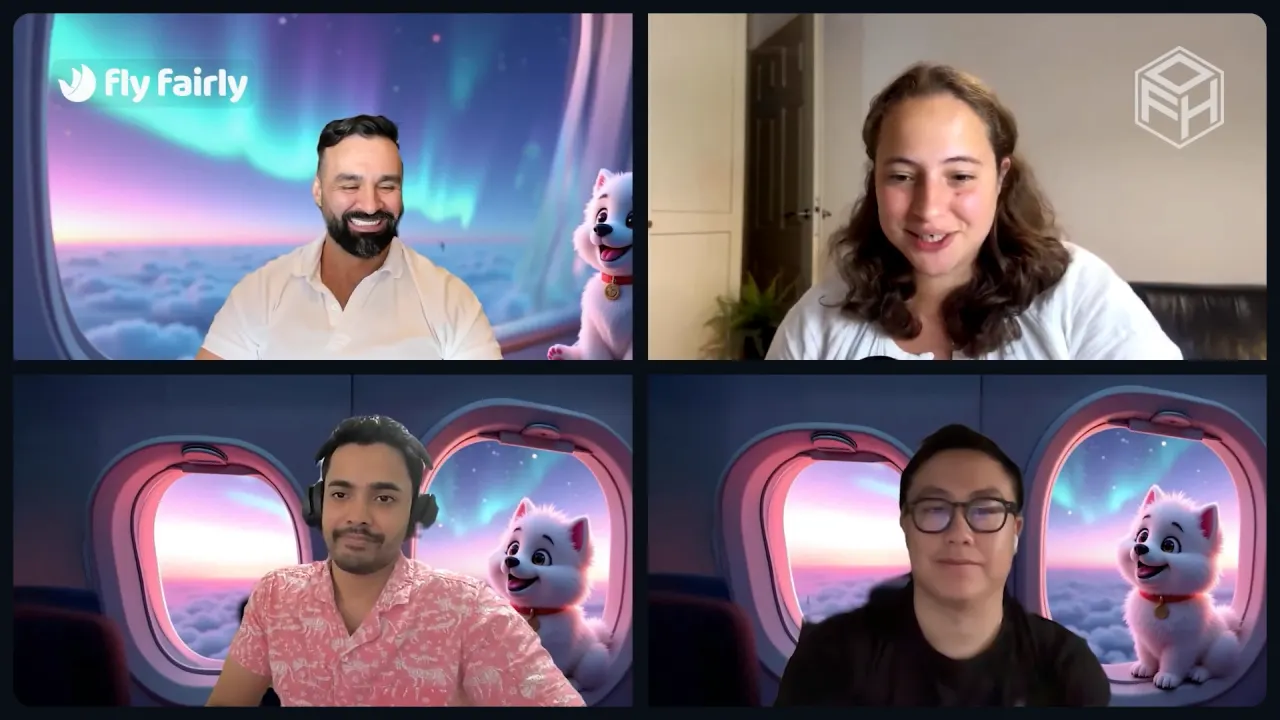
"GabyWelcome to the podcast, Future of Hospitality. I'm your co-host Gabi and today I'm interviewing somebody really, really cool. He is one of the co-founders of Centrum. Centrum is there to solve the hotel connectivity problem. They are one of the 25 oldest travel startups regarding to FocusWire. They have a lot of hotel suppliers connected to their platform, borrowing more than 3 million bookings. I'm talking about Bony is one of the co-founders of Centrum. Hey Bony, welcome to the podcast.
BoneyHey, hey, hi, Gabby. Good morning. And it's great to be here. Thanks for having me. So just to be clear here, my real name is Mrigindra Mithil. But in the travel world, I go by the name Bonnie. I say it just saves people from butchering my name at the conferences. But yeah, it's stuck. So, it is.
GabyYou Yeah, yeah, no, I think, I think the pronunciation for me would be a little bit difficult. So, Moni, it's just... Moni, so that's really interesting. The first thing that I really want to ask to you, everybody in the industry knows how big of a problem hotel connectivity is because there are so many suppliers, there are so many hotels, there are a lot of links and APIs that you need to connect. And my reason, or my question is...
BoneyYeah, I know, I know. That's why it's funny.
Gabywhy solve this problem? Why this complex painless problem? Why did you want to solve this?
BoneySo honestly, guess, you know, travel is this guy's I mean, chaos in this guy's because on the surface booking hotel looks very simple. You search, you click, you pay. But beyond the scenes, it's a legacy system, supplier APIs, mismatch data, timeouts and constant updates. So I would say every supplier speaks a slightly different language. Some might give you rates in euros. Some might give you rates in dollars. Some send inventory in real time. Some send in batch of few hours. Some APIs are very well documented where others feel like they were written in the nineties and never updated. So as an OTA, you don't just have to connect to them. You have to normalize all that chaos into a single clean experience for your customers. And that's really the pain in the ass. Sorry for the language, but the more suppliers you add, the messier it gets with every new integration, complex complexity grows exponentially. Debugging a broken API to him when a customer booking fields, it's not just lost revenue. I believe it's a trust disaster. And that's where we realize this pain because the travelers look, imagine yourself as a traveler. As a traveler, you don't care that supplier X timed out or supplier wise in didn't show up. All you want to see is you want to see the cheapest, most accurate total instantly. And that's the gap between the chaos and front end simplicity where OTs bleed money and reputation both. And that's where Zentrum Upcare comes in. We take on the pain so our partners don't have to. So we already fought those integration battles, handled the weird edge cases. We're building a platform that makes all the complexity invisible. And our job is to make sure that OT never think this problems again, again, again, and their customers never. know that they existed. yeah, it is in the pain, but I believe whosoever solves it right has a bright future in the travel industry. Gabby, I guess I can't hear you. You went in mute.
GabyI was saying this, I really agree. think if you correct this code, then you're really, really somewhere because it's so difficult. what you say, OTAs bleed out money because of having not the right suppliers and APIs. I'm really curious, how did you guys start? You have multiple co-founders. How does this story of ZendTrip started?
04:00Founding Story and Startup Life
10
Boney shares how Zentrumhub started during COVID, the team's backgrounds, and the challenges and learnings of building a travel tech startup.
BoneySo that's interesting one. you could say during COVID, we thought about this idea. So I don't come from a travel background. Just a short brief about me. come in from a sales and marketing background of almost 10 years. I am not even a tech engineer, you could say. So I am more towards the business side of this part. But my other co-founder is one of them. comes in from a rich travel tech experience of almost 10 plus years. Other co-founder, comes in from a operations background from the travel. So he's there in the travel industry for a
GabyMm-hmm.
BoneyI guess all his life, maybe 17, 18 years now he's been into travel. So this guy's already knew that this problem existed. So instead of you could see making pizzas during COVID, we thought about, know, can we start up something? So we started thinking more about this idea and that's what we started building because this guy knew about the problem and that's what we started to think about. How do we solve it? How do we make it better? Because let's face it, there are already a lot of companies in the market who are doing this. But still people had that problem. The major problem was the technology and the price of that technology. So people didn't trust tech companies because of the scalability and then the price was huge. So anybody who wants to start a travel business, the technology cost for him was huge. So thinking about all those aspects, believe we thought it's a great idea to start it. And we thought about this idea during COVID and that's we started building it up.
GabyYeah. And how is that founder startup founder life treating you right now? Or what did you learn?
BoneyI guess you should ask that to my wife because being into startup, it's really confusing. The good thing is before this, had tried my hands on two different startups and you could say I was not in those companies for a lot of time. Like I didn't give it a thought. I didn't give it a try. You could say I didn't have that kind of patience to be there in those companies. But with this company, it has been tough. So Initially when we started in 2021, we were in a stealth mode. So you could say first six months were more about figuring out what to do, how to do, because everybody came in with a rich experience. So aligning ourselves to the roadmap. then this came in with a lot of travel. So you won't believe, but I never stepped outside my country before Zentrum. It was just once on a vacation, but after Zentrum, I guess it has been a nightmare. So I've been traveling a lot. And the reason that you need to travel when you're into travel ecosystem is because trust relationships is what we know that is building central maps. So the journey is tough, but it's inspiring because along the way we are learning a lot. We're learning how to fix problems. We're learning how to create problems as well. I believe what to do, what not to do. So the journey has been amazing.
GabyYeah. Yeah. And is that something you're talking about? The hospitality brand travel fund being on trust? Is that also something that you like? Like, what do you like from the industry?
BoneyOkay. So what I like the most about the industry is the people. So you know, there was a time when we meant missing. So me and one of my other co-founders, Bhushan, we were traveling to an event in Cancun. So when I say an event in Cancun, you could say it was somewhere in the year 2022 or 2023. And what happened is everything was planned. There was an event. We took our flights. We landed in Cancun.
GabyMm-hmm.
BoneyAnd the moment we reached to immigration, things went sideways. we had our passports were taken. You could say mobile phones were taken and we were put in an airport jail in Cancun for almost 16 to 18 hours. So that was a horrible experience. But what happened is what I really love about that moment is the moment we went missing, the word got out and everybody in the industry that we knew in the community started looking for us. So I guess that was one of the best moments for us to realize that, okay, the people in this industry are really good. Though the industry is really competitive, but what we find out when we find out about people, when the moment was not right with us, it was the people who stood with us. So I guess that is one of the best part that I love about this industry is people.
GabyYeah, I think that's like, it's an industry where you need to have relationships, network, trust and it is a community, right? Everybody knows everybody, even though you are maybe competing with each other. It's okay, right? You try to help each other out in this really beautiful way. And I think it's also really interesting to see the older side of the industry and the newer side and how that combines with each other. think ITB is a really good example where everybody's just really working hard, but also partying hard. it is fun. Now, what is like one of your most, yeah, the thing that you're really looking back to and that's a really great milestone for example, your proudest moment until now.
09:00Milestones and Industry Relationships
11
Boney reflects on key moments like office expansion and industry recognition, emphasizing the importance of trust and community in travel.
BoneyYes. Hahaha Okay, so I guess there were two incidents that have stuck with me. The first one was very emotional for me because in our early days, it was just three of us who started the company, then we had two more people joining us. So it was a small team of five people. We started growing, then we grew into teams of 10 to 12 people immediately within a year, and we got into a new office space.
GabyMm-hmm.
BoneyBefore that, we were working in a co-working space, but this time we had our independent office space, which could accommodate, you could say, 15, 16 people. But within one more year, we had the team growing to 30 people. And that's where we realized that, we still need a new office because we need more space for the people to sit. So I still remember I said this very jokingly to one of my other co-founders, Bhushan, that isn't the office next to us empty? Why don't we just break the wall and make it one?
GabyMm-hmm.
BoneyAnd it just came out as a joke, but Bhushan took it seriously. He pitched the idea to everybody, to the owners, and everyone agreed. So one day we literally broke the wall between the two spaces and we made it into one big office. So watching that wall come down felt really symbolic to me. It was like a movie moment. It made me realize, yes, we are growing and something big is loading now. And the second moment happened.
GabyMm-hmm.
Boneythis year at an industry trade show. So I had been in the same event. It was at ITB Berlin actually. So I had been to that event when we started in the early days when nobody knew us. Back then I was walking from booth to booth, introducing Zentrum up, trying to get people to listen. Fast forward to this year, we had our own booth. We knew everyone and the response was overwhelming. So one moment in particular it hit me was I was talking to prospect customer.
GabyMm.
BoneyAnd before I could explain, one of my existing customers jumped into the conversation. He started pitching about our product. He spoke about what we do and how it had worked for him. And then he ended by saying that I am already a customer and I know the value this guy's can deliver to you. That moment really stayed with me. It showed me how far we have come from explaining it to everybody to having one of our customers advocate for us. So I guess those two milestones breaking the wall.
GabyMm-hmm.
Boneyand breaking into the industry are really special because they capture two sides of Zentrum Up. One is the internal growth of our team and the other is the external recognition from the world. So I guess those should be the two most proudest moments till now in Zentrum Up.
12:00Technology Focus: Speed and Simplicity
27
Discussion on Zentrumhub's fast booking speed, the philosophy of 'doing less but better” in travel tech, and how AI enhances recommendations without replacing human touch.
GabyYeah. And I think it's also when you have a customer that is pitching your idea to another exponential customer, then they know you guys are doing something right. And I think if we look at Zentra Hub, it's really key for you guys to have the speed and the speed in the hotel booking is also there. Why is that so important?
BoneySo Zentrum currently offers say less than 500 milliseconds of speed, which is less than a blink of an eye right now. And why is it important is, say example, think about when somebody is searching for a hotel, they are usually juggling between multiple tabs. They're comparing rates on Google. They're also checking the reviews on TripAdvisor. But as an OTA, if I take, say, four or five seconds longer than a competitive to load results, I've already lost a customer because that's not just a technical lag, it's a lost revenue. So it's about the experience that you're building and that's why I believe the speed matters the most, especially in an ecosystem where different suppliers have different response times, like somebody responds within two seconds, somebody takes five seconds, somebody take 10 seconds. So that's where it gets really messy where you have to build everything in a way that the speed is most optimized. And even one of the Google Travel study shows that even one second delay in loading a page reduces conversion by 20%. So I believe in a world of hotel bookings where margins are really thin, that's the difference between a successful Ooty and somebody who's building it.
GabyMm-hmm. Yeah, no, I think we are also as a consumer, want everything on our fingertips and quick and yeah, really easy. And I think that's interesting because you have said travel tech doesn't need to do more. It needs to do less. What do you mean by that?
BoneySo that's something that I really feel strongly about. I recently did mention this about this on one of my LinkedIn post as well that travel tech does not need to do more. It needs to do less, but better. Now say for years, we have celebrated innovation in travel by say counting features, more dashboards, more modules, more integrations, but you step back. That doesn't always create the value. In fact, sometimes it just creates friction.
GabyMm-hmm.
Boneylike agents have to juggle between five different logins, operators spend more time on manual reconciliation, travelers are overwhelmed by too many choices and too many clicks. But in my opinion, the real innovation is when technology makes it almost invisible. Now, what do you mean by invisible? example, the booking journey feels effortless and not engineered. Imagine this. Instead of taking a dozen of steps, you just do three clicks and you book a hotel. Like you choose your hotel.
GabyMm-hmm.
BoneyYou book your room and you confirm the payment. And then that's when the technology is being the star of the show. And it is not being, you could say, just something which is trying to create more complexity. We have already seen, you could say, a glimpse of this with booking.com. You could say they experimented throughout their journey. They're one of the early adopters of A-B testing on, you know, mass testing, A-B testing on scale, where they
GabyYeah.
BoneyWe looked at every option. So they kept on experimenting. They looked at the color of their button. They kept on looking at the order in which they show results. And through that, they realized that, OK, adding too many features is not going to solve the problem. But what is going to solve the problem is showing the relevant content, relevant prices. And I guess that's where you need to do less. And that's what we have built Zentrum up as well. We don't just want to throw more at our clients. We want to give them less, but better. So fewer headaches.
Gabyand
Boneyfewer clicks, fewer worries, and more focus on what matters, which is growth, experience, and the trust that they are building with the customers.
GabyYeah, yeah, I totally agree. Like the fewer steps, the lower drop rates, how more stimulus it is, how higher the conversion can be for booking. How do you think AI will help with this or what's your stand on AI within this?
BoneySo AI for me is everybody's moving towards AI now. if you could see, like every OTA or you could say every business, like you look at automobile sector right now, automobile sector is moving towards AI. You look at healthcare sector, everything in the healthcare sector is moving towards AI. So I believe the first step
GabyYeah.
Boneyin this case isn't adding you could say shiny pieces of tech of AI. It's building the adaptability. It's building the adaptability into the business of everything that you do. you could say, how do we look at AI in Zentrum Abyss? We firstly look at recommendations. what we look at is our currently the booking engine or the ecosystem handles, as you said, more than 3 million bookings a year. So what we look at is we have the huge database that we are setting on.
GabyMm-hmm. Mm-hmm.
BoneySo what we're looking at is we're looking at using that database or using that insights to better map the recommendations. Now, say example, if you're looking at booking a hotel in Dubai, and what you're looking at is you're not looking at a thousand options. What you want is you want the right set of hotels. So building AI to understand the predictability. So I know you have been traveling for 10 years now. I have the database that what you like, what you don't like. So using AI to show the right set of recommendations.
GabyYes. Mm-hmm.
BoneyI guess that is one of the main intent that we're looking at. And I guess apart from that, AI is used better when it comes to sorting, when it comes to, you could say even for the travel agent, AI is not really replacing the travel agent. I believe AI is used for the travel agent to solve it better. Like the sorting, the recommendations, everything can be done by AI. But what the travel agent can do is add human touch to it.
GabyMm-hmm.
Boneyadd stories around it, can build on trust, can build on relationship with the customers with the right set of data. So I believe it's in the travel ecosystem, it's going to be the combination of both the AI and the human touch. And I guess that's where we are also heading towards.
GabyMm-hmm. Yeah, and is that also like one of the best practices, like your advice to OTAs? Like you focus on the relationship with the traveler and we focus on the tech side that everything is working correctly and provides the right results.
BoneyYeah, I guess that's exactly what we are also looking at, where we ask, not just ask, it's like, both cannot do both. Like an OTA should not be a tech company and a tech company should not be an OTA. So you take an example. If you ask me to sell a hotel online, I would be like, okay, guys, I don't know how to do that. It's not my cup of tea. And that's what the advice that I give to OTAs as well, that look at solving problems what your traveler needs.
GabyMm-hmm.
BoneySo don't just look at the tech side because when you get into tech side, you forget about what the customer wants and you start building more. So you start building features which are not required, which are not useful. And that's where the differentiation is where being into an OTA focus more on how can you sell travel better and then what is required to build on that side. And that's where we come into picture helping you with tech to better sell it.
GabyMm-hmm. Yeah. Yeah. And I think also one thing you at Sundrum Hub find really important is like the speed to market. That's also something that you guys, because you're really helpful for starting ODAs, getting the tech on it, helping to lower costs and time costs. Why is that speed to market so important? And have you maybe have a use case about that or a story?
20:00Advice for OTAs and Market Strategy
28
Boney offers guidance on choosing B2B tech solutions, the importance of speed to market, and adapting to changing traveler behaviors, especially Gen Z's mobile-first approach.
BoneyYes, so I would say speed to market is important. Now you could say we had one of our customers. I I'll talk about one example first. So we had one of our customers where he went live in three days. So you won't believe that we had a customer going live in three days with Zanchumup. We signed the customer on a Friday and we took that customer live on a Monday. So we were also building Zanchumup. We were into that startup enthusiasm, which we still are. Even if we have a customer walking to us today, asking us that, okay, can you make me live in three days? I might not say yes immediately, but you know, it's possible because if there are no customizations, we can still take a customer live within three days. One week is our anyways, our promise, but again, that is possible. And I guess that is the best part about Zenchumab is because it's a build versus buy concept. So it's already built, everything is built, and you can just look at the build systems and you can go live. And trust me, the customer was so happy that he has
GabyMm-hmm.
BoneyHe wanted to pitch the product to the investors and he wanted to prove them that he can do something very fast. And that's what helped him. And he was of an opinion that he has never seen something like this. And I guess that's we won the battle. And what OTs don't realize is, say example, if you want to build something perfect, like a lot of people see that build something which is perfect, like you cannot eat a half cooked dish, something like that. Right? You go to the kitchen, you want to cook a dish. which is the best for it so that the user experience is better. The delight is there with the customer. But what I believe is when you start an OTA, you're actually cooking the dish for the first time. Don't look at it as a perfect dish already. You cook the dish for the first time and when you cook the dish for the first time, you don't want to taste it and give your opinion to it. You want the people to taste it. You want your customers to taste it and that's how you perfect that dish. And that's how it is with the OTA as well. Unlisten until you know what your traveler wants. You don't know if your website is perfect or your OTA is a perfect build. So I believe people don't look at the lost opportunity cost because building by themselves might take a building perfect might take a year or two. And you might never understand the customer because with the changing industry, you could see the way travelers behave today is changing very rapidly. Till that time I'm building on an idea, who knows that it's not relevant anymore. So it's better to look at speed. It's better to launch faster and then build through the journey. that?
GabyYeah.
BoneyI guess that's what I feel and that's where the industry should head at as well.
GabyYeah, and I totally agree. You do see like a lot of changes in travelers behavior. How also like the fastness of tech right now, it's going so, so quickly. So it is like competitive, like understand your user is important, but not building the perfect OTA website directly. And I'm also curious, like what would you advise to, for example, starting midsize OTA, how to choose his B2B solutions, how to use his tech stack.
BoneySo I believe if you look at anybody who wants to start a mid-size solution, mid-size OT or say anybody who wants to look at starting their own TA, I guess there are three golden rules which I think they should look at. The first is, I'll come to what they should avoid while choosing a B2B side of the travel tech stack. But before that, I guess the three golden rules that they should look at is first, knowing what they are. Like I know this might sound rude, but... When I say knowing what they are, it's like more of a concept where know your role. If you're an OTA, focus on what you do the best. Building relationship with travelers, curated experiences, drive bookings. Don't get distracted trying to become a tech company. Second would be prioritized transparency and trust where travel, the entire travel is built on trust. Now, say example, you give your money. When you book a travel, you give your money and you have your dream of a vacation. and you give that money to somebody, you give that money to a third party company where you build that trust. So handling data, pricing, integrations, anything that you build, make sure there is trust, there are no black boxes into it. And third is long-term scalability. Like too many OTAs look at patching things here, like one supplier integration here, one supplier integration there. It's like a spaghetti that you create and once you start growing, you look at that as a mess. So I believe even while looking at choosing the right B2B tech provider or a right B2B tech stack. What you need is you need experience. believe somebody like Zentrum Up can help you better because we have already been working with more than 70 customers. We have seen those problems coming in every day and day out. So we've already solved a lot of problems for you. And second, I believe is looking at do more with less. So don't look at adding, say 50 suppliers. Look at starting with five suppliers, look at starting with seven suppliers. and then adding more on top of it. Because with that, you can create more database like what is searched, which cities are searched, which hotels are searched, and accordingly, then you can add more supply to it. I guess the third point for me when choosing a B2B tech provider would be the trust. Not the trust on side of people, but the trust on side of the tech. Look at the scalability of the platform. Look at what kind of traffic they can handle. If something goes wrong, do you have that kind of support? Because in a B2B world, you imagine
GabyYeah.
Boneyyou're a B2B company, you're actually selling to the agents, the agent is selling to his end customer. So when there is some problem, the customer is going to call to the agent and the agent is going to call to you. So it's lot of people that are involved, a lot of business. There are two businesses that are involved. One is your business, one is the agency business. So you need a support system which can support you at 2 a.m., 3 a.m. at midnight because say you're sitting in one part of the world, the agent is also maybe in the same part of the world, but the customer who has booked the hotel is in a different part of the world. So something that goes wrong at 10 a.m. at the customers, I mean, you could say customer's time is actually midnight at your time. So you need that kind of a support system and a customer calls, you're able to provide that support. So even on the tech side, I guess it goes the same way where the right sort of support system is something that you require.
GabyYeah. Yeah. And again, it's such a complex story, like having all those integrations and having all those, connectivities with each other, right? If you want to start your hotel, OTA. So that's also my question. Like what was like the first nightmare complex problem that you've solved, like in the hotel connectivity where you were like, okay, what we doing is like really solving something really complex.
BoneyI guess the good thing, mean, the only upper hand that we had is we knew the problem existed. there were nightmares. I still remember the initial days where few supplier integrations were getting broke. guess they were broken 100 times a week, I believe. I still remember a time where I was on a call with my team at 3 a.m. We were trying to fix some certain problems for certain customers. And...
GabyYeah. Mm-hmm.
Boneythat kept on coming in and you wouldn't imagine there was a use case where we realized that something broke into suppliers API. The hotel in Bali was not coming up and we started analyzing it but we realized that the reason that the hotel was not coming up was not because of any error. It was because of the mismatch of time zone into the suppliers API and that's where we realized it is not a very critical problem. It's like plumbing critical plumbing you could say
GabyYeah.
BoneyYou know, one one thing that can be broken can be as minute as possible, but it can just ruin the whole experience. And that's where we realized it with time that don't look at bigger problems. Look at minute details in every API because every supplier talks in a different language, different contract. So you need to understand every minute detail in the API so that things might not be broken in the future. So there have been cases where, know, if I talk about experiences in terms of
GabyHmm.
Boneysolving critical problems. It was with our first customer in India who trusted us in the initial days. The good thing was we were building with them. So our first pitch to them was the product is not perfect. We are still building and we need your support more than you need us to build the right product. So I believe that went hand in hand and that's we were able to build it better.
GabyYeah. So yeah, we always have that with our first client, right? Like, okay, we're building something, we need your trust and we hope we will do it fine. Well, what I'm also interested in is like, we now have this Gen Z area where we see a lot of social media, people having more on the community. How do you think OTAs should play into the Gen Z audience?
BoneySo Gen Z's, I still don't understand Gen Z's to be very honest, but let's talk about their travel behavior. Now, you could say Gen Z's are rewriting how we discovered and booked travel. Unlike our generation, not our, I'm not that old, but unlike older generations or even my generations, the first instinct would be to go on a Google or through a travel agent and then start searching for my vacation. But Gen Z's, they do everything different. They do everything on their mobile phones.
GabyHahaha.
Boneydiscovery, research, inspiration, booking. It's all happening in the apps like you could say TikTok, Instagram, Snapchat. So I believe the very first step for OTA is to meet where they are. Like that means leveraging short content, a video form, like not traditional ads. I think recently I read one of the articles which say SEO might be dead within, you know, few years because nobody's going to SEO. People are going to chat GPT. People are going to AI tools to ask more questions. I believe that's where OTS need to look at so maybe a short 20 second video into tick tock about a hidden rooftop in Barcelona. I guess that that will convert Gen Z's as a glossy two minute brand film. So that's one of the things then using language. I mean their language and humor. could say means trending sounds even slangs like Loki gateway or that's a vibe. I mean, you know, this is the sad slangs I believe Gen Z's use.
GabyYeah.
Boneythat can be very inspirational to them. So they need to communicate genzies in native style and then they earn trust. Now say an example, a very amazing example. I stay in India and I have seen so many videos from Ryanair's. So Ryanair short form videos. their TikTok account, it went viral simply because they leaned into humor. So you could say they even poked fun at themselves. So suddenly a low-cost airline became a meme machine and guess what their brand affinity with Gen Z that skyrocketed so now the tech has followed now you figured out as an OTA that how do you communicate with Gen Z's how do you promote your travel to Gen Z's but the tech has to be top-notch because I believe Gen Z's they have zero patience zero patience for slow and you could say clunky experiences if your mobile site takes 15 seconds to load results you've already lost them and that's that's where the game must focus on speed personalization and mobile first design for example instant search results for optimize on mobile specifically and just remember that gen Z's don't go on the stops. They're always on their mobile phones and they want everything quick on their mobile phone. So maybe swipe able booking flows like you could say the dating trend that they'd like to swipe right and swipe left maybe I guess a wild idea would be
GabyThat's right.
BoneyYou put up vacations when you swipe right, it adds you it to the cart, you know, some something like that. So personalize recommendations like Spotify does for music like trips for your vibe in the summer. So things like that might, you know, attract Gen Z and the business model. I know I have a lot to speak on Gen Z's, but but you could say they value authenticity and flexibility like they are more likely to book.
GabyMm-hmm. Hahaha Yeah.
Boneyboutique hostels, eco-stays or experiences than five-star chains. So experiences is something that what you should focus on. Like say if you're promoting to Gen Z, tell him about a hidden gem restaurant into some locality that nobody has ever been or tell him about and hidden adventurous experience or a mountain that nobody has ever climbed. know, those kinds of things might be attracted to Gen Z more.
GabyYeah, you do see this trend, right? Where we see that people are less focusing on where I go, like in a hotel, but more focusing on what I'm going to do. So I'm going to choose this hostel because I can hike there or I'm going to this boutique hotel because I have a romantic dinner, which I can do there. So it's more about what I'm doing at the destination rather than, I'm going to this hotel. And I totally agree. And I do also see a lot of articles. implying that it's so important. It's so interesting what you guys are doing and I'm really curious if you would start over again. How, like what would be the learnings for yourself that you would take away?
33:00Future of Hospitality and Transparency
25
Boney envisions frictionless hotel booking powered by AI, stresses transparency as a core value for Zentrumhub, and shares why trust is essential in travel tech partnerships.
BoneyOkay, interesting. I think if I start over again, the learnings that I would take is, I think the learnings would be, don't look at the problems as a pain, firstly, because I still remember our crazy fights about how to solve this, why are we not solving it in time, the customer is going crazy, we are going crazy. So, know, it's very important, because even through my story, when I went missing, the two most important things that I learned was people and staying calm in the right moments. I guess those were two of the most important learning because you need to value people into a ecosystem. Initially, you don't realize that because you're very passionate to build something and you don't know how to stay calm. So if I have to redo everything, I think I'll do it exactly the same time. I mean, not the same time, but the same way that I've done it.
GabyMm-hmm.
Boneybut with a lot more patience, with a lot more, you could say, resilience while building it. And yeah, I guess that would be my take over.
GabyAnd. Yeah, nice. And that's how I start, but I'm also of course interested in the future, right? The future of hospitality. How will hotel booking ever be as frictionless as for example, food ordering or picking a movie on Netflix? I'm curious how you are seeing that in the future.
BoneyInteresting. So I guess the problem right now is the fragmentation of the industry, to be very honest, because if I talk about any other industry, people think that travel tech currently is lagging behind. Like you see innovations in FinTech, you see innovations in the OTT platforms right now, innovation, as you rightly mentioned, on the food delivering apps. know, sometimes when it started, even in my country, a food delivering app, you could say
GabyHmm.
BoneyI ordered the food and the food arrives within 15 minutes. in fact, I had a story where I went to an inauguration function and I was not carrying anything with me. Like I didn't have a bouquet, I didn't have anything with me. So I thought what to do. I was actually standing near the building where I was supposed to enter. And that's where I ordered something online. And I got the bouquet of flowers with me within next five minutes. And I was like...
GabyWell, yeah.
BoneyHow do we take travel there? So I believe taking travel there is making booking seamless. And I say, what do you mean by seamless? I travel tech does not have to make it complicated. Like I mentioned this again and again that you make it so simple that you choose, you pick, and you book. So this is, in fact, one of my customers in the US who had
GabyMm.
Boneythis idea of, I don't know if I'm supposed to mention the name or not, but I think they won't mind that. So their idea is very simple. The name of the company is Malabo, where they say, Malobo, guess, Malobo, but they say, make it, love it, book it. I guess that's where the future of travel is, where you leverage AI, you leverage AI to show better recommendations, you leverage AI to show right set of hotels where the user journey feels effortless, whether
GabyMm-hmm.
Boneyyou book online through yourself, whether you use a voice module to book, whether you use any other mode to book a hotel, but it has to be relevant. Like say if Gabby is searching hotel tomorrow, I know what Gabby likes. I know what Gabby can book. So I show her only five hotels and she's able to make a decision among those five hotels. Rather than looking at a hundred hotels, I just show you five hotels and you're able to book any one of those particular five hotels. And this
GabyYeah. is it a Yeah, exactly.
Boneywill come in from the back end data. So you could see in the back end, there is million data points right now. So you could say, look at Gabby's past history, traveling history. And then based on that history, what do you suggest Gabby? And I guess that's what the future should look at as well.
GabyYeah, super interesting. And thank you so much for the whole conversation. We had a lot of insights about hotel connectivity, but also how to be a founder of a travel tech startup and how you can solve really huge complex problems. Because that is, it is a really complex problem in this industry and you guys at the Zentrum Hub are fixing it. So that's so nice to see. One thing I also want to talk a little bit about is that you really are an advocate for transparency. That is huge. And that's something that's not done a lot in the industry. Everybody wants to keep his code secret or doesn't want to share. So why is that transparency so important?
BoneyI guess that's one of my favorite subjects and one of the reasons why Zentrum Hub is successful today. Because when we started the business, what we realized is, say, I'm an OTA, right? I'm into travel business. I don't understand a thing about tech. How do I trust somebody? Sorry for that. I'll just take a sip of water. So you could say, transparency in travel tech is very serious topic. Now I often explain this in a very simple way, building an OTA is like raising kids. You might rely on someone for help, but you don't want, you could say you never want them raising with their values instead of yours. So you need full honesty, visibility and trust. And in travel, OTAs trust companies like us to handle their most valuable asset, which is hotel bookings.
GabyMm-hmm.
Boneyand you could say hotel connectivity. If something breaks, most OTAs, they're not techies. They don't want big jargons. They want clarity. Like they want to know what went wrong, how do we prove it and how do we fix it? And that's where Centrum Web is different. We share access to booking logs, source data, supply responses, and our partners exactly know what came in from which supplier it came in and in what format did it come in. So no hidden markups, no favoritism.
GabyMm-hmm.
BoneyAnd I think if you can't trust, you imagine Zentrum Up is a bridge between OTA and a supplier. So if you cannot trust the bridge, you'll never carry, you know, heavy loads across it. And that's where it comes in. And let's just face it, the industry had enough of tech companies in the past acting like magicians with their secret sauce. But Zentrum Up, we're not trying to be magicians. We'd rather be engineers. We might be boring engineers, but we are reliable. We are predictable.
GabyMm-hmm. Mm-hmm.
Boneyand we are 100 % transparent.
GabyYeah. And I love that about you guys. You're a speed, you're blowing new fresh air in this industry. And I think that's so, so awesome. Bony, I want to thank you for your insights, your story. Even the story that you were missing is super interesting. And I want to thank the listeners. And if you want to follow us on Instagram or TikTok or on our website, our episodes, then I would invite you to do that. Bony again. Thank you so very much for being a guest at the Future of Hospitality podcast and I will speak to you again.
BoneyThank you so much. for having me... "