















 EPISODE · 28 MIN
Closing the AI gap in hospitality's talent pipeline
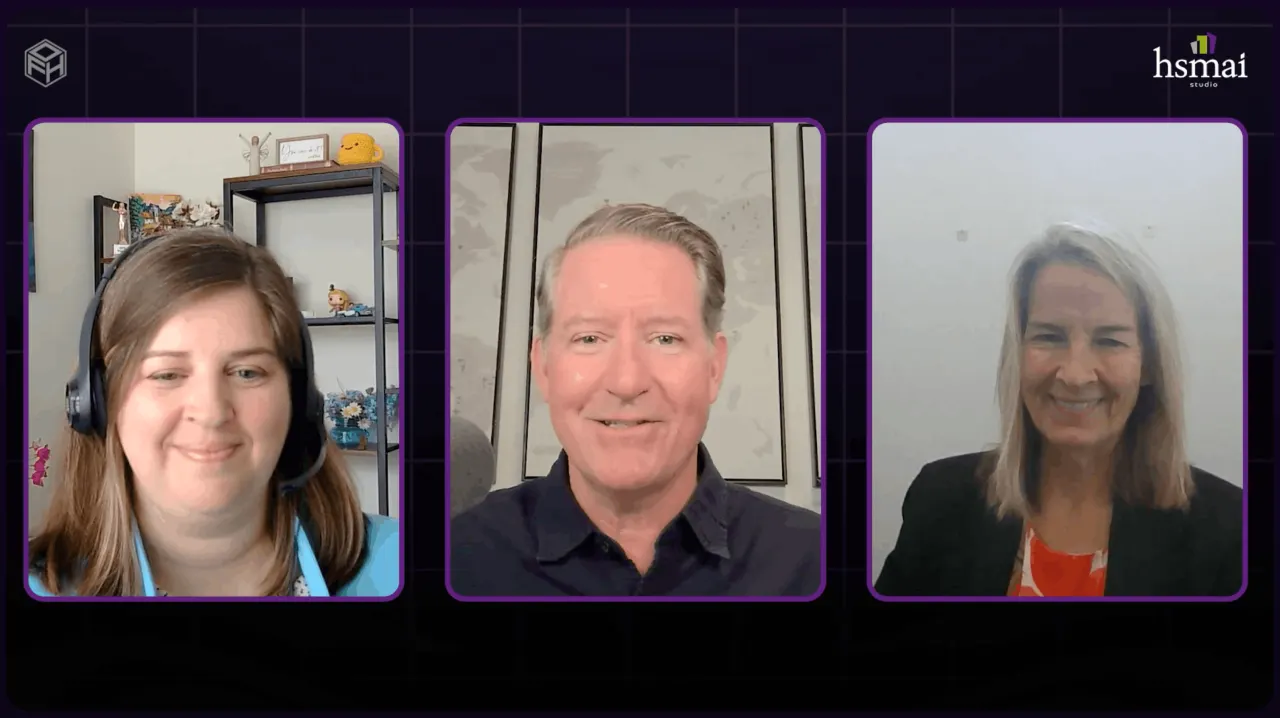
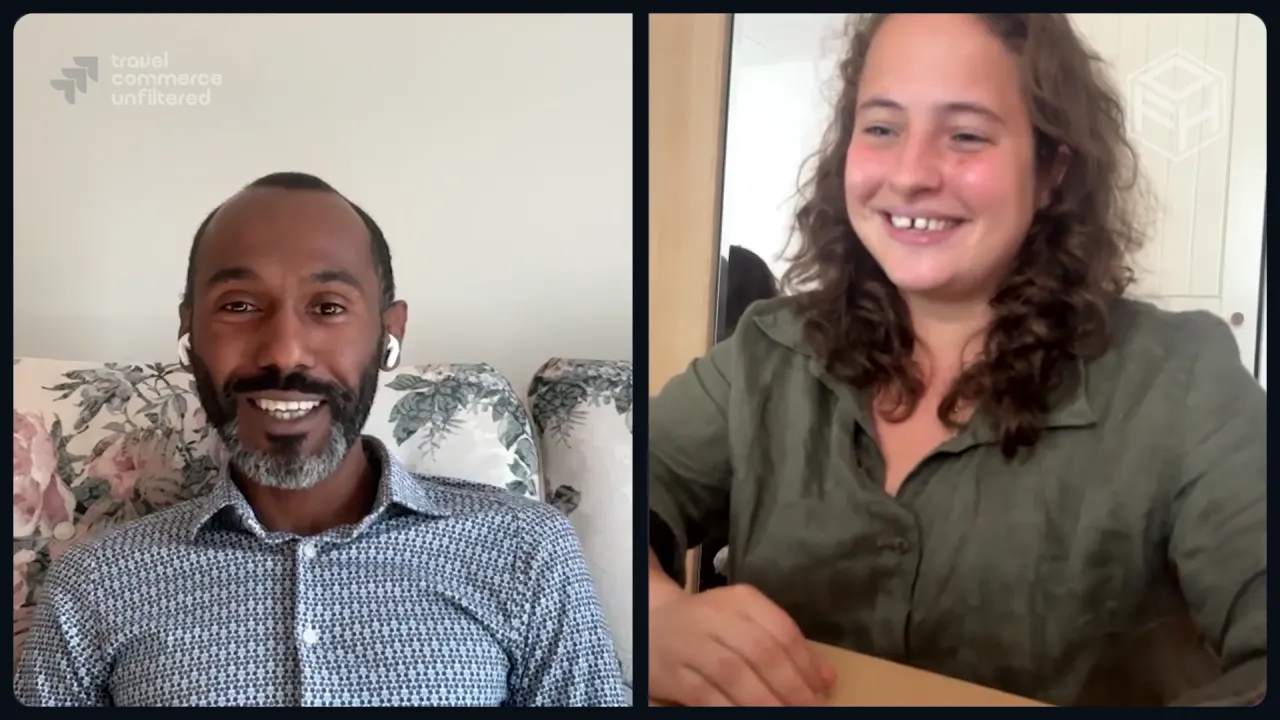
Michael Goldrich and Mike Gamble join HSMAI Studio to unpack what the future talent pipeline report reveals about AI and the next generation of hospitality talent. From the confidence and competence gap in new graduates to the four things that make AI adoption stick, it is a playbook for hiring and onboarding in an AI-first industry.
 Mike GambleCEO
 Michael GoldrichAI Advisor
KEY TAKEAWAYS
Confidence is not competence
new grads are self-taught and fluent at writing, but untested on the analysis and judgment hotels actually need.
Adoption needs four T's
tone from the top, one shared tool, real training, and protected time are what make AI stick instead of staying in pockets.
Onboarding is a recruiting weapon
a great training experience travels by word of mouth and pulls in better talent, and a bad one travels just as fast.
Human skills still decide
EQ, instinct, and culture remain the difference at every level, from entry roles to CEO searches.
You have to invest the time to get the time back
Transcript
Click a timecode to watch from that moment.
0:00Cold open: will AI be outdated by graduation
4
This stuff is moving so fast. Is it is it is it gonna be outdated by the time they graduate? And are are they still is it still gonna be kind of the same same for, you know, somebody graduating today moving into, an industry versus, you know, four years. It's just it's all gonna be new.
0:24Welcome and the future talent pipeline report
40
Well, welcome to the HSMAI studio. We have a exciting, and just a very topical discussion today. I've got two industry experts when it comes to combination of AI and talent. I have Michael and Mike. So I'm gonna turn it over to them to, give a brief introduction. Why don't we start with you, Michael?
Oh, yes. Well, thank you, Brian. Thank you for having me on this, podcast. So I'm on the HSMA Foundation, and HSMA Foundation is all about talent. And one of the things they did is they asked us to conduct some research on that. So my background is I set up an AI advisory company, pretty much soon after Chatt GPT came out, and I focus on the hospitality industry.
I work it on literacy. I work it on discoverability and also ways to make hotels more, the staff more productive using the technology. Mike? Awesome. And Mike? Hi there.
Hey. Thanks, for having us, Brian. Mike Gamble. I'm the CEO of Searchlight Global. So we do executive recruiting in the travel, tourism, hospitality, and events, sector. And I too am on the HSMAN Foundation and America's board, but Michael and I have collaborated quite a bit, in the last couple of years, especially on this topic.
So, I look forward to the discussion and and grateful to be here. Excellent. Excellent. Well, so for our viewers, the state of talent has been a piece of work that's been done on a pretty regular basis, and it's refreshed regularly. As you can imagine, this is a fast moving, part of our our industry. Such a critical part of our industry as well.
And our latest publication, the future talent pipeline, was a special report that was just released a couple weeks ago. And it's about the state of generative AI in talent management for hotel sales, marketing, and revenue management. And these two gentlemen were a huge part of it. And it's a really interesting read, and I think it it sheds some light on a couple of things for me as I read through it. One was the state of, talent coming into the industry and some of their concerns and some of their worries and some of their expectations, which I think is really good for leaders to understand as they're bringing in new talent. And then, you know, from that standpoint as well, what is their literacy when it comes to AI?
How are they, how are they approaching it? How are they, using it in their daily lives? And there's just some really interesting, ideas that came out of it. So one of them that I thought was really interesting, and I'll I'll shoot this one to Michael.
3:07Students self-teach AI: confident, not competent
21
As the students are, in universities, they're preparing for, their studies, etcetera. The their usage of AI today, from what I understand, is very I don't wanna say remedial, but it's the basics. It's using the common tools that are out there today. And the reality is once they get into a hotel or a a corporate environment, etcetera, those tools are very, very different than what they're used to. How how does that disconnect, kinda manifest itself with students as they're kinda coming out? And what what are some of their their fears and expectations as they because they kinda graduate?
Well, well, I think what's happening, and it's not too different from what's happening in hotels, is a lot of these students are self taught. So this university isn't showing them how to use the tool. They are just using the tool. And so in terms of their their confident in how they seem to be using it, but their competence may not be at that same level. And so and and you're exactly right. They're using it basically just to help write reports.
However, when they get to the hotels, it's really all about numbers and analysis. And how they might be have been using it might give them a false sense of authority and expertise where they might just when they get to the hotel, they may not question it because they haven't necessarily been questioning it. And so there could be this, I think it'll be the best word is like a disconnect. And so I think when these people when the students start working, I think there needs to be a a an onboarding process that probably involves using AI literacy, like how the hotel uses it versus how they probably using it to really so it can set the expectations right off the bat. Because they might have been using maybe, you know, ChachiPT or Claude or what have you. And if you're working at a hotel that says you can only use Copilot, and then there could be all of a sudden, it's like, okay.
Well, this thing did everything before, but now I I'm very constrained. So I think there needs to be that kind of conversation as well. I totally agree.
5:20The generational AI divide in the workforce
20
And I think that's, Mike, over to you in terms of when you're if you're speaking with students that are coming out of university, they're looking I think they're a lot of them are really excited about the opportunities within hospitality, especially when you see the impact of AI on a lot of other industries. I mean, we are a people industry, and we're gonna always need people. Right? How are they feeling when they're coming out of university applying for roles in terms of, you know, how are they putting forth their knowledge of AI and usage and is does it match what the employers are looking for? Yeah. Great question, Brian.
You know, even even before the insurgence of of AI, we had this generational divide, if you will, four or five generations in the workforce. So now imagine coming out of university, you still have the boomers who've used AI for about less than 5% of their career. Right. And now you've got college students that they're fully immersed in it. So the the the divide generational divide even even gets bigger because it's like, how do you coexist and commingle the human dynamic with those who've been doing it their whole life and now are trying to incorporate the tools to do it better, with those who really this is how they were taught is to use the tools. So it's a you know, the one thing and and you said it's we'll always need people to people business.
That's the piece that we're focusing a lot on. It's the again, it it Michael's right. The onboarding piece, but more importantly, the it's just that human dynamic of working within a culture and then the instincts combined with great tech. You're still gonna be working with people who've made decisions off of instincts their entire career and just looking at data, you know, if that makes sense. So so that's one piece that we talk to our clients a lot about is, is to really, again, try to bridge that divide, and Michael is right on. I think that I think onboarding has to be much more, significant than it's probably been in the past, to make sure that, again, that you've got you bring someone on.
You have someone that's gonna be there for a long time and be a really productive part of your culture. So that's one piece, that I guess I would add to that.
7:33The confidence and preparation gap
23
And, Mike, what about their confidence level? I there's you know, the report kinda moved into looking at their confidence level of, you know, usage of AI, and there's a little bit of a gap there. Maybe, Mike, you can talk about, you know, kinda how students are you know, how your clients are thinking about that that gap. And then, maybe, Michael, you can give us a bit more kinda details on, you know, more of the specifics of the the kinda what the data what else the data is telling us. Yeah. Yeah.
We we've had we've had some clients have done a great job, matching them up with younger mentors. So, you know, gone is that you don't need to be with a a baby boomer mentor, but perhaps a 20, who's been working here a couple of year years only. That's really smart because they still are in that similar mindset, but they also the people who've been there a few years already understand the innuendo to the company and the brand and how to get work done, both with the human piece and the and the tech piece AI. So that's one example I would say that we've got some clients doing that, and it's just working extremely well. I think that's critically important, to make sure that they've got a good opportunity to to learn before you throw them in, to to get the work done. Let's make sure we're we're training and teach.
You know, I I mean, again, Brian, you and our hotel hoteliers remember the day we had the the training program, and it was extensive. And this is long before any technology. Yeah. I mean, we can date ourselves. Right? But Yep.
But our companies took a lot of time to make sure we were coming out of college, and they still took a lot of time to make sure that we understood the culture and how things worked. And I think we've gotta get back to a little of that. That that's such a great point. And, yeah, that's a big that's a big gap, big loss. Michael?
9:20What the data shows across class years
11
Yeah. In in terms of the data, so we looked at, you know, not just seniors, but we we sampled, you know, freshmen, sophomores, juniors, and seniors. And we saw, like, there was a divide in terms of, first of all, how much do they use it when their freshmen and sophomores are using it less than as their seniors. And then also it makes sense that the confidence versus preparation, is wider when they're earlier in the school versus when they're getting closer. And I think one of the things that is different for the seniors where they seem to be double the amount of usage of the juniors is because you're probably working on those cap stone projects in which really require not just the writing, but it also some analysis and, like, full project work. And I think once they start to do that, I think it starts to make them feel because they says that they feel more prepared.
Like, they're actually doing, like, real world, you know, simulations of work of what it might be. So it's possible that once they get to be a senior or senior, the kind of the confidence and the feeling preparedness kind of even out sit a lot more. So maybe in terms of working with these students in term preparation is that we give them more real simulations earlier on so they get comfortable with what the expectation is versus just using it to write a report. When you when you think about that, if you think about, you know, freshmen, sophomores coming in today, how I I I certainly see the, you know, great great viewpoint to kinda give them some more simulating type, of work earlier on. But at the same time, you know, they're three, four years away from graduation.
11:00Always-on personal agents and shadow AI
24
And, I mean, this stuff is moving so fast. Is it is it is it gonna be outdated by the time they graduate? And are are they still is it still gonna be kind of the same same for, you know, somebody graduating today moving into, an industry versus, you know, four years? It's just it's all gonna be new. Yeah. Yeah.
A 100%. Because, you know, what got announced a couple of weeks ago by Google and, like, a like, a week ago by Microsoft, they're creating these personal twenty four seven always on agents. So it's different than prompting. Like, the whole sort of prompting, you know, engineering exercise, that's become less of an issue because these these AI agents are gonna really know everything about you. They already know your intent and sort of, like, what you need to do because they know your work. So I think if they're if you're these students have this sort of personal agent that's with them, like, say, sophomores or juniors, and then they graduate and they go to a hotel and say, well, wait a second.
You know, security issues, you cannot use that personal agent at all. Then it's gonna be one of two things are gonna happen. You're gonna have people using shadow agents where they use it secretly on their personal accounts and, well, this is how I got through school. Or they're gonna be just feel very disaffected and feel like what not like a good fit. So I I imagine so to your point, Brian, yeah, it's moving very quickly. And, sure, we could train them for today, but what got just announced, it's, like, like, 10 x in terms of the capabilities.
And the hotels aren't there yet. They're just not there yet. Right. Yeah. Yeah. Great point.
12:42AI inside the recruiting process
24
Yeah. Mike, when you think about, the recruitment side, they were talking a little bit about how students expect AI to be embedded into the whole recruiting process, and and, obviously, that's gonna change as well. Maybe they're gonna have their personal agent, you know, with them as they're as you know, getting asked questions or, you you know, and if that agent knows them that well, it's probably gonna get it right. Right? It's it's gonna be really interesting. But, you know, how, how do you see that impacting the whole recruitment process, in terms of and and look, each company is gonna be at different levels of their AI usage.
You could apply to one company and have a very different experience in terms of the tools that they're using versus another one. How is that, how is that playing into their psyche and and their preparedness? Yeah. Boy, that's a that's a big question, Brian. And it's a it's a big it's a big one now, to be honest, at all levels. Not just not just entry level and terminology.
I mean, we're doing some CEO searches where this is front and center. You know? How how you use AI, how you manage a team that is aggressively using it to sell and market and operate your your company. It's, it's it's detailed. And I and I think, Brian, I was really Michael, that's a that's a very interesting point because if any of you have ever changed, we just changed platforms. And and afterwards, I kinda I felt I felt like I've got a couple team members that are really not enjoying the fact that we jump from one to another, and I get it.
I think coming out of school, I think that's a concern. I think couple things, Brian. First of all, the amount of research and prepared how prepared you can get, to interview with a company and then and really have a good interview is is off the charts. I mean, if you're not using it, boy, you you certainly should. But even the way in which, we're helping our clients prepare for those interviews, using AI. And then and then the question to ask about how they use AI and how they manage it in their in their life and in their work life, I think is I think is is critically important.
14:49Why EQ and soft skills still decide
17
Yeah. Again, I think the thing we can't lose sight of, and I don't mean to be the broken record here, but we still are in the human business. And and so this idea of EQ at the end of the day, at all levels of searches that we're doing, from renter level to CEO, it is it still gets down to kind of the innuendo and the and the instincts of the person, and I think it'll be no different with the way in which they use AI as a part of their work and the way that they use it to be prepared for an interview. And and the key is it's at the end of the day, in our business, especially if you're in commercial, the soft skills are are still gonna be super important, and EQ is gonna be super important. So how do you how do you really calibrate those things? And and, again, I just went I just sat in on a bunch of inter interviews last week for a big job, and we talked a lot about this piece.
And and it's it's just fascinating. And to your point, it's, it's gonna change so fast. And so you're right. The students, how do they how are they best prepared? Again, it gets back to the it will be different levels for different companies that they're interviewing with. That is an absolute fact.
And, Michael, you and I talked the other day about, you know, the, difference between, you know, that that self learning approach to AI and then, you know, a true and I said this to to you about myself is that I've I haven't taken any formalized, you know, AI training. And and I, you know, I realized through this report that that's a gap I need to I need to fill that. Like, I need to start, and and I've found some good ones that I'm I'm gonna try to get through, because it is so critical. But when you think about somebody joining an organization, that has, you know, robust AI tools, we're not seeing training programs that are really fit for purpose for those individuals, whether they're, you know, new to the industry or, you know, to to Mike's point, you know, we've got the four generations there. So, how how do you get it across to companies, the the the criticality of putting these types of programs into place when people join their organizations?
17:02The four T's: tone, tools, training, time
49
Yeah. I I think that's a great point. So what I what I've seen is so I've gone to hotel management companies, like, right after ChatGPT came out, and I said that this is what it can do. This is how you should approach it, yada yada yada. And I go back a year later to the same company, nothing has changed. They're like but they but when I talk to them like you, they're like, wow.
It's almost like magic. They hear all the stuff it can do. Seems like magic, but then nothing changes. But then when I went back to this company a second time, everything changed the second time. And what was different the second time and I call it the four t's. And, Brian, I was telling you about the four t's.
So the number one t is the first tone from the top. The CEO needs to say, this is important. This is what we're doing. Everyone get on board. Stop. I mean, just there.
That is the most important thing. Because if the head of the company, the head of culture isn't on board with this, then people will do it in, like, little areas, but it will not be nothing will be unified. The second t is tools. Everyone needs to use the same tool, and then you need to bring that training, that LMS training, the people coming in training all against that tool. So because everyone has Copilot right now. Right?
No one's using Copilot. Not really. And it's free, essentially. So it's like so you pick a tool. Third t is the training. Okay.
Here you got Copilot. You've got JetGPT. You have Claude. This is what it can do. Just explain it to everybody simply. This is what it's it can do, and then have the last t, which is the hardest t, is time.
You have to use it every day. You have to make time for people to do it, and it is it's that curve. It's gonna take longer initially to get your work done to actually reap the benefits. It's sort of like, you know, delegating. It's like a manager, a new manager coming in. You have somebody, and it's like, oh my god.
So much faster if I just did it myself versus delegated out to this where because I gotta spend all this time to explain to them and teach them and edit you know, give them feedback. It's the same thing with the AI, but but take instead of a person, it's a this technology. But if you spend the time and you start to learn it and you learn how to adopt everything, then that's when you get the benefit. So that's the four t. So that's what I think every organization needs to do is have that sort of perspective. And then I think when people come on, then you're gonna start to see the benefit of the technology, my opinion.
I think that's a great point.
19:38Onboarding as a talent magnet
51
And, you know, especially the next generation coming into the workforce, they are less, they're less apt to stay at a company for ten years, twenty years, you know, what what we're used to. You know? And and they'll and they they will communicate with each other when they land a role with a company that has an amazing onboarding process, training of all the tools. Like, that that is gonna be just magic for a company if they've got, you know, few individuals that have come on board and have had this amazing experience. They're gonna tell their friends. They're gonna post about it.
They're gonna, you know, and that's gonna attract better talent to those companies and vice versa. If somebody joins an organization and there is zero training, it's like, here you go. Off you go. Good luck. You know? That's gonna get out as well.
And I think that's one of the the big differentiators going forward in our industry is the companies that are gonna stay on top of it, that are gonna have those training programs available, are the ones that are gonna attract the best talent and and just and and and win. Mike, are you seeing any of that as you're working with your your client base and, you know, because I I we we know people talk about it. Right? Oh, they do. Yeah. It it's really the the culture too.
They just same thing. It's so easy now to research, you know, the culture and what it's like to work there. And and, you know, your brand is is important for your internal team as it is for your external customers. Right? And I think the same is true here that you just touched on. So critically important.
It's not a mystery anymore, what your culture's like and what your onboarding and training is like and how and how you're using the tools that are that, again, like you said, Brian, winning. And so that's then, again, we talked again to our clients a lot about that. If you wanna win the best talent, these things have to be aligned. I love, Michael, the training piece that you said, the one all the t's were good. But that one, that level setting is so important because you've got some that are remedial that are kind of at the kindergarten level, and you have some that are in graduate school. And I think getting getting everyone on the same page, that comes through an interview process Mhmm.
At every level. And so, again, back to the for the for those who are looking for the best talent, just be consistent with even the which the way in which you're interviewing and talking about all things, but certainly tech and AI. And so that you're all saying you know? And if you're trained, then you're all level set. You're gonna be able to do that. And so your the best candidates are gonna feel it and hear it and want to work there.
And you're right, Brian. That is that is a successful, recipe to win and win the best talent. But the key is then to retain them. And, again, no there's no secret, to understand who who's doing all those things well and then who's retaining the best talent. And so yeah. Yeah.
All all good stuff. Love the four t's, Michael. Yeah. Agreed. And, Michael, you mentioned, I believe kinda near the end of the conclusion, I think it's great. Students are, you know, students aren't unprepared.
They're coming in. They're gonna they're gonna do just fine. And the companies that are using AI are the ones, as we said, I think are gonna do extremely well.
23:00Transparency about AI monitoring
17
There was a footnote there, which I thought was really important as well, which is the transparency of companies in terms of, you know, telling employees that are coming in, this is how we use AI to monitor performance or, you know, whatever else, you know, they're using it for. But that transparency is so important, because that's again that just feels like a could be a ticking time bomb if if a company is kind of, you know, secretly using AI to monitor and and performance or whatever it might be. But, any any additional thoughts there, Michael? I thought that was a great kinda conclusion part as well. I I think the expectation should be anything you do on your computer or any device is being monitored, and I think it's important for pew the students to know that. Just have an expectation that, you know, work is work.
It's not personal, and just kinda tell them that. But I think the other thing in that we discussed, in in the study, when it came to recruitment, the students know and understand that the businesses, hotels are using AI, to vet them, but they're not actually really using the AI to find the jobs. So that was one of the thing is, like, the so they're not sophisticated enough in terms of their job search process where the companies are more sophisticated. So that was one of the things is maybe in a a opportunity for the foundation or these career planning placements that kind of show them how to use the technology to find the best fit for them. Love that. Yep.
It's, just more like, goes back to your yeah. The time. Just taking the time every day, to start to use the tools, and and you're gonna get more proficient at them. Right? Yeah.
24:42AI as a time machine
16
And, you know, and regarding time, you know, when I was doing one of the earlier studies, just on the state of generative AI, the first first round, Christy Gaucho said, as you move up in seniority, they expect you to take time to think. And so they're paying you to think. But as you but she said, in reality, as you move up, you have less time to think. And in theory, this technology could be like a time machine. It can create time for you, where people don't have that time. So, you know, that could be a perceived advantage.
But, again, you have to invest the time to get the time. It it but it also will give you it'll give you a better it'll give you a better launching pad from which to start the thinking. That's the thing that we use too is that it's just so easy to you know, people think, well, gosh. You know? Imagine a few years ago where we used to start when we were trying to be strategic and think about any aspect of our business. Today, that that doesn't need to be.
That whole that whole portion, AI will do that for you and give you a very different platform on which then to do your best thinking. I mean, that's the way, again, that's the way we think about it is that is how how we can use it to then take us, and get us prepared to start thinking about the next level. But I think that's the that integration piece is really key. Good stuff.
26:04Closing: human skills first
31
Excellent. Well, those are all the questions I had. I'll leave it, any final, any final comments, Michael? No. Just thank you for, you know, inviting me to share a little bit of the findings that we found. But we should also call out Noreen Henry also helped facilitate this whole exercise with Mike.
So I just wanna make sure that, Noreen was a big part in terms of driving the research and the studies. Awesome. Huge huge part. Huge part. Good good shout out to Noreen. Yeah.
Again, I'll I'll just go back to let's be sure to use our strong human skills to make sure that we're making great great decisions on how to use this advanced technology. You know? And and we still need to be good collaborators. We still need strong EQ, and and really, really good human skills in our business. And so that that will not hopefully ever be lost. Couldn't agree more.
I mean, it is, this is such a great industry. I mean, so the people that get into it, most of the time, it's their their love of people, their love of travel, the new experiences, and and and that's that's not gonna change. So, you know, having those those skills coming in is is still really critically important. So, yeah, great points. Awesome. Excellent.
Well, gentlemen, thank you very much for your time. This was, really great conversation. I think there's some really, great tips for our viewers that they'll be able to take away. So, look forward to doing this again sometime once we have, the next iteration. And, again, thanks for your time. Thank you for having us.
Thanks, Brian.