
















 EPISODE · 38 MIN
Der Funke, der nie erlosch
Xander Verheij begann seine Karriere in der Luxushotellerie mit einer Leidenschaft, die er während seines Praktikums entdeckte beim Ritz-Carlton in Barcelona. Vom Erfassen der Gästepsychologie bis zum Aufblühen in multikulturellen Teams erzählt er, wie diese Erfahrung sein persönliches Wachstum geprägt hat, und warum er, selbst nachdem er andere Wege ausprobiert hatte, wusste, dass er im Gastgewerbe wirklich zu Hause ist.
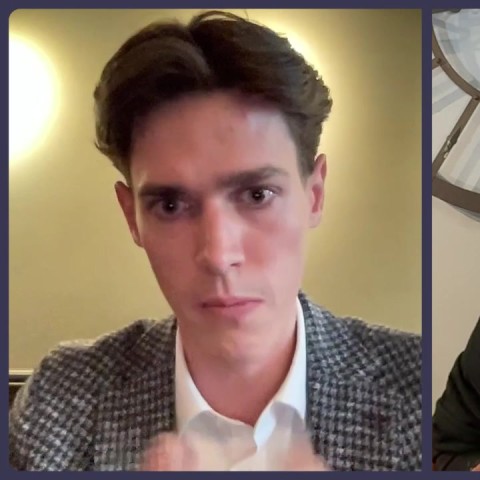 Xander VerheijGeneral Manager
WICHTIGSTE ERKENNTNISSE
Der Funke für den Luxus
Während seines sechsmonatigen Praktikums im Ritz Carlton in Barcelona entdeckte Xander seine Leidenschaft für die Luxus-Hotellerie. Er beschreibt sie als einen Funken, der dort entstand und nie wieder erlosch.
Kein Durchschnittsgast
In Amsterdam gibt es keinen Durchschnittsgast: Die Besucher reichen von Menschen, die das ganze Jahr für eine einzige Nacht sparen, bis zu solchen, die freizügig ausgeben. Mit diesen völlig unterschiedlichen Erwartungen umzugehen, nennt er die größte tägliche Herausforderung im Gastgewerbe.
Lernen, indem man ins kalte Wasser springt
Als Praktikant im Hotel 27 wurde ihm als einzigem Manager im Haus vertraut und er kümmerte sich trotz seines jungen Alters um Dienstpläne, Abläufe und die Schulung des Personals. Er meint, man müsse nicht jede Stufe erklimmen, sondern könne gleich ins kalte Wasser springen.
Es ist das Hospitality-Business, das mich wirklich reizt.
Transkript
Auf eine Zeitmarke klicken, um ab dort zu sehen. Die Aufnahme ist auf Englisch.
0:00Begrüßung und Einführung
7
Xander VerheijSeek first to understand before being understood. And I think that that's a very good conclusion. Very nice saying as well because, I also joined here, and I joined the operations for two or three months dishwashing, doing everything that that everyone did here. Because I'm not the guy that that just indeed, what I just said, sits on the chair and directs everyone everywhere.
the Future of HospitalityWelcome to our podcast, the future of hospitality. I'm your host, Arjen Eichelbaum, and today our guest is Sander Verhae, general manager of the Noblemen in Amsterdam. Sander, welcome to our show.
Xander VerheijThank you very much. It's a pleasure. Yeah. I'm glad to see you.
the Future of HospitalityFirst, a little bit about Nobleman that's in in the canal on the canals. Right? It's on Leitsgeft
Xander Verheijin the middle of the city center. It's quite a quiet canal, so that's Yeah. Quite convenient. Although, it's only a five minute walk through
the Future of Hospitalityto the city center. So yeah. Wonderful. We're gonna speak about that a little a little more later on. First, I would like you to introduce yourself. Who is Sander?
Xander VerheijSander is, 24 years old, and I would like to immediately highlight that I still see my hospitality career to be, just right at the start. However, I started working in hospitality now ten years ago when I was 14. 14. 14. Yes. Correct. Okay. I will remember that because go ahead. Go ahead. Yeah. In the in the hotel with my father, actually. I was born and raised in the South Of The Netherlands in a town called Wahwejk. My father had a hotel there with around 70 rooms, some meeting rooms, restaurants, a bar. Everything was there to learn. And, yeah, that that's where it all started. All the basics, carrying trays, some basics about, yeah, customer service. We did the breakfast a lot of times together for the whole hotel.
1:33Mit vierzehn im Hotel des Vaters angefangen
2
the Future of HospitalitySo it was really cool to start off my career with my dad in the in the hotel. How you started at 14 years old. That's that's because your dad your your parents have a hotel. Yes. Ah, that makes sense. Go ahead.
Xander VerheijYeah. And and from there, although I have to say, it was a big pleasure to work with my father in the hotel. Also, he sold a couple of years later, but I decided that I really wanted to create my own career path, let's say, and not fully follow into his footsteps. So I started to do some side jobs in hospitality, restaurants, bars, cafes, everything in Brabant. Eventually, there was only one choice to start studying hospitality as well. It it was my passion from 14 years old, and I directly dove into it, the studies as well. I did two years of MHBO, so something in between MBO and ABO on the in Tilburg.
2:19Hotelmanagement-Studium in Brabant
3
Xander VerheijRight. And there was a connection with the the Buas, the Brita University of Applied Sciences, where I could go for three years to the Haier Hotel School. Let's let's call it like that. Yeah. That was a beautiful period as well. I was way more motivated on the higher level than on the lower level, I have to say. And
the Future of Hospitalityafter that, after my studies, I decided to do something completely different. I started gonna say before you continue, because I was gonna say, so you automatically you move because the the the hotel in the family, you moved to the hotel school. And I was like, didn't there were wasn't there a moment where you thought, hey. Maybe I wanna do something else, but that came later.
Xander VerheijThat came later, I have to say. Yeah. Yeah. I I I very fluently from working starting working in side jobs. I had to tell my dad to also start studying hospitality, and then there came the urge to think like, hey. There's a lot of other things going on, and I have to say it was also in the at the end of COVID where I decided, well, I will I just want to try something else in my life at least once. And I thought right after my studies would be the best moment because I run another I run it off my internship, my studies. So, yeah, I could try something else. I did account management at a platform for freelancers, something completely different. It was a bit related to hospitality because I had some clients in that industry.
3:52Ein Versuch im Account-Management
2
Xander VerheijBut for the rest, it was it was a completely different way of being in contact with people, mostly on the phone, trying to sell something, trying to convince them, where in the hotel industry, you're welcoming people that chose you for how you brand yourself and not going towards them to to, yeah, get the acquisition there, let's say. I realized quickly it wasn't for me after a month almost already. Mostly by the contract Not for me. Not for me. It's it is the hospitality business that that really attracts me, and I really wanted to give it a chance because that's also who I am. I think I don't want to say after a month, nothing for me. I will go on the next challenge. I want to give it a proper chance, so I stayed there for eight months, and I remained in close contact with my previous employer where I also completed my internship.
the Future of HospitalityAnd she said, why don't you just come back, rejoin those Which employer was that? What what property was that? That was hotel twenty seven in Amsterdam. Hotel twenty seven. That's in the city center of Amsterdam on the Dome Square. Correct. It's a very it's an iconic building and institution almost, 27.
5:22Die Entdeckung von Hotel 27
3
Xander VerheijYou could call it like that. Yeah. It's a very unique hotel. Suite only boutique hotel with 16 suites ranging from 45 square meters to rooms, and the biggest one was 240 square meters, if I'm not mistaken. So a mission to start restaurants, a very high end bar, and therefore a great place to learn a lot of things. Yeah. So a very valuable time there. That's why I did my internship. So you you the the the the the owner asked you back. So let me backpedal a little bit because
the Future of Hospitalityyou ended up working there, and we missed that part. Can you tell us about how you ended up at twenty seven? Because because of the fact that I think it's it's an institution, and it is beautiful. Everyone should go there. The restaurant is amazing. The bar is amazing. So you ended up there. Can you tell us a little bit more about that?
Xander VerheijSo my studies at the Reipanen, we actually had a field trip to Amsterdam, and one of the hotels that we toured was actually 27. And, yeah, the impression I got there remained with me for the entirety of my studies. And when I was doing my studies in Reda, I had to do another internship. And, that tour was so clear in my head still, like, all the corners. And and and I was so impressed by the design and by everything. I thought, well, let's go for it. There was a position open as a personal assistant a general manager, basically a management assistant. I thought, let's just go for it and see how it goes. And the general manager, I immediately had a very good bond with her during the talk. Right after the talk, she said, well, we're going to go for it. We're going to do it together.
6:54Hospitieren beim General Manager
5
Xander VerheijI want you in. So I started my internship. That that's how it started. And
the Future of Hospitalityyeah. So what did you do at that? Because I want to go a little bit deeper into that position because that's really what what formed you, I guess, to what you where you are now. So what what was your daily how did your day look like days look like? Well, I was in the beginning, I was really
Xander Verheijshadowing the general manager in terms of everything she did, and I think that was the greatest way to start because I I had no clue what it meant to be a general manager, what it looked like, what the responsibilities were, how the the the hierarchy was towards the staff as well in a in a in an organization like that because we had 90 people 90 people of staff even though it's a it's a small hotel with 16 with 16 suites. And
the Future of HospitalityIt's relatively small indeed. Yes. Yes. So I can only imagine that guests then even demand more because it's so small.
Xander VerheijCertainly. Yes. And especially since it's on Dam Square, it's so multicultural, and the variety of people you see on Dam Square in the middle of Amsterdam, that's also the variety that you have in the hotel. And Okay. In terms of everything, in terms of culture, in terms of budget as well, some people, they save money for an entire year to spend only one night with their beloved ones while others Oh. Money like there's no tomorrow. You can imagine that. So so and I think that's one of the most valuable things about hospitality, and especially in Amsterdam. There is no average guest. So also the expectations, they go from they go all all over the place. Let's let's call it like that. And being able to manage those expectations from all these different people in the best way possible, that that's, yeah, the greatest challenge we have every day in hospitality, I believe. And I really started learning about that at 27, but also the responsibilities of a manager, of course, started there.
8:27Kein Durchschnittsgast in Amsterdam
2
Xander VerheijYep. General manager really put great trust in me, which I still really much appreciate. There were days that I was the only manager in the property as an intern, so that was really special. And that could be administration, that could be scheduling, that could be writing procedures, that could be training new staff members,
the Future of HospitalityWent went everywhere, checking bills. Yeah. The the the not the highest level of management task. No. But you you were in the middle of it at a very young age. That's what what I find so remarkable and and inspiring, I think, for a lot of people because you don't have to go through all these these levels. You can dive deep dive into the deep, which what you did, and all these responsibilities were thrown into your lab, and you just grab them. Hey. This is what I need to do, and I did it. So I wanna hear more about that because that is really inspiring.
9:58Praktikum im Ritz Carlton Barcelona
8
Xander VerheijSo you mean, like, the question, what do you need to do to
the Future of Hospitalityhave, like Well, you had more you had more experience. You also had an internship in in Barcelona at the Ritz Carlton. Right? That's correct. And that's where you're at. Little bit more, then we go back to '27. Yeah. That's good. That's good. So my internship in Barcelona was during my studies at the Voipana in Tilburg.
Xander VerheijI moved to Barcelona for a half year for the internship, and that was one of the most crazy times I ever had. The the the best time, maybe even in hospitality still for a healthier being able to we I was doing an internship in the executive club lounge there as concierge, as front desk agent, but also a bit on the F and B side. We were basically running a small hotel of 30 rooms inside a larger hotel, which had almost 600 rooms Mhmm. On the very highest standards you could imagine. Of course, it's it's called a property. So it was also good for me to get familiar with what a working for a brand
the Future of Hospitalitymeant. Because that was your first brand. Right? That was yes. It was my first brand. Yeah. Right. And not the not the smallest one. I mean, the Ritz Carlton. And like you mentioned, they have hundreds of rooms and they have a club area, club lounges and club rooms, club lounge, and you were responsible for that. So walk me a little bit through your daily activities at that particular property.
Xander VerheijYeah. So we started the day by setting up the breakfast. It was located on the 30th Floor of the building. So we had a beautiful view. It's and it's right at the sea. It's a tower at the sea. So every day was so special to me to to to basically wake up with this view, prepare the breakfast for the guests. At the same time, you could have people checking in, asking for recommendations for the city because you were also their front desk and concierge agent. And they had five different buffets during the day. And for the rest, yeah, you had all the tasks that you have in a hotel besides all the housekeeping parts.
Xander VerheijSo what I said, the check-in, checkouts, managing the bills, but also that concierge part was a really big part of the of the job since Ritz Carlton is known for its, yeah, high standard of service. Yeah. Of course, it attaches a lot of Americans to to the brands, yeah, which are always a perfect example of how you can be the great concierge, I would like to say. They really would like to know everything about the city and in a very expressive, inspiring way. I have to say I was quite an introvert person first when I started working hospitality. Oh, really? I find it quite hard to, yeah, to, yeah, to properly mingle in with with with people and go into the social contact, let's say, like that.
Xander VerheijYeah. Yeah. Yeah. Yeah. Yeah. But that developed a lot over the years. How long did you work there? For how long? The Witscotin was only in the industry for six months. So Six months? But oh my god. But it felt like what I'm hearing, it felt like a few years. Felt like a few years. Yeah. And I have to say all the experience I have felt as a few years because I think that's a good conclusion what you just mentioned that you just have to jump in on it. Yep. Step away from all the expectations that you might have about the job. Go within bit of common sense, maybe just jump in with a clear mindset and try to learn everything you yeah. That's possible there. Yeah. And I think if you have the right motivation and and and passion
the Future of Hospitalityto learn things actually, then with this mindset, you will also I like how you explain and how you draw that picture of the Ritz Carlton in Barcelona because you just a few minutes before, you mentioned that you started a career or tried a career in account management, and you immediately felt, uh-uh, this is not me. You didn't have that with the Ritz Carlton, did you? Even though you were trying to find your way in there, but there was this park inside of you that knew, okay. This is what I want.
13:45Der Funke für den Luxus
2
Xander VerheijExactly. And I really have to say that's where it all started, especially the spark for the luxury hospitality industry because I think that's really where you have to manage these expectations as I just managed. That's where also people really expect you to take the step forward towards them rather than a step back and just check you in and enjoy your room. Goodbye. That's that's completely like that. So in order to develop myself as a person, I think that's where it's a bit underlying image of why I was motivated to learn about the industry, is I wanted to develop myself as a person. And I think in that high industry, you're confronted with confrontated with with so many different people on a daily basis, both internally and externally that time, because also the team itself with the colleagues, they came from all over the world. They only selected the best students from certain schools to be able to do the internship in the club lounge back then. So both with the colleagues as with the guests, you really had to, yeah, transform yourself as a person in order to manage it properly.
Xander VerheijAnd I found it so interesting, the the the human psychology behind it, to to look someone in his eyes and understand what he feels and what he might need and what he expects from a stay. And all the honor, I'd from from a colleague, what he or she might expect from you when you're working with him, that that that's still what inspires me every day, I have to say. And that is the spark and the essence of hospitality
15:16Die COVID-Zeit im DoubleTree
49
the Future of Hospitalitythat is naturally inside of you. And I really, really, I'm glad that that you just poked it out because this is what it's about. Yeah. To me it is for sure. That is that is for sure. So that's the the Ritz Carlton. You six months in the Ritz Carlton in Barcelona. You also worked at the Double Tree next to Central Station in Amsterdam.
Xander VerheijYeah. There was also next Tell me something about that. That was a very special period, I have to say. That was in the middle of COVID.
the Future of HospitalityWas In the middle of COVID. So they were open?
Xander VerheijThey were softly opened. Yeah. Yeah. There were still some people allowed to travel, but, yeah, it was very little. The occupancy there was between 510% on average during my whole industry, I think. So with a hotel of almost 600 rooms again, yeah, that's with all the staff they did have in house, which they still had to maintain, it's not a challenge in terms of that. I was supposed to do a duty management in the ship there. And, of course, Doubletree is a Hilton brand, and I already had a Marriott brand. So that's actually why one of the reasons I chose it because I really wanted to compare, like, hey.
Xander VerheijHow does Marriott how is Marriott compared to Hilton? And on the other hand, also, how is the luxury industry compared to the bit less high luxury industry? It was a four star hotel, a very big hotel as well. But it ended up being in the middle of COVID, so there was not a lot of communication with the guests and a lot to learn. So we ended up doing some maintenance in the hotel, actually, with the whole intern with the whole intern crew. We painted some walls, and we renovated a roof garden, and it was a very special time, I have to say. I don't look back on it very negatively because it it was out of everyone's It it was yeah. You connected with the with the people in a very different way. Have to say internally with staff, we got so close. And after everything we did, we're working on the roof for a whole day, basically, just to renovate the garden. And And you were renovating
the Future of Hospitalityyou were working on the roof, renovating, etcetera, at at the Doubletree, and you did that with colleagues who were also just working in the hotel normally, but all of a sudden, they had this extra shift because there were no guests. Exactly. So both people that were already employed there just on the payroll as well as
Xander Verheijinterns that also applied for an intern internship at the same period. And, yeah, that was basically the only thing that could be done. And there were some things that I could still learn, and, eventually, I believe I have a picture of how it could be if it was really busy in terms of all the procedures and how the check-in would go there, everything. They have a lot of restaurants as well. So now I'm not looking on in the looking back on it in a negative way, but it was certainly very interesting. That's It's a good experience because
the Future of Hospitalitymost of your career right now, because you're still very young, is post COVID, and COVID is now it's five years ago since it started. It lasted for a year and a half with lockdowns, lockdowns, lockdowns, all of and I remember that because I live in the city center of Amsterdam, so I know everything about it. That's a good experience. The and after that, is it that when you went to twenty seven? After that, I did the internship at twenty seven. Yeah. That's correct. Go ahead. Tell me in indeed. So you ended up at twenty seven. You were like the assistant to the general manager or the PA as you called it yourself.
the Future of HospitalityYep. You just walked us through your daily activities. Is it also there after Ritz Carlton and this property? Twenty seven is independent. Right? It's not doesn't belong to Richard. It's okay. So how was that different?
Xander VerheijIt was different in terms of a lot of things, I have to say. You really feel that you're dependent on, who's above you way more than in a larger chain hotel, I would say. Because there, you always have these standards that are there, and, a manager can be a manager there, but, the standards will always count twice as hard as his own philosophy. Not always. It depends a bit, of course, on the type of brand and how the brand is incorporated into the business. Those will be franchises in terms of way. But I feel that if you work in a boutique environment, the influence of the owner and the managers is of way greater value than in a in a larger brand.
Xander VerheijAnd that's what was really special to me since I had a very good connection with the general manager that she also really invested in me. I thought, like, hey. This guy really, really suits to this concept and and to this to my vision as well. I want to He listened to you. Sorry?
the Future of HospitalityHe listened to you. She yeah. She sorry. Sorry. Sorry. Excuse. My assumption. There we go. Sorry about that. So she she opened up. I mean, that is that is that is what I like about these days. Things are changing. Times are changing. I just had to talk about this with someone else that even general manager are general managers, people at sea level, they are opening up to the young people coming into the property, and they wanna hear their their vision. They wanna learn from them. So sorry for interrupting, but I think that's very beautiful. Go ahead.
Xander VerheijYeah. And for the rest in terms of the boutique environment, of course, we will always be closer into contact with the guests. After my internship, I, of course, did the account management, and I came back. Yep. I'm the head of the Butler department, but maybe we can save that a bit.
the Future of HospitalityAs a management Butler department. I mean, I have to repeat that because it's it's not something that all people know about. What does that mean?
Xander VerheijNo. And especially in the in the Dutch hospitality industry, it's something very unique, I can say. I think so. Yeah. There's only three hotels in Amsterdam, and I think maybe a few more somewhere else in Netherlands that does it. But the butler department was there for anything you could imagine for the guests. So in terms of you also had a bit of the conjurage role, but we also did the room service there. During my time, I also started implementing serving some of the dishes of the one mission to start restaurant into the suites, which was a very big challenge, but, yeah, a very cool addition to to being a butler there as well, being able to to serve it like that. But also the traditional things you could imagine, like, like, ironing or, washing clothes for guests, the tidying of the room, folding clothes, packing luggage, everything like that was also included.
the Future of HospitalityYeah. Wow. Wonderful. So after that, why did you leave twenty seven?
Xander VerheijWell, I I completed my internship there. So and after, I also wrote my thesis at twenty seven while I remained working part time. Mhmm. Then I completed my studies. And then was the moment that this spark came up, the urge to try something else,
the Future of Hospitalitywhich I'm also not ashamed of. I'm very No. No. No. No. I mean, that's that that says a lot about you. I mean and I recognize that. Hey. I'm done here. I I I used to have I'm old enough for that. When I look back, I've got a three year cycle. I either either leave before three years are over or I stay a lot longer. That's
Xander VerheijYeah. Yeah. Yeah. Yeah. Well, that that's how I like to express my career always a little bit that it it should be an exponential growth. So you you could grow in a certain way in your position, but if you feel that there's no exponential growth to it, and maybe that's a bit exaggerated, but I really want to look a step ahead always. Like, hey. I can be there the coming year, or if I really do my best and I go for it a 100%, then, yeah, it could also be something else. And I think then that goes a bit naturally as well. So, yeah, I'm I'm very glad to be still this young being in this position.
Xander VerheijBut but that that passion for that, that really came during my first internship at Rich Colton, and it never left. It never left.
the Future of HospitalityThat's clear. That moment that I wanted to try something else. But that but that's beautiful. Trying something again. Like I said, you need to try and now I think that's an interesting story in itself because then you applied for this position at the nobleman. How did that go? Yeah. That's correct. I
Xander Verheijyeah. I I I I started looking for something else. I was not actively looking for for another job because it had to be a really nice one in order to, yeah, have it even better as the head of the department because I was really enjoying it at 27 as well. But it came on my path, the general manager position at Hotel and Nobleman, and I thought, well, if I have a good click with the owner and the concept suits my vision, this could be a really cool place to work. So I just went for it. I, sent a motivation letter to get him my CV.
Xander VerheijAnd within one minute after applying, the owner, Neil's, Neil Sandberg, he gave me a call. I've never experienced something like this. I also found it super strange that after one minute, had him on the phone. So I was a bit shocked, but it was really cool. And, he said to me, I'm currently doing the application for this position. I have several people that I'm talking with right now, and I would love to include you in the round. So let's go for it next week. I said, well, that's quick. Let's go for it next week. I went for the talk, of course. I immediately had a very good good connection, at least from my side. That that's how it felt.
Xander VerheijIt's a very, very unique concept. We can dive into that a bit later. Yep. But I was I was doing the talk with him. I was feeling very comfortable. I heard about the job, and I was super excited. And, Niels was telling me, well, yeah, you are quite young. I'm not really sure if, yeah, if I have the trust, which, again, I can fully understand because, yeah, I am very young, and my experience is also not that broad that say, you like, hey. We're going for it, and I'm 100% sure. So he said to me, well, I'll think about it for a few days, and I will come back to you within three days, I think it was.
Xander VerheijSo that's where it started, and then I went home with the train. I was in the train, and he sent me a text right after the talk. Yeah. I think it was half an hour after the talk, literally. And he said, well, I think the connection was really good. We had a good click. So I thought, why not? Let's go for it. And then he already sent me the offer. Yeah. And and that also pinpointed to me, like, hey. Okay. This is the place. I have to go for it because I like to communicate in this way as well. If the connection is there Yeah. Don't think about it for a 100 times. Of course, if you have a lot of other good candidates, then yeah. Go for it. You're welcome. Yeah. But go for it. Yeah. You know? If if you feel the connection is there and and and you had a good talk,
the Future of Hospitalityjust do it. Alright. Put down originated. Did he ever tell you? Obviously, he he he saw your qualities, but did you ever talk about it later later on? Hey. This is it was really short. How did you do that? Why did you do that?
Xander VerheijI think we did not talk about it explicitly anymore, but I think it's just to conclude that he really felt that the connection was there. And he's young as well. He's 33, if I'm not mistaken. 33, 34. And, of course, I'm also very young. He re it's everything is already going very well. It was already going very well before I joined in terms of guest satisfaction, in terms of operations, in terms of HR, in terms of budget. Every everything was already fair on a very good level, I would say. But he's so motivated to improve it even more, which also, yeah, really stood out to me. And he said, I'm I'm not looking for someone that has been in the industry already for thirty years with a lot of experience that is going to tell me how to do certain things. I want to have someone young join the team who has his own vision and, yeah, that we can do it together in some sort of way. And also new idea. It's it's
the Future of Hospitalitythe Nobleman, it's a well known hotel on the on the canal, Geiselstracht, as you said. It's a relatively small property, even smaller than 27. Well, less rooms. So it's very, I would say, intimate.
Xander VerheijYes. I think intimate is Tell me more about
the Future of Hospitalityyour daily activities and about the hotel itself so people can have a clear picture of what it looks like. Yeah. So
Xander Verheijas I said, we are located on Leisenhof, actually. Leisenhof. Sorry. Actually, Leisenhof. No worries at all. No worries at all. We have 13 rooms, and all of our rooms, they are dedicated to one of the noblemen of Dutch history. Of course, there's way more, but we chose 13. The owner chose 13. So they all have their own theme. And the storytelling, that's what makes the hotel really special. First of all, we're located in a very old building of 1663. There's marble still original marble on the floors on the on the Ground Floor on the 1st Floor. It used to belong to a French marble trader, the building. So when the first moment you enter, you directly, yeah, involve yourself into something really old.
the Future of HospitalityI should have stepped in. I'm I'm I mean, I passed it millions millions of times on my walks through Amsterdam. But and I remember and I remember seeing it so many times, but I never stepped foot in. I will do that the next time though. Go on. Please do so. Please do so. More than welcome.
Xander VerheijIndeed yeah. Yeah. We have 13 rooms, so indeed a very small property. We don't have a a restaurant nor a bar. So it's I'm fully focused on the hotel on the hotel side for now, although I'm also very interested in F and B. I love F and B, to be honest. But, yeah, we're so intimate and small. The storytelling, let's let's come back to that. It's it's everywhere. When we are at the reception, we have a booklet with story about all the noblemen. When you enter the rooms, we'll always guide you to the room, which is quite a standard in luxury hospitality, of course. But we stop on the 1st Floor because right there, we have a huge painting with all the 13 noblemen on it. Cool. We always stop with the guests and say, like, hey. This is our story. That's your noblemen. That's your guy. Let's let's call it like that.
Xander VerheijHe was the inventor of the submarine or Rembrandt Varenhein, who was the painter of the night watch. I'm going to proceed right now with you to the room. And in the room, you have a lot of details that also refer back to the nobleman. So the lighting, closets of curiosities, and when you open the TV, we have a whole introduction movie of how the owner together with the designer created the hotel. So all the furnitures, all the the lighting as well, everything is antique in the hotel or is handmade for the hotel. So that's what also the vision of meals of the owner that it should be timeless, the concept, because you could design a hotel that that that lasts for for ten or fifteen years, and then it gets outdated.
Xander VerheijBut antique and nobleman and the history has been here for hundreds of years already. So why would there be a reason to have it outdated in the coming fifty or sixty or a hundred or three hundred years even? So that was a bit of the idea, a bit of sustainable idea as well, of course. Quality of all the furniture, of course, is antique, but it's really good because it has been here already for so many years. But especially that storytelling is what really speaks to people because also these noblemen have a great relation to the city. We have the brothers Tripp who were weapon traders.
Xander VerheijThey have a huge used to have a huge home on the Clovenesburg Wall in Amsterdam. It's a very wide property with huge cannons on top, that depicted their wealth back then. Of course, Hamlet van Rijn, he lived in the city. There's a statue of Spinoza, which is one of our one of our noblemen. So there's also a lot of historical relations to the city with the concept. And, yeah, the the unique design Sounds amazing to me. The setting, that's what really attracts people here.
the Future of HospitalitySounds really good. About yourself, what kind of leader do you want to be in this industry? What are your aspirations?
Xander VerheijYeah. It's good to call my aspirations because I'm still developing every every single day, and I think everyone will be even if you're already have thirty years of experience. But still, I I I think that's maybe one of the cool things that I also realized that I still have to learn lot. I'm not the guy that that that that steps into a property and directly sits on the chair and say, hey. We can do this like that, and I think we could improve there. So you, yeah, have a look how we how we can fix that. And I think, our prime ex prime minister, Mark Rutte, said it yesterday on the on the NATO, and it's not that I'm a particular fan of the whole situation, but seek first to be seek first to understand before being understood.
Xander VerheijAnd I think that that's a very good conclusion. Very nice saying as well because, I also joined here, and I joined the operations for two or three months dishwashing, doing everything that that everyone did here because I'm not the guy that that just indeed, what I just said, sits on the chair and directs everyone everywhere. I want to be the type of leader that inspires people, yeah, by practice, and that's a bit common sense. You always want to show your best version and want people to follow that. But in order to achieve that, and I think being young, working with young people is is is very nice in that regards because you it's it's just easier to level with people. You know what's going on in their private lives. They want to go for a party on Friday.
Xander VerheijYou can relate to that. I'm I'm also still young, and you can just be very honest to me, and I want to be a very honest leader that says to his staff, like, hey. I'm here to learn a lot in this new position I'm going into. I'm going to join you for three months in the operations full time. Will give it my best. You will see what you think from me, and, yeah, that's where we start. We don't start from any any other point. That that's, I think, where's where every relationship should start from manager to, we call our team ambassadors. That's the type of leader I would like to be and also would like to remain.
the Future of HospitalityWonderful. Sounds good to me. Let's About the hotel, that is the it's probably the end of our of our talk. There's a new hotel coming. Right?
Xander VerheijThere is a new hotel coming. Can you tell me a bit about that? I can't tell you too much about it, but I have been there today for the second time, and it's a hotel with 42 rooms. So it's about three three times bigger than this one. But we will try to get into the same concept as we have right now. The sister of Niels also has a hotel in the Amsterdam City Center hotel, The Craftsman. I know that much. Yeah. Very much related to Hotel in Noemun, of course, which Niels started two years after Michel three. But indeed, there's a lot a lot of news new things going on as well, and it's going very fast because I've only been here for six months since December.
Xander VerheijAnd now there's already a new new new opportunity going on. And, of course, the focus will be will be all here. And I mean, I can only imagine you will be bored at a large hotel where you only have to,
the Future of Hospitalitywell, do your job, as they say, because you are so well developed in such a short time. That's what I hear. And being responsible on all levels, and you know every single detail of the hotel, you are forming yourself into, I think, a good leader. That's what I'm hearing. That's a great compliment. I hope I hope you I like it. I really like this this journey of yours. Yeah. What is maybe an advice that you can give to people who want to start a career in hospitality or maybe students at the hotel school or head to hotel schools? Can you give them maybe one or two pieces of advice from yourself?
Xander VerheijYeah. I think what I just explained regarding the leadership, not thinking that if you finish your hotel management studies that you can be a hotel manager within, yeah, within within the first second because you have the paper in your pocket, let's say, like that. That's not how it works. You have to continuously involve yourself into all the layers of the hotel in order to be respected. That's yeah. I I think that's a good lesson. And don't feel sorry for yourself because it is working hard. It it it hospitality is is is known for having to work hard, and you shouldn't be afraid of it. But if it's the case that you have to work a lot of hours a week, really have to give it your all and you come home with great energy, that's a good sign. That's what I always had in certain positions and then some a bit less. But you have to understand that you sometimes you can't feel sorry for yourself. And also don't pay don't take feedback from guests personally.
Xander VerheijIf I would sell a product, a a beautiful pen, that's the easiest example always, of course, and you don't like it, I'm not going to take it personal. Because, yeah, it's just a pen, and maybe you don't like the design. But if you provide service to someone and someone says to you, like, hey. I don't like how this is going. I think the service is really bad here. Your tone tone of voice isn't good, then it's really easy to take it personal because, actually, it is personal. But it's also take it personal, I think that's where the the the the largest growth is. And that's the greatest advice because if you would take it personal, then you would immediately come up with excuses for yourself. Like, oh, this guest, he doesn't like my tone of voice, but I always do it like this. So why doesn't he like me? But if you reflect on it, like if you would sell a pen, like, oh, maybe the design isn't good enough, then I should improve the design in this and this and that way. And you can also shape yourself, and that that's where people are a bit hesitant in sometimes.
Xander VerheijBut being able to do so and being able to open yourself up for that, I think that's where the growth comes from, the exponential growth.
the Future of HospitalityWonderful. Let's end with this. Sander, thank you so much for being on our show and giving us your insights and your experiences.
Xander VerheijYou're more than welcome. It was a pleasure.