















 EPISODE · 33 MIN
F&B-Trends kommen und gehen, aber dieses Konzept bleibt
TV-Koch Jeroen de Pauw zeigt, wie apéro-geprägte Zero-Waste-Trends im Gastgewerbe zu einem Geschäft und einem kreativen Leben unterwegs heranwuchs. Er berichtet vom Touren mit Künstlern, vom Aufbau von Canape Apero, von Zero-Waste-Küche und Lektionen zur regionalen Beschaffung. Praktische Einblicke in Menügestaltung, Gästeerlebnis und wie man Gastfreundschaft auch unter Druck menschlich hält.
WICHTIGSTE ERKENNTNISSE
Essen nutzen, um Netzwerke aufzubauen
Kochen als Weg zum Netzwerken hat seine Laufbahn verändert: Das Touren mit Künstlern machte hochwertiges Catering zum Markenaufbau und erschloss Kreativität, neue Kontakte und Konzepte jenseits klassischer Michelin-Wege.
Rund um soziale Rituale gestalten
Gestalten Sie Menü und Service rund um den Apéro: Kleine geteilte Teller und Getränke erzeugen ein Urlaubsgefühl, das soziale Verbindung fördert, erfordern aber einen angepassten Küchenablauf, häufige Menüanpassungen und einen starken Fokus auf Getränke.
Mit Einzelhandel und Zero Waste diversifizieren
Um die Margen zu schützen, diversifizierte er in Einzelhandel und nachhaltige Küche: Er brachte Canape-Produkte mit Delez auf den Markt, Mocktails und wendete Zero-Waste-Techniken an, die Schalen und Reste in Gerichte verwandeln und die Lebensmittelkosten senken.
Das Einzige, das in jedem Food-Trend immer bleibt, ist der Aperitif; er vermittelt sofort ein Urlaubsgefühl, wenn man die Flasche öffnet und ein paar kleine Canapé-Häppchen dazu isst.
Transkript
Auf eine Zeitmarke klicken, um ab dort zu sehen. Die Aufnahme ist auf Englisch.
00:00Einführung und Hintergrund des Gastes
13
Der Gastgeber stellt Jeroen de Pauw vor, einen TV-Koch mit einer vielseitigen kulinarischen Laufbahn, die Gastfreundschaft, Storytelling und Emotion verbindet.
Jeroen de PauwIt's very important to work with local products for for different reasons. The first thing is that, yeah, you have to be you have to be proud on your on your roots where you're coming from. And, like, we I'm living in in Flanders in Belgium. We've got a lot of lot of very perfect products in the area, so I don't understand why you're gonna buy your products on the other side of the world if you've got it in your garden.
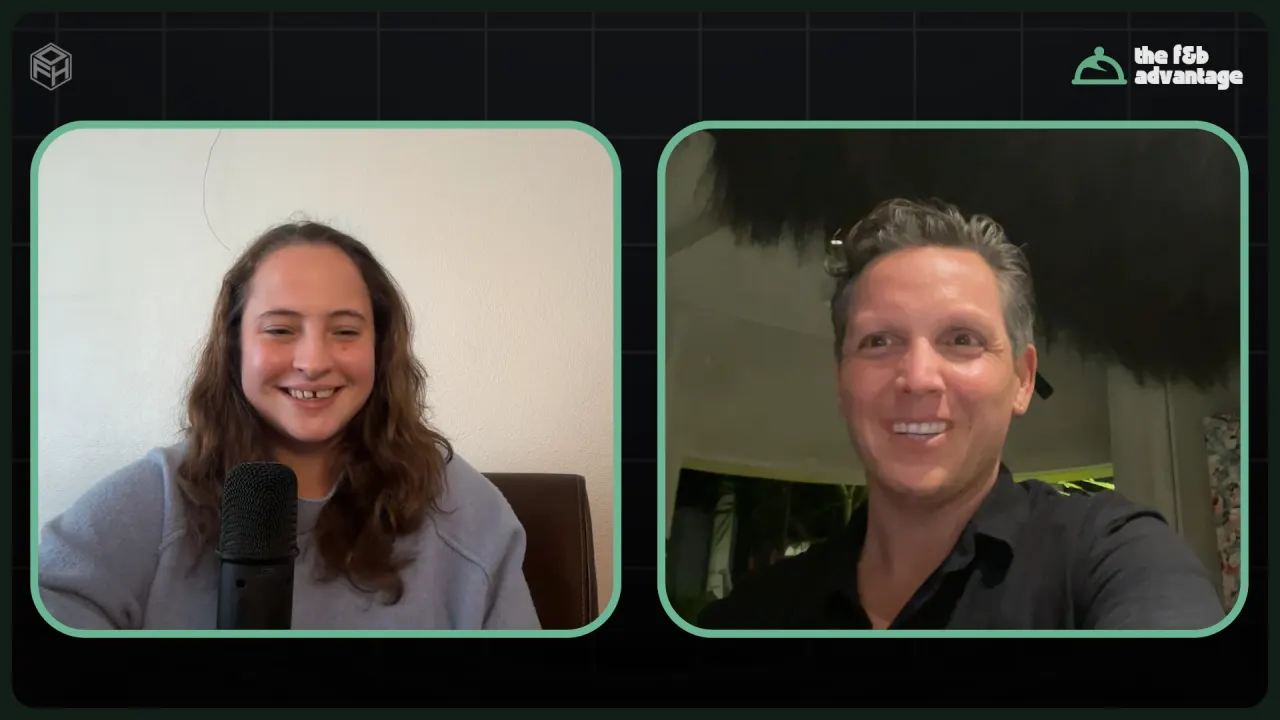
the Future of HospitalityWelcome to the F and B Advantage, a series within the future of hospitality, where we explore how food and beverage can truly move the needle for hospitality business. My name is Gabi, and today, we have a TV chef with a rock and roll running through his veins. He started the star restaurants, toured with artists, and built an experienced brand around the best moment of the day, the Akeratif. My guest is Juhon DePauw. Welcome, Juhon. Thank you very much. Jeroen has built a world around food that blends hospitality, storytelling, and emotion. And later in this conversation, we will unpack how an open road driven concept becomes a business model and how intuition and creativity fit into operations. But before we dive in, Yaron, you are a person that does so much things.
the Future of HospitalityHow do you usually explain to people what you're really focused on today?
Jeroen de PauwYeah. It's very difficult because someone some people ask me what are you doing, and I always said, yeah, I do something with cooking, something with always the same subjects that's food, but I changed every five till eight years. I do another thing, but it's always food based. But, yeah, it's true. I did already a lot of different things. I did also a lot of things that I always wanted to do, so I'm very happy with my job. Yeah. Yeah. Yeah. Food is a central part in your journey. Right?
the Future of HospitalityAnd how much did your time at the hotel school really shape the way you think about food and hospitality today?
Jeroen de PauwIt's very different because, when I was on the on school, on artillery school, there is a lot of indoctrination that you really have to go to Michelin Star's restaurants. Mhmm. And I did it also after school because it was normal. Mhmm. We had an education in gastronomic food, so I did also. I worked in those restaurants, and I did it also later on. Mhmm. But, after some time, I said, yeah, it's it's really always the same thing. It's hard work. It's, no, free time. It's always working, working, working. And I really wanted to explore the world, and that's something that was very difficult in this time to do it when you're working in Michelin starved restaurants.
Jeroen de PauwMhmm. So afterwards, I realized when I want to see the world, when I want to see when I want to meet other people Mhmm. When I want to create the kind of networking, then I have to change, and I I have to go out of the of the Michelin star restaurants. It was also very different world, the Michelin restaurants than than how it is now.
the Future of HospitalityYeah. Because what what is different if if you, yeah, compare it to each other? Yeah. I think that
Jeroen de Pauwa lot of chefs now also from Michelin stars are really rock and roll stars. They really explore the world. They go they do they travel lots to to to cook with other Michelin stars, restaurants. It's more international. Mhmm. But when I was younger, it was really based in Belgium, in The Netherlands. I worked also in The Netherlands.
the Future of HospitalityAnd I think it was not so not so big like like it is now. Yeah. So you would say, like, the networking, the kind of community, the collaborations is something that really deferred it. And were you Yeah. And that's something that people are getting more if if I hear you correct, the networking. Yeah.
Jeroen de PauwNetworking is for me, personally, the networking is the most important thing in my in my job, in my in my life because that's the reason how to explore other things, other jobs, other countries, other it's it's very important for me to to met other people and to do a lot of networking.
the Future of HospitalityYeah. And I do maybe think also, like, hospitality. People can learn about networking a lot of different cultures, how people are doing different operations or doing different and learn from that to implement maybe in their own hospitality business.
Jeroen de PauwYeah. I always said that cooking, it's really the key for explore new people, for explore races, people that you love. It's it's really something who makes people brings people together. Yeah. Even even now, I do I'm I'm ready to make a documentary about countries in war. Mhmm. And even countries in war, you see that the only thing that that's very important for them to keep them together, it's always food. It's the hospitality. It's the the mothers who are cooking for the boys. They go to the to the to the army. So even there in the baddest time of your life, food is very important. It's really
05:00Vom Michelin-Koch zum Tour-Koch
8
Jeroen berichtet, wie das Kochen für Künstler auf Tour neue kreative und Networking-Möglichkeiten jenseits traditioneller Michelin-Küchen eröffnete.
the Future of Hospitalityyeah. It's the key. Yeah. Yeah. It's interesting because you're now telling about this documentary. And like I said, you're doing a lot of things regarding it's always like the food is a big theme within your life, but I'm really curious. Can you maybe take us back to the moment where you realized you wanted to do things differently than the classic model you were saying about networking, but when it does really click?
Jeroen de PauwIt's not really that I planned to do. It's something came very organically. Like, I was working in a in in a Michelin star restaurant, and I would like to do something else. And it was really there was someone who called me. It was a a Belgian famous singer, and he he made the kind of video clip in the neighborhood where I was living. So they asked me, can you can you cook for us? Can you make the lunch for us? But I always I was used to work in Michelin restaurant stores restaurants, so I had my own my own style of cooking. So I did the same for this day to cook for the artist there, and they was really impressed because they never seen a catering on a on a concert that was so high level.
Jeroen de PauwSo they said, yeah. It's really great. Why don't you come with us to go on tour? And but I never did it before. That's why I had not the material, not the experience. I had nothing. Yeah. With the artist in Belgium, she said, yeah. I will I will invest in it with you, and then you can you can come with us for one year. Yeah. It's
the Future of HospitalityYeah. No. Yeah. I wanted to say, like, does did it feel maybe risky? Right? Because it's something totally different. How did that feel?
Jeroen de PauwYeah. It was risky, but I was very young. I think in this this time, I was even not 25, so I had no children. I was not married, so I was a little bit free to do what I wanted to do. And I wanted to explore the world. And, you know, it's really when they ask you to go with some famous people for for to cook for them, it was really something new for me. So I said, yeah. Maybe it's a nice it's a nice challenge. Maybe I have to do it. Mhmm. And the fact that they also want to invest in it was also for me, the risk was really low. Mhmm. It was just to explore a new world and to do what I wanted to do that was cooking and traveling.
Jeroen de PauwYeah. So I traveled around Europe for, I think, two years, and I did cooking shows for Belgian artists like and Kabatra Plop till on weight and Shanita O'Connor. Yeah. So it was really nice to to met those people and to create
the Future of Hospitalityagain a new network. Yeah. And then did it also, like, maybe unlock a type of creative creativity? Because you're with creative per people in the music industry, but you are also creative. Did it unlock, yeah, maybe a new potential?
Jeroen de PauwThere is a lot of same things in music and food because music, you make it with yeah. It's it's it's like food. You have ingredients, and you make a dish with it. And it's the same thing with music. And they they make something like a dish, but it's called a song with them. So it's a little bit similar world. We have the same interest. It's the same way of thinking, I thought. And so, yeah, it was really nice. It was also because I did France, Italian France, Italy, Spain. So I also explore a lot of other ingredients, a lot of other cultures, lot of other foods Mhmm.
09:00Die Entwicklung des Aperitif-Konzepts
10
Diskussion über die Schaffung eines entspannten, geselligen Genusserlebnisses, inspiriert von der universellen Anziehungskraft von Aperitifs und kleinen Gerichten.
the Future of HospitalityCulture. So it was it it opens my mind to be creative. Yeah. Did it maybe also shape your view on what hospitality should feel like for the guests?
Jeroen de PauwYeah. That's really difficult because when you are on tour with a group of of people, of artists, of of musicians, of crew, you're very locked in your own group. We slept together on the tour bus. We go we are you are really in our in our in our our world. It was a little bit different. So that's that was not so easy, but, yeah, you you you make your own universal effect.
the Future of HospitalityYeah. Yeah. No. Really interesting thing. And like I said in the intro, you're also working, having this upper road driven concepts. And I'm curious how did that evolve? How did that came up?
Jeroen de PauwYeah. That was later on when I came back on tour. I did some sport events also, like, to the France and and difficult and other things. But in the end, I was thinking, when you ask people, how are you doing? They always said, I'm very busy, busy, busy, busy. Mhmm. And so I was thinking, yeah. I did I I asked to the people, when you're not busy, what do you wanted to do? So everybody said, I want to go on holiday. And then I was thinking, yeah, holiday, but why don't you do it? Because and the people, told me, yeah, or you've got no time to go on holiday or it costs some money to go on holiday. So I was looking for what is the the the holiday feeling that I can put in food. Mhmm. And in Belgium, I think in all of the world all over the world, you've got a lot of trends from food trends, and they are coming, but they are going also. We've got a future kitchen. We've got a molecular kitchen. We've got a vegan kitchen. Everything is coming, but it goes away. Mhmm. When the only thing that always stays in every food trend is aperitif apero. It's the nicest thing. It's also it it gives immediately kind of a holiday feeling when you open the bottle at the end of the week, and you've got some nice small canape dishes to eat. So it it gives a lot of happiness.
Jeroen de PauwAnd because I traveled a lot also, I saw that everywhere everyone all over the world, they are taking Aperol. If you go to Central Park in New York, you see people, they are opening a bag of chips and and and and they drink something. Or when you go to Italy, it's the same thing. It's all all over the world. People like to do it because it's also it it brings people together. So I thought I'm gonna make concept a food concept around apero. And I call it canape because canape, it means in Belgium or in France, it means a couch to to to to to chill out, in fact. But canape is also a small dish, small yeah. How do you say it? The zakuski to eat. So for me, the the name was was perfect.
Jeroen de PauwAnd then I I started with some, yeah, with a restaurant. I had a shop. I had two restaurants, a shop. Yeah. Different areas to to explore the Apelo concept.
the Future of HospitalityYeah. And and and when you look at, like, the traditional host FFB or restaurants, where is the difference between operational, like,
Jeroen de Pauwrestaurant versus an opera concept? Is there a difference in in in that? Yeah. It's a big difference. So we are a lot of we put a lot of focus on cocktails and on Apero drinks. But on the other side, we've got also it's a lot of work in the kitchen because we've got people. They can choose between a lot between different things to eat. So it's kind of Apero dining. You old old evening, you always it's like a kind of tapas, but more more small dishes, not like just olives and things like that. There are really small dishes. So it's also a different different concept also for the kitchen and for the for the for the waiters. It's not so easy because it's it's a lot of work when you when you've got a small restaurant or a big restaurant and you've got just apero and the main dish desserts, the normal stuff.
Jeroen de PauwYeah. It's not so much work than than really make always new dishes. But for us, it was new, but it's kind of the way of having dinner in the South Of Europe. It's always a little bit like that. You eat small things, sharing things. It's easygoing. So I want to have really an easygoing concept. Yeah.
the Future of HospitalityLike, I'm really curious because it's quite a new concept. And, like, what is harder? Creating in your first experience when when the first time you you have a new concept or protecting it over time?
14:00Herausforderungen und Anpassungen im Gastgewerbe
6
Jeroen spricht über wirtschaftlichen Druck, sich wandelnde Kundengewohnheiten und die Balance zwischen Einzelhandelsprodukten und Restauranterlebnissen.
Jeroen de PauwProtecting it over time. Because you see that even now we are working now eight years, and I see that it's it's a little bit gone already because there is also a lot of economic changing in in Belgium. There's a lot of financial crisis. So people, they don't spend so much money anymore. Mhmm. And it's quite expensive concept. So as an entrepreneur, you really have to change always. You really have to to make new ideas. You really have to switch your concept, your business plan. So I see that now it's a little bit the moment to change it already because we did it eight years. Mhmm.
Jeroen de PauwAnd people, they are a little bit getting used to it. More restaurants try to work like this. Mhmm. So it's also kind of trends.
the Future of HospitalityThe is still is always very, very popular in in in our country. Yeah. Yeah. Because you're talking about about the, and I think that's, of course, something within the menu. Right? And, like, I know you you like to engineer the menus and then specialize in that. But was this something you have learned about the menu structure that directly, for example, impacts the revenue per guest? As you're saying, like, in Belgium, there is this crisis, and and it, yeah, the margins are important in that way.
Jeroen de PauwYeah. Yeah. That's also it's a concept that that asked a lot of work and a lot of energy and a lot of concentration to to make it like it has to be. But on the other hand, you see that rentability from MENAPERO concept is getting lower and lower also because it's it's a lot of focus on, alcoholic drinks. Mhmm. And even that is getting less and less more people, they don't drink alcohol anymore. So we took it with the with the mocktails, and we tried new drinks and things like that. But Aperol and food and restaurant business is for a lot of people. It's a it's a luxury thing that you that you can have. So when there is financial crisis, you see it immediately that the rentability of a restaurant is lower than before.
the Future of HospitalityYeah. I think that's super interesting because we're often restaurants think they're competing with a restaurant around the corner, which is kind of true. But in essence, in in in this situation, they're competing with the supermarkets. Right? Because their prices are lower, and it is more accessible maybe. Yeah. Yeah. How would you say that?
Jeroen de PauwYeah. But that's that's true. So that was the reason for me to create also supermarket products under the name of Canape and under the name of Apero Concept. I'm always I'm working now for, I think, fifteen years for Delhaize. It's one of the biggest retail companies in Belgium. It's a little bit high class supermarket. And so I create the magazine for them, and I write all the the recipes. So I have also some some some products that that we sell there in market. So we've got the Aperol salsas. We've got kind of bitter balls. It's very it's very Holland, the bitterballa. Yeah. But that's the Belgian version of it with classic Belgian Belgian dishes in it. So, yeah, we had to do the two the two markets, the retail and the hospitality in the restaurant. And it's a little bit the same thing, but, yeah, in the retail, you don't got the hospitality that you've got in the in the restaurant and the and the feeling and the and the the kind of music and the, yeah, Things like that, the designing.
17:00Regionale Produkte und soziale Verbindung annehmen
16
Die Bedeutung regionaler Zutaten, kultureller Stolz und die Förderung echter sozialer Interaktion im heutigen Gastgewerbe.
the Future of HospitalityYeah. Yeah. And I I it's interesting that you're saying local products because I know you're also a really big ambassador of local products. And and and Mhmm. Would you say it would be interesting to focus also more on those local products, for example, for food and beverage concepts, for example, in hotels who focus more on that and really show their guests, okay. This is interesting. Yeah.
Jeroen de PauwI think it's it's very important to work with local products for for different reasons. The first thing is that, yeah, you have to be you have to be proud on your on your roots where you're coming from. And, like, we I'm living in in Flanders in Belgium. We've got a lot of lot of very perfect products in the area, so I don't understand why you're gonna buy your products on the other side of the world if you've got it in your garden. It's like you have to support your people around you and and the local heroes. I I call them the local heroes. Got so many great products, so I really try to to work with them. Mhmm.
Jeroen de PauwIt's also kind I'm kind of ambassador also for our own products because that's also what what I think is very interesting when I go to another country. I really want to explore their products and their tomatoes and their all the things that that that they've got really in the in this country that that make this this country special. So that's also the reason why I want to work with it in Belgium. And I also want to show it to the world because that's one of my of my next missions that is try to to let the world taste from all the good things that you've got in Belgium. Yes. I was in in in Japan on the World Expo to cook with all products from my neighborhood from Flemish part of Belgium. Mhmm. And I was there with a 100 people in Tokyo to let them taste our chicory or mustard or the really, the beers from Belgium, the chocolates, the waffles, the asparagus, so the really the things from from our side.
the Future of HospitalityAnd, yeah, it's very it's great that I can do it. Yeah. But how did you sell, like, your curry to an audience that very knew it? Right? It it is kind of maybe scary for them. How how did you, yeah, convince them to eat it?
Jeroen de PauwConvinced them to eat? No. But always when you do things like that, people, they are getting they are very couriers. They it's also the most of it, it's an audience that really like to explore also new. I work a lot of with entrepreneurs, and they are they are traveling a lot. I see also that that food in is a kind of culture for a lot of people. They are or I will talk for myself. I I travel to to explore new food, and I live my food is so important in my life that everything that I do, it's focused on the food thing. And I see that there's more and more people there. They really like it, and it's kind of we said, the least out of food, we call it. Mhmm. So it's really it's really important in our country, food and beverage.
the Future of HospitalityYeah. As I think you you're really saying, okay. The food is really important. Mhmm. But I'm also interested. Like, if you look at the concept, like, and beverage concept, how much is this about the food, but how much is it, for example, about the flow or the energy a whole concept, or it should there be a kind of balance?
Jeroen de PauwIt should have be a kind of balance, but I see also and it's something new, I think, in the last ten years before we've got the food was very important even in Michelin Star's restaurant. It was the most important thing. Also, in in small in small brocceries or restaurants. But you see that people, they want more than just the foods. They want to feel the vibe. They want to have the the best the the the music who is working with food, the, yeah, the furniture, the the people hospitality, how they how they talk, how they are dressed, how they Yeah. How they how they make you they really have to give you a a special feeling. And it's the old thing, the experience that it's important, and food is one of them. But the other things are also very, very important, I think. Yeah. Yeah. And it's also interesting. Like, how do you design,
the Future of Hospitalityfor example, the food and beverage experience to be spontaneous and nice and and human, but also have it, like, operational. Right? Because it's operational is maybe more structure and strict, whereas we also want that human. How do you balance, yeah, data in in essence?
Jeroen de PauwYeah. It's not so it's very difficult because there is also people, and they don't like it. They want to have it very strict and but I'm I'm a little bit I don't think nonchalant, but it's important to to be yourself. The people that has to be are their self when they come to the restaurant have to got a nice feeling. I feel a lot of restaurants where you when you walk in that there is a little bit stressed. How are you dressed? And what can you do? And sometimes I see people that don't go often to restaurants. They are feeling a little bit strange to be there.
the Future of HospitalityMhmm.
Jeroen de PauwSo I think we have to we have to chill a little bit, and it's easier that someone can feel themselves great and that they can, yeah. You have to make an experience for them. And it's diff it's difficult because some people, they've got a lot of time to explore, to to be their self, to to chill, to have the whole evening. And some people, they want to have it strict and e and ease and fast. And so, yeah, the hospitality is very important to the people that are working for you that they feel
the Future of Hospitalitythe guests a little bit what they are looking for. Yeah. And should you say maybe, like, you're really talking about chill, kind of pay, like, relaxed? Should FB concept maybe be more designed around social behavior than around, yeah, maybe the foods? Or It is a social behavior. It's it's
Jeroen de Pauwthe start of it, if you if you met a new boyfriend or girlfriend, the first thing that you will say is go do gonna have eat something or we're gonna drink something. So the the social thing is so important, and I think it's even more important now and in the future than before. Because before, we had not we had not social media. We've got not other things. So when we want to met people when I was young and I want to met my friends, I really have to make an appointment. We have to drink something. We have to be together. We have to to see each other, feel each other. But now I've got young kids. And even when I say, why why don't you go out with your friend? And they say, yeah. But I I talked to a chat already on on on Instagram or or Snapchat or something like that. So we lose a little bit the the social thing.
Jeroen de PauwAnd that's very important that it that that that we try to keep it. Yeah. If you see in Belgium, we had a lot of pups before. You know that in Belgium, they really like to drink a lot of beer. So a lot of pups In every small, yeah, in every small town, you had five, six cafes. Mhmm. So we all disappeared because people, they don't they don't go out anymore. It's so we have to try to to put it back that it's really that food, hospitality, gastronomic, that it's really something social and that that we have to try to rebuild it again. Yeah. It's interesting that you're saying, like, pops are maybe the are disappearing and etcetera.
the Future of HospitalityDo you believe, like, the classic restaurants, like, with table service is still the best default model for restaurants today? Like, the classic classic ones.
Jeroen de PauwI don't know. I think there are a lot of classic restaurants. They are disappearing in Belgium Mhmm. Because a lot of big companies, they take it over, like, the the the big ones, like, yeah, like, food concepts and businessmen, they have ten, fifteen, 20 kind of the same restaurants, like concept concept restaurants. Yeah. So financially, it's getting very difficult to to start from yourself to make restaurant because the business model of a classic restaurant is not it's it's not a good effect because you have to invest in people, in food, in furniture, in in in the vibe. So it costs a lot of money, and then you are waiting till the people are coming. And when they are coming, you're not sure how many how much money they will spend. So the business model is not so good in for a classic restaurant. So I think it's important to always to always find new things, new vibes, to to be creative, to, yeah, to make people happy,
26:00Nachhaltigkeit, gelernte Lektionen und Zukunftsausblick
10
Jeroen reflektiert über Zero-Waste-Küche, zentrale Karrierelektionen und den künftigen Fokus auf belgische Produkte angesichts von Personalherausforderungen.
the Future of Hospitalityto explore new things. Yeah. Yeah. And I also really want to touch up quickly about, like, the zero waste ambition that you have. Right? Because that's a more a really important thing in your story. And, yeah, what what can zero waste help within, yeah, the current situations restaurants are in? Can they like, what did you what can you adjust without losing the experience and focusing on the zero waste ambition? But the zero waste, I I rather I
Jeroen de Pauwhad made I read a book about zero waste cooking. It's very technical in the kitchen. What can you do? You know, with the climate changing Yeah. Or or even cooks, they can make different about it. They can try to have to cook with everything that they got. So that's really the story that I want to to tell in my book is to to make chef behave that you can cook with everything with a lot of things that you throw away normally that you can make something with it. And it's also a financial model. The things that you throw away normally, you can you can use it. So we make cakes with the whole oranges that you you the thing was that I made recipes and all the ingredients that you've got on your plate, we use them all of everything, even the peel, even and it's it's easy to do. It's a new way of thinking, new way of cooking. But I think if we can if we can do something to to stop the climate changing, then we have to do it. And also in the kitchen or in the gastronomic world, you can do it something about it. Yeah. Yeah.
the Future of HospitalityI I the thing that I really love about you, Yaron, is that you are a sponge of knowledge. You have so much knowledge about different things and is really inspiring. If you look back on your journey, like, what's one early mistake that maybe quietly became an important lesson for you during your journey of of of, yeah, finding all these new things?
Jeroen de PauwYeah. It's for me, it's very I really needed to to to do new things and to explore. It's what I said. I have the networking with other people is so interesting, and I'm getting older now. I'm 46. And I even I'm a little bit scared that I cannot do anything what I wanted to do, what I still wanted to do. But I did a lot of different things. And after a while, I think, okay. I've seen it. I've done it, been there, done that. I gonna do something else because I want to do new things. And I've got also things that that didn't work, that I tried, but it didn't work. So but, yeah, I think that the most important lesson lesson is to when you met new people, you can you can open your mind and you can open you you have to listen to other people, and you learn a lot of you learn more about listening than about talking. So it's for me, it's important to to do different things for myself to be creative.
Jeroen de PauwBut the most important thing is to be together with the family, have some nice dinner, to explore new tastes, and things like that. So the basic of all my career is be yourself and do what you want to do and do it for yourself.
the Future of HospitalityYeah. We always talk our final question is always about the future of of hospitality. And I'm really curious because you're saying Belgium is currently in, yeah, difficult situation. What do you think will maybe amaze people about the Belgium hospitality within five years? Is that the product? Is that the process? Is that the service maybe?
Jeroen de PauwI think that the biggest thing in Belgium is the product because the the people are getting the workload is very heavy in hospitality, and we don't find so much people anymore that wants to work in it because the cost of people is very high in Belgium. So it's very difficult to to make rentability business around working with people. They're working with their hands. So we really have to work on our products in Belgium, the things that we've got, the the tastes that we've got. And I think that we can that we can rule the world with all the the good things that we've got in Belgium. And it is the most important thing, I think. Yeah. Nice. Now,
the Future of HospitalityYaron, thank you so much, honestly. I had a great time, and I love the stories and the perspectives the perspectives you shared today. And, again, thank you so much for your time.
Jeroen de PauwNo problem. We'd love.
the Future of HospitalityFor the audience listeners, this was F and B Advantage, part of the future of hospitality podcast. If you enjoyed this conversation and want more insights on how food and beverages can drive real hospitality impact, make sure to subscribe and join our newsletter at futureofhospitality.org. I wish you a really nice time, and I will see you the next time.