
















 EPISODE · 37 MIN
Jenseits von Greenwashing: echte Nachhaltigkeit im Gastgewerbe
Dragos Avram zeigt, wie Nachhaltigkeit im Hotel echte Wirkung entfaltet, wenn sie in der DNA des Unternehmens verankert wird, wo Finanzabteilung, HR, Technik und General Manager zusammenarbeiten. Von datengetriebenem ROI über grüne Kredite bis zu sich wandelnden Vorschriften erkunden wir, wie Hotels nachhaltig werden können, ohne dabei allein dazustehen oder pleitezugehen.
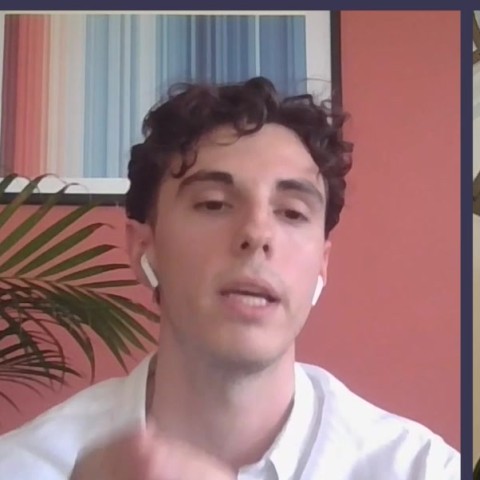 Dragos AvramCEO
Transkript
Auf eine Zeitmarke klicken, um ab dort zu sehen. Die Aufnahme ist auf Englisch.
01:51What motivated that leap, and how has your perspective changed since arriving?
10
the Future of HospitalityUnderstood. Understood. Okay. You moved from Romania to The Netherlands just six years ago, if I remember that correctly. Yeah. Yeah. What motivated that leap, and how has your perspective changed since arriving?
Dragos AvramYeah. That's that's a great question because I think, of course, values change, your way of living changes, your perspective on life. Why I came to The Netherlands first is because, yeah, it's one of the best hotel schools on the planet. And also when you look at, yeah, the investment that you have to do for getting into a hotel school, it's quite appealing. But, also, I wasn't interested in becoming one of the, say, bay basic success successful jobs that are seen in Romania, like a lawyer or like a a doctor. You know, I was kind of lost like every other young person, and traveling and meeting people was always, yeah, something that got my attention. And I was also fortunate enough to travel with my family when I was younger, and we stayed in hotels. And I was always, like, really examining everything that happens, and I was like, this this looks like something that I wanna I wanna look further in in my future.
the Future of HospitalityAlright. So you mentioned a hotel school. Right?
Dragos AvramYeah.
the Future of HospitalityOh, can you can you can you explain to me because I hear sustainability and hospitality. What did motivate you to go to the hotel school?
Dragos AvramYeah. So as I said, the fact that, you know, you travel and also the fact that a hotel school combines both your soft skills and life science because you learn a lot about managing a team and how to talk to people in order to motivate them. And I think that was the the part that really made me, you know, go for it. And, like, I wanna be a bit dynamic during my during my day. You know? I don't just wanna, yeah, end up looking at an Excel. And I think that's why that's why hospitality and and, yeah, the diversity of working with so many people. And and to be honest, at the beginning, it just sounded like a like a good idea and didn't really have it it kind of grew on me during during my years in Amsterdam, you know, because I started to be more win oriented or have bigger goals as well and realized that there is more than just then yeah. The there there's more there than, you know, just having fun, etcetera.
Dragos AvramAnd and and yeah. Then I realized that also the hospitality industry is more than just operations. You know? And that's when I moved into also learning about sustainability and later also doing a master's into that and now operating at the nexus of these two spaces.
the Future of HospitalityI wanna backped a little bit because if I remember correctly, your parents are also active in sustainability
Dragos Avramat some level or different level. Can you tell me a bit more about that? Yeah. Yeah. That's true. Yeah. So both both my parents, they they work in sustainability for, like, twenty five years. My mom works more on the government part for the Environmental Protection Agency, and my dad is an entrepreneur both, yeah, in the sustainability field. And, yeah, since I was a kid, I was seeing reports of coal mines and, like, you know, different different impacts that are brought by, you know, by growth in in economy. And, yeah, this was kind of, like, I guess, the easy way out. So maybe that's why I didn't go to sustainability straight away. I tried to dodge the bullet and go for hospitality first, but I guess, you know, I I came back to to my values and to, you know, to the background of my parents, and I realized that it's it's already deep down into into so many experiences.
Dragos AvramAnd I can always go back with a question, you know, like, how was the environmental policy twenty years ago? Because for sure, the challenges we have today, they were here for for some time. So so that's, of course, a good a good aspiring partner to have and also good inspiration for for me. Yeah.
06:03How did that shape your understanding of sustainability in a business context?
6
the Future of HospitalityRight. So move forward to Amsterdam to The Netherlands. You studied at the Reija University Yeah. And you pursued a scientific premaster, if I'm correct. How did that shape your understanding of sustainability in a business context?
Dragos AvramYeah. So it it was it was really interesting because I was also working during during my studies. So I was working for, yeah, for for a hotel chain, but we're gonna get probably to that in a second. But I always like to compare the the scientifical knowledge I would get in school, which was very holistic, but then also with how you translate it into business. You know? Because it's so much more about change management. And, like, you can take concept that is very I idealistic, I would call it. And then in real life, you would have to do a bit of negotiations, and it's gonna end up somewhere in the middle of operations and, yeah, this concept that you are that you're trying to bring.
Dragos AvramBut I think it was really interesting to to go back to school and do a pre master's and then a master's because it gave me the tools to understand the science and also the complexity of governing sustainability and later all these regulations that we've been dealing with at sustainings.
the Future of HospitalityWell, let me build a bridge to to the cost part of complying to the regulations that are increasing. Sustainability is often seen as a cost. How do you reframe that for hotels as something that also improves the return on investment and access to finance even?
Dragos AvramYeah. Yeah. No. So so indeed, I think that's it it's it's one of these concepts that is called, like, spiral of inaction in literature, and it shows that yeah. Obviously, we most of the times, we see sustainability as a cost rather than the other way around as a enabler. Right? And, well, how do you see that? It's it's quite easy if you take the example of a building envelope or, like, a hotel operates, of course, in a building, and improving that building in a certain way either by reducing it to other consumption or energy consumption is gonna result in a decrease of your operational costs. Some of the highest operating costs are related to utilities, right, for the water that you consume, the energy. And these are very dependent based on your geography and the age of your building. But if you invest in sustainability in the building, you're gonna see a direct return on investment. And another point that you mentioned is, of course, the the capital. Most businesses are working on on debt, on refinancing, so they are getting money from the banks, yeah, every every four, five years.
Dragos AvramAnd now we see that there is a discount on the margin that you're paying, and, also, you have the opportunity to borrow more capital. Right? And here, are really talking about Fortune 500 companies that are doing this and also the biggest change that you that we all heard about. They are engaging in this mechanism because it's a win win situation for the banks that are giving green capital, but also for the companies that are getting this money. And, of course, it doesn't come just by saying, hey. We are green. You would have to prove it with certain reporting and achieving some goals. But, yeah, I do think that there are financial benefits tied to sustainability results.
09:40Can you walk us through a project, maybe a recent one?
22
the Future of HospitalityInteresting. Can you walk us through a project, maybe a recent one? I read on your website there's one in Amsterdam with the grand, I think, but it was also in London. Was it Saint James? Yeah. I'm not really sure. But can you walk us through a project that made you feel like you're making a real impact?
Dragos AvramYeah. No. Of course. So I think a lot of the a lot of the projects that, you know, we are doing are related to solving a certain goal for the organization. So same as you have, you know, something that is driving the revenue, you know, like decreasing the cost, having a new sustainability strategy. And often, I think when you're doing sustainability consulting, and this is what a lot of sustainability managers can tell you, it's a bit frustrating because the effect is is way longer. Right? But then when you work with certain projects like a sustainability loan, like the hotel that you mentioned, you know, for example, the grant, then you can see that, you know, the once the once the deal is signed, you know, you can see that the the decrease is happening. But then also the timeline of this project can be four to five years. Right? So it's it's not like it's it's it's given. Right? So you would always have to kind of keep the level of sustainability there. But to give you an example, I think, you know, most of the the projects with with the grant, and one of the the coolest things that we did is we kind of purposed the way that the sustainability strategy works. Right? So we designed a sustainability department and also the management team, the XCOM, they were also actively engaging in sustainability, which is quite unique because usually you would see this happening, you know, just at the global level. You would have, like, an email flying around.
Dragos AvramAnd the fact that those those people that are very busy people would break some time from their day and put sustainability on their agenda and talk about it. Okay. How can we decrease waste? And we we can see that this is related to food cost as well. So and integrated this into their current daily tasks and operations. I think that's one of the things that I'm, yeah, very proud of, and I think it's a it's a thing that can be scaled to other hotels. Right?
the Future of HospitalitySo so definitely that's something to to look into. So it is good that you mentioned that. I wonder how people because what I know from hotels from on the front side, but also also the the the the the marketing side, the back end. How do they respond when you enter the building and hey, I'm here to green you up a bit. I mean, they have no time for that. I mean, can you can you give me a a a can you draw a picture how that looks like? For instance, the grant or the the one in in London or maybe another property.
Dragos AvramYeah. So this is one that I also learned it on my on my own skin, you would say. Because indeed, sometimes you can end up being like the green police and be seen as this vigilante that just comes in and, you know, measures how many bins are recycled and, you know, counts that all the tabs have this new perilators that are reducing the water. You know? So it can be kind of like a auditor job sometimes seen as a as a negative. Right? But I do think this comes with awareness and with presenting in front of the team from all levels of management that, hey. We're in this together. We wanna do it.
Dragos AvramThese are the benefits, and it's either being against each other or trying to do it together. And, yeah, making sure that this is not only gonna result in extra time put by the teams. Because the truth is you are adding a new process usually to the current sequence of their process. So directly, it it is gonna be a bit of change management that has to be involved, and it's also gonna be a bit of resistance. But I think within any kind of innovation, you know, you usually see that. And the second point is sometimes you end up in taking something out of the process because you make it more efficient. Right? So if you're adding, for example, maybe reusable bottles or taps, you know, into into your into your hotel, that could save certain certain time from the housekeeping stuff or from from the banking stuff next to the, of course, the financial incentive that comes with it.
the Future of HospitalitySo there are benefits, but probably they don't even realize that. So what is the biggest misconceptions that hotels have when it comes to complying with the new regulation, CSRD? I hate abbreviation, but it stands for corporate sustainability reporting directive. Yeah.
Dragos AvramYeah. There is a joke that 50% of the job of sustainability experts is to come up with all these acronyms acronyms. Yeah. Well, I think the common misconception is that we we don't have the resources in house and that okay. So it's it's very different because you're asking about CSRD, which is for certain companies that are passing certain thresholds, and we're gonna talk about that in a second because that is completely changing right now, and the threshold is possible to go even higher. And kind of the entire market is frozen right now because because of that. But I think the common misconception in operations for for hotels is the fact that, yeah, we are not having enough things around us. So like what I said, like, they're already having this daily meetings or weekly meetings of operation Insert five minutes when you talk about sustainability and find a facility manager to join and someone Are you are you part of those? Are you do you join those meetings sometimes? I mean, I'm just wondering how that looks like that you're not distant. You are part of that process. Right? Yeah. So it it really depends. You know? In some cases, you you just wanna advise on the strategy, and in some cases, you also wanna join the implementation and then be part of of of this. But from a investment point of view of the company, most of the times, you wanna just make sure that you create a base and you create a setup. And after that, you're gonna have an internal person that is gonna manage this. Because if an outsider would have to run the operations, that would become, like, a huge, huge bill for for any hotel. But I think how a consultant can help is add this setup and show that the resources that the hotel currently have can be used in a better way and create a structure for the hotel to run sustainability in house as much as possible. And, of course, you can look into hiring a part timer or or start with an interim position depending on your goals and and need. And, also, we are talking a lot about what's happening now with the operations at one hotel, but then, of course, you have the owners, which are usually owning the building, which is called a property company. And you also have the brands because today, you have so many stakeholders. And what we see is that these brands currently, so our core Marriott, etcetera, they are really pushing a lot of processes and standards and tools to help the local hotels grow their performance and have this this little help.
the Future of HospitalityMhmm. So about balancing between the technical side and the human side. So how does you how do you and your team, how do you guys balance this between the technical side and of reporting ESCG and the human side of hospitality and guest experience? Because indeed, those are two you just mentioned it yourself, two different things. How do you balance that?
Dragos AvramYeah. So I think you need you need a team with various skills. Often, sustainability is seen as a one superhero that does everything from data to teleporting to. And and I think a successful team is your your finance department is already collecting a lot of the invoices and the data. If you have invoices, we can have 80 or 90% of your sustainability data there, like consumption, and we can calculate your carbon system, everything. So I think finding the inside stakeholders that are already having the skills to help you into creating a successful strategy or report or supporting this loan process. Right? So so, yeah, some of the favorite stakeholders that we are working with is, of course, the the general manager who has kind of the oversee helicopter view Then it's a finance department who knows a lot about the the the flux of of money and also the risk that is involved because this is a huge part of sustainability reporting or strategy.
Dragos AvramAnd then on the impact side, which is more social and, of course, environmental, you really take different stakeholders. So for social, you're looking at the HR department, probably the housekeeping department as well because they work with big big forces and probably a bit of SMB if the hotel has a lot of SMB. On the environmental side, there, you're talking to the technical department, which has a great understanding of everything and all the equipment and how efficient it is, what their lifespan, etcetera. And, also, they have a lot of technology at the at this point because what we see is that a lot of hotels, you know, have dashboards, and they have a good base of of data collection at the moment.
Dragos AvramYeah. So so it's it's it's a big table of stakeholders that is basically helping you build this sustainability project by utilizing their, yeah, their knowledge.
the Future of HospitalityOkay. So now I want to know, hearing all this, how do you make do they come to you, or how do they make or how do you make stakeholders aware of the fact that they can benefit from let me just call it going green.
Dragos AvramHow does that work? How does how does it look like from from the back end? Yeah. Yeah. So there are different drivers different drivers based on different services. Mhmm. Some of them are because of the regulation. You know? Like, I'm gonna be very honest with you. And the entire sustainability space exploded in the last five years, maybe four years because of the push of the opinionated So that's like top down driven. It's a regulation. Yeah. Okay. Yeah. So Yeah. That and and then there is a a need in the market for for help with this, and it's very hard to translate the pages of regulation into practice and understanding each business model.
Dragos AvramYou know? As yeah. It's very important to to figure out how to to translate this too. But, also, just just networking, I think one thing that is good about hospitality is that we are people, persons, and we like to meet, and we like to go to events. True. And what I experienced in my career is I had a lot of mentors of mine or people that I really respect, you know, like Emmy and and Remco and, like, a lot of people that just they they meet you a few times, but then they they talk good about you. And I think that's that's really cool, and that's also, you know, one of the reasons why people hear about about us. And then, of course, it's the entire social media and LinkedIn. And I I try to be quite active on LinkedIn. Sometimes it works. Sometimes it doesn't.
the Future of HospitalityBut but yeah. LinkedIn is very is a good it's it's one of the best platforms that I read just recently about for for for business to to connect. Go on. Sorry. Yeah. Yeah. Yeah. No. I think you're doing a good space good job in that space as well. So so yeah. Yeah.
Dragos AvramNo. So but but if I could relook back at all the things that we tried, I think the one that works the best in connecting people and actually having a good qualified conversation with the person in in person event, because then they see directly the value you're providing often your inbox is full of messages from people. My inbox is full of so if you have an in person event and you're seeing that person and then you have a chat, you know, it's it's a different type of relation, and you can also understand if this is something that you wanna continue further or not. So definitely, I think that's a good platform.
Dragos AvramYeah. At least from my experience.
the Future of HospitalityQuestion that comes to mind is then so hotels or yeah. The hospitality industry driven by regulations, so top down as I as I mentioned. So how do you choose your project?
Dragos AvramI yeah. So how do you choose your project? Well, I think it's well, we we were all also, you know, like, it's always growing. Like, I think you always like trying to because we also work with a flexible shelf. So if we really see that there is an opportunity and we would like to jump on it, we can find some people around and make sure that we manage the project and then still deliver quality for it. Or sometimes the lot of times, we're talking about the project now, but then it's like, well, actually, let's do it in six months because so so I wouldn't say that we are really at, you know, a place where and and and the next thing is the fact that currently, the market is really frozen in sustainability.
Dragos AvramAs I said, it the regulations really drove a lot of of demand. But currently, what's happening in Brussels is they are trying to redesign this regulation, the CSRD, CS triple b. Just to summarize it in a few words is they are trying to make the minimum amount of employees higher. So it was 250. Now it goes to a thousand. And for some of them, they're even talking to go to 3,000 or higher. Right? So Okay. So that means that the market went from 50,000 companies in scope to under 10,000. So that's huge decrease. You know? Like, over 80% of the companies that had to report are now basically not in scope. So so that really made the entire sustainability ecosystem in Europe, I would say, a bit a bit frozen.
Dragos AvramBut, nevertheless, we we're still surviving. So and and we do see that the people that been engaging in this project, you know, they're really like, hey. Look. We started the work. We see value into this. Like, now we have a sustainability strategy, which makes so much sense. Then we can finally go back to our investors, you know, and we know what we're talking about. So I think that what we see now is people that see value in sustainability are continuing. You know? And when it comes to the the building improvement, those projects, know, never stop. Same with the financial, you know, once you once it's tied to business KPIs also, then usually, yeah, it's easier to to get the buy.
25:04Do you see that people are proud of it?
16
the Future of HospitalityOkay. So from a from the European governmental point of view, you see a change. It's like it's going backwards kinda, where, what I see over the past twenty years, I think the people's mindset, I mean, mine is, turned to a much greener one being want you want to be more responsible, etcetera etcetera. Etcetera. So when you do a project, do you see that staff on the front side are one one once a project has been has finished and, you contributed to a greener property in whatever way. Do you see that people are proud of it? Do they wanna talk about it? Is is there is that mindset still there? That's what I'm trying to Yeah. You're touching upon a really cool concept. It's called green hushing. So not greenwashing, but hushing because Okay. It's interesting. I didn't know that expression.
Dragos AvramBecause a lot of people are a lot of people care about sustainability at the at the personal level or about climate or about impact, but they don't wanna talk about it because they are like, I don't wanna be called woke, or I don't wanna be like, oh, you are a do gooder. Whatever that means. Exactly. And and that's that's reflected into the corporate world as well. So you have companies that are doing really good stuff and, like, it's more than just having an offset on on their website or some some green leaves, you know, flying around. It's it's companies that really put effort into it, and they have teams of people working on it. And you can really see progress over the years.
Dragos AvramAnd they don't wanna share this because they're scared, well, what if the telegraph or the newspaper is gonna say that we are greenwashing or we're trying to you know? So so that's basically greenwashing. When you are scared of sharing even the the little good that you're doing because you think, a, either people don't care about it or, b, it's gonna be perceived as, yeah, you just wanna lie about it. And this is, I think, one of the things that we should do more, like, because if the hotel next door starts communicating and in in in a nice way, you know, not just like the I don't know. Say that we are the most a 100% sustainable hotel. No. But, actually, what you did in the last six months, then the market is gonna see this more and more, and I think sustainability is gonna be more accepted also also into this. But and then I'm I'm gonna close this with a loop that if you look at the last twenty years, yes, I do think it's growing, and the regulation is growing. It's the first time ever when we're talking about regulation on all continents. You know? So, like, we see also Southeast Asia increasing their taxonomy and also, you know, China adopting a double materiality in The US as well. So we do see more unity into into regulation and, you know, what's happening at the COP conferences.
Dragos AvramSo so for sure, the trend is is positive in that way.
the Future of HospitalityThat is good. So that's a good lookout for your for your for your company, Sustainix. So where do you see Sustainix heading in the next few years? Knowing all this, the mindset of the people, regulations, it goes it's it's like the the the the the market, it goes up and down depending on who is who is governing. So where do you see Sustainix going?
Dragos AvramYeah. I know. So, of course, I I think Europe is our is our playground, and I think from a location point of view, we really wanna establish well here. Like, now we work with around 80 assets in around 50 countries, but, of course, we wanna we wanna expand and help more and more teams. When it comes to how exactly, I think maybe I can explain a bit of what I see in the market right now and what Sustainix is doing. You know, what we see is that data is here, as I mentioned before. But the hotels have the data, but the challenge is with making sense of this data and bringing the data into business operation.
Dragos AvramAnd that's exactly where Sustenix comes in. So we are helping with building improvements. We're helping with communication, but, also, we're helping with compliance, the point that we touched upon a lot in this interview. And this is the areas where we see, you know, still opportunities, especially in when it comes to communicating sustainability from what you currently have. Right? So starting with the data points that you currently have, the dashboard, the certification, how can you how can we better make sense of this rather than coming with the entire new type of processes and confusing everybody? So simply put, we wanna make sustainability make sense starting with the resources that you currently have.
the Future of HospitalityCan you this is this is where I wanna close. I used to work in sustainability myself. I used to be so in solar energy. I published a book about solar energy ten years ago, eleven years ago, actually. And that was a big thing. And I was at, that was at it it was just starting. It was also before Obama in America started the green initiative. Yeah. And I remember when I started in solar energy, and I I moved from finance to solar. I was a bit tired of the greediness. We just had, the the credit and the financial crisis. Yeah. And I just wanted to do something good. So I don't come from a green mindset, but I was like, you know what? It's time to to to to play my part, and that that's that's what I did. And the first year, there were no subsidies or not a lot, and most people really, really, really just wanted to spend money to do something good. So apart from regulation driven projects, are there still stakeholders, properties,
Dragos Avrambrands that come to you? Yeah? Okay. Yeah. Yeah. You got my question. Yeah. I think this is a very important thing to to mention because sometimes, you know, you feel like, oh, damn. Like, what are we doing here? But so all this decrease that I was talking about was happening somewhere, like, three, four months ago. But at the same time, what we see is that pension funds and, also, a good example is a few pension funds that we're investing in in US based, yeah, investment entities. They moved their capital back to Europe and to The UK because they said, look. We do care about sustainability, and we do care about ESG.
Dragos AvramSo we do want our money to be held into, yeah, into companies and into a fund that actually values this. And, also, this is something that we see with a lot of our clients. So it's a variety of clients. Some of them are, again, property companies, asset managers, and also just operational companies that run the hotels. Especially the property and the asset managers, you know, they are it can be an investment company that is on the stock exchange, etcetera. They care about this because of the, you know, because of the the way that their type of business is working. Right? So they have investors that are asking for the sustainability goals, and they're all going towards a certain target. You know? So decrease your emissions to this percentage or make sure that all the assets have a certain building level.
Dragos AvramRight? Make sure that all the teams are are being trained in this way. So this is what's happening on the, say, the asset heavy or the or the people that that own it. But on the other side, we also see brands like Radisson and Accor, you know, which are Europe based, that are really pushing, and they are truly trying to change the processes when you talk about single use plastic and food waste and reducing the emissions in the building because their brand is directly when you put a flag, right, that's what you're gonna remember. You're not gonna think that the real estate companies, etcetera. You're gonna see the the brand, if it's Ibis or SocTel, etcetera. And that's what you're gonna link the impact to.
Dragos AvramSo for them, it's very important to to to push. You know, if they communicate, we wanna be sustainable, they also wanna put it into into practice. Of course, it's very hard because they have thousands of assets on almost every country. So it it's it's for sure a process, but we do see that are good stakeholders. You know, you have Citizenham here in in The Netherlands that is doing an amazing job. And overall, since I started working in the hospitality, there were little to none sustainability managers, coordinators. Now we see this number always almost doubling every year. So that's Really? Oh, that's a good development. Yeah. That's quite good.
the Future of HospitalityI'm happy to see that. Alright. Dragos, do you have one last thing you wanna share with us before we we close-up here?
Dragos AvramNo. Maybe I do have a question for you. Like, what's the last time you visited a hotel and you felt that you had the sustainability experience or something like
the Future of HospitalityOh, lord. That's a good question. Hotel, I don't know, but I travel a lot. I do. And what I always I like at Rotterdam Airport, I think you have it at Schiphol or Schiphol Airport as well, then it's how they flush the toilets with rainwater. Yeah. That's Yeah. Yeah. And, oh, that's a point I wanna touch because the word sustainability, I never use it myself. And I I think greenwashing indeed, by using that term, I would prefer if hotels or businesses would just say, hey, 80% of our energy is solar, or, we flush our toilets with rainwater, or this is what we do. I mean, don't use the the the the the big labels, but use it just just name it by name. Say what you do and show people what you do. Cool. That is what but indeed, a good question, hotel. Oi. Oi.
Dragos AvramI don't know. Yeah. That's fine. Maybe I'm gonna pay attention to it now. You can text me once once you find one. Really, really curious about it. Yeah. Yeah.
35:50Where can people find your website, by the way?
3
the Future of HospitalityAlright. Gragos, it was really nice to have you. Thank you for sharing your insights. I I learned some things, and I wanna wish you good luck with with Sustainix. Likewise. Where can people find your website, by the way? Yeah. It's sustainix.eu
Dragos Avrambecause we're based in Europe. They can find us on LinkedIn or Drago Salgram on on LinkedIn as well. Just follow us, and, hopefully, we can make the hospitality industry a better place.
the Future of HospitalityWonderful. Thank you for being on the show. So much. Take care.

